
Community Shootaround: Kings’ Outlook
The Kings broke an ignominious NBA record last season, missing out on the postseason for the 16th consecutive year. However, things appear to be a bit brighter heading into 2022/23.
Here’s a quick rundown of the team’s current roster:
Returning:
- Backcourt: De’Aaron Fox, Davion Mitchell, Terence Davis
- Wings: Harrison Barnes
- Frontcourt: Domantas Sabonis, Richaun Holmes, Alex Len, Trey Lyles, Chimezie Metu, Neemias Queta (two-way)
Additions:
- Keegan Murray: No. 4 overall pick.
- Malik Monk: Two-year, $19.42MM contract as a free agent.
- Kevin Huerter: Trade with Hawks.
- Matthew Dellavedova: Non-guaranteed deal as a free agent (becomes partially guaranteed for $250K if he’s on the opening night roster).
- Chima Moneke: Partially guaranteed deal ($250K, increases to $500K if he’s on the opening night roster) as a free agent.
- Sam Merrill: Partially guaranteed deal ($150K) as a free agent.
- Keon Ellis: Undrafted rookie on a two-way contract.
- Reported but not yet official: Kent Bazemore; Quinn Cook; KZ Okpala; Jeriah Horne (Exhibit 10?)
Out (or likely out):
- Donte DiVincenzo: Wasn’t extended a qualifying offer, signed with Warriors as a free agent.
- Justin Holiday: Traded to Hawks.
- Maurice Harkless: Traded to Hawks.
- Damian Jones: Signed with Lakers as a free agent.
- Jeremy Lamb: Free agent.
- Josh Jackson: Free agent.
With a projected starting lineup of Fox, Huerter/Monk, Murray, Barnes and Sabonis, the Kings have an interesting blend of youth, speed, shooting and athleticism. A reserve squad featuring Mitchell, Huerter/Monk, Metu/Lyles and Holmes looks pretty solid on paper as well, though the roster is a little thin on wing depth and interior size/rim protection.
A full offseason should help Fox and Sabonis, the two offensive hubs, create an even more potent rhythm together. Sabonis was acquired ahead of the trade deadline in February, and Fox thrived after the deal, averaging 28.9 PPG, 4.3 RPG, 6.8 APG and 1.0 SPG on .503/.380/.766 shooting in 16 games (38.5 MPG), but the team still struggled.
The main question I have about Sacramento entering next season is the defense, because while Huerter and Monk are both strong (albeit streaky) shooters, neither is a great defender, nor are Fox and Sabonis. Losing DiVincenzo, a stout defender, without even extending a qualifying offer was a bit of a head-scratcher.
Of course, one of the team’s biggest offseason moves was hiring Mike Brown as head coach, a defensive-minded tactician, but it’s fair to question how much he’ll revamp the team’s defense given the lack of quality defenders up and down the roster. Buy-in is great and all, but defense isn’t purely about effort, it requires skill, aptitude and awareness as well.
Much of the Kings’ success might hinge upon the play of Murray, who got off to an encouraging NBA start after being named Las Vegas Summer League MVP, but unfortunately suffered a right wrist injury that required surgery shortly thereafter. However, a league source tells James Ham of ESPN 1320 and The Kings Beat (Twitter link) that Murray is progressing well in his recovery and is shooting again with both hands.
The West is stacked with talented teams, so even reaching the play-in tournament will be difficult. The Warriors, Suns, Mavericks, Grizzlies, Clippers, Nuggets, Timberwolves and Pelicans all look strong, and the Lakers and Blazers are looking to bounce back from disappointing seasons.
We want to know what you think. Will the Kings finally snap their postseason drought? Is the play-in tournament a more realistic goal? Could Murray be the difference-maker the team has long been looking for? Head to the comments section to weigh in on Sacramento’s prospects for the upcoming season.
Nuggets’ Jamal Murray On Injury Recovery, Expectations
Nuggets guard Jamal Murray admits that it was difficult to miss the entire 2021/22 season, including the team’s first-round playoff loss to the Warriors, while recovering from a torn ACL, but says he didn’t want to rush back and have second thoughts on the court.
“It was tough, but I just wanted to wait until I was healthy, until I could play the game without thinking about it. I didn’t want to be doing both out there, especially in the biggest time of the year for basketball,” he told Kane Pitman of ESPN during a trip to Australia. “It was smart of me to miss the playoffs and get my knee right, now I can go into the next season with a lot more confidence.”
Murray was in the midst of the best season of his career in ’20/21 prior to the injury, appearing in 48 games (35.5 MPG) while averaging 21.2 PPG, 4.0 RPG, 4.8 APG and 1.3 SPG on .477/.408/.869 shooting. He says that although his leaping ability hasn’t quite returned to the level it was pre-injury, he thinks his game has improved overall.
“I feel like I’ve gotten better in the span I’ve been out,” Murray said. “I may not jump as high right now, but I feel like I pass better, I see the game better, my pace is a little better, I shoot a little more efficiently. I’m just looking to bring all those aspects to my game, just so I can get a feel for how hard guys are going to play again, in front of crowds’ adrenaline is running a little different, loose balls are harder to get, stuff like that.”
The 25-year-old says he’s not worried about the stacked competition in the Western Conference entering next season, as the Nuggets are focused on their own goals.
“I don’t care. I don’t care what they’ve got. I know we have a great team,” he quickly responded when Pitman asked about the depth in the West. “We have a great team. Everybody knows what we can do, you’ve seen the snippets of what we can do when we’re all healthy together, so we just look forward to that. We don’t care what the Suns have and what the Lakers have, we just want to be healthy so we can do what we set out to do.”
Murray also went into more details about his rehabilitation process and what it was like both physically and mentally, as Pitman relays.
According to Roy Ward of The Age Sport (Twitter link), Murray says he plans to play during the preseason, so Denver fans won’t have to wait until the regular season tips off to see his return to action.
Jazz Owner Smith Trying To Bring Third Pro Team To Utah
Jazz owner Ryan Smith has sold a minority stake in Smith Entertainment Group, the team’s parent company, to private equity firm Arctos Sports Partners with the “intention to bring a third professional sports franchise to the state” of Utah, writes Eric Walden of The Salt Lake Tribune.
As Walden details, in addition to owning the Jazz, Smith Entertainment Group also owns Vivint Arena, the team’s home venue, and is a shareholder in Major League Soccer club Real Salt Lake. Arctos will now be invested in all three ventures, pending approval of the NBA’s Board of Governors. Arctos actually already had a minority stake in RSL, so evidently the private equity firm had its eyes on a bigger prize.
On the NBA side, Arctos holds a 17% stake in the Kings and 13% in the Warriors, in addition to numerous other professional sports franchises. According to Walden, it seems that SEG and Arctos will be trying to bring either an MLB or NHL team to Utah in the future, as NFL teams currently forbid private investment firms and are extremely expensive.
“We are excited to partner with Arctos. They are committed to Utah and to investing in this community and our sports teams and facilities,” Smith said in a statement. “As SEG continues to build out the professional sports landscape in the state, the Arctos partnership brings strong commitment to Utah sports and a deep connection across all major sports leagues.”
While the move presumably has no bearing on the Jazz’s on-court product, it certainly shows Smith’s commitment to his home state. Many around the NBA are waiting to see what’s next for the team after it traded Rudy Gobert to Minnesota and is reportedly listening to offers for three-time All-Star Donovan Mitchell.
Pacers’ Tyrese Haliburton On Goals, Future, Trade, More
Pacers point guard Tyrese Haliburton has been working hard this summer with trainer Drew Hanlen in order to become a more aggressive scorer, according to Alex Kennedy of Basketball News, who recently had an in-depth interview with Haliburton that also features Indiana’s general manager, Chad Buchanan.
The 22-year-old had a very impressive 26-game stint with the Pacers last season after being traded by the Kings in February, averaging 17.5 PPG, 4.3 RPG, 9.6 APG and 1.8 SPG on .502/.416/.849 shooting in 36.1 MPG. Entering his third season, he says he hopes to boost those numbers even more in 2022/23.
“I want to be a 20-and-10 guy and I want to be an All-Star,” Haliburton said. “Those are two personal goals for me that, I think, are attainable. I definitely think [I can accomplish that], for sure. I think I had that ability last year, and there was a span where I was doing that, so I think that naturally, I just have that ability. But now it’s just making that shift mentality-wise. I truthfully think 8, 9, 10 assists, that just happens for me playing basketball. I feel like I’m just a facilitator by nature, like, that just happens.
“But I think for me, it’s just getting more field-goal attempts, getting to the free-throw line more — I think I had like 30 games last year with no free throws, so I’m paying attention to that — and just figuring out different nuances and different ways to score the basketball. That’s just gonna allow me to elevate my game to a new level.”
Here are a few more highlights from Kennedy’s interview, which is worth checking out in full for any fans of Haliburton and/or the Pacers.
Buchanan on Haliburton being Indiana’s centerpiece:
“We’re gonna build our team around him. We see him as hopefully being the next Reggie Miller. We had a Reggie Miller mural painted on a building in downtown Indianapolis, and I think our dream is that one day Tyrese will have [his own] up somewhere in downtown Indianapolis.”
Haliburton on hopefully emulating the Grizzlies and developing the young roster over time:
“Man, I’m really excited about (the Pacers’ long-term potential). I’m really excited about the opportunity to build something young and starting from scratch, it feels. I think what Memphis has done is kinda what every young team is aspiring to do — have a bunch of young pieces that grow together, draft well and then compete for a championship. That’s big for me — to be able to kind of start from scratch and be a part of that culture building and everything that comes with it… I think that’s just the fun part about it, just being so young and getting to grow together, I think that’s really exciting.”
On using the trade as motivation:
“I think for the rest of my career, that [trade] is in my head, right? I think the great ones take little things, negative things and run with them. It’s funny — when I do things well, people are always like, ‘Look at what the Kings did!’ I love that stuff. That’s what I love. My whole life, I just love proving people wrong… Everything I do, I just want it to be like, ‘[Look at what the Kings did]!’“
NBA Minimum Salary Projections For 2023/24
The NBA’s minimum salary is one of several figures that changes from year to year at the same rate as the league’s salary cap. If the cap increases by 5% from one season to the next, the minimum salary will rise by the same amount.
That means that even though we don’t know yet exactly where the minimum salaries will end up for the 2023/24 season, we can make an educated estimate. When the NBA released its latest salary cap projection, the league forecasted a $136MM cap for the ’23/24 season. That’s just shy of a 10% increase on this season’s cap, so the minimum salaries will increase at the same rate — we’ll bump it up to a round 10%.
[RELATED: NBA Minimum Salaries For 2022/23]
A player’s minimum salary is determined in part by how much NBA experience he has — a veteran who has 10+ seasons under his belt is eligible for a significantly higher minimum salary than a rookie would be. Based on the current 2023/24 cap estimate, next year’s rookie minimum salary will exceed $1.1MM, while the minimum for a veteran with 10+ years of service will surpass $3MM for the first time.
Here are the current minimum salary projections for the 2023/24 season, based on a $136,021,000 cap:
| Years of Experience | Salary |
|---|---|
| 0 | $1,119,563 |
| 1 | $1,801,769 |
| 2 | $2,019,706 |
| 3 | $2,092,354 |
| 4 | $2,165,000 |
| 5 | $2,346,614 |
| 6 | $2,528,233 |
| 7 | $2,709,849 |
| 8 | $2,891,467 |
| 9 | $2,905,861 |
| 10+ | $3,196,448 |
We’ll update these figures later in the season if the NBA adjusts its cap projection for the 2023/24 season, and then again next year when the league officially sets the ’23/24 cap.
We previously published projections for the ’23/24 maximum salaries and mid-level and bi-annual exceptions, based on a $136,021,000 cap.
Longest-Tenured NBA GMs/Presidents
As is the case in the NBA’s head coaching ranks, a handful of long-tenured heads of basketball operations have been replaced in 2022, a result of some offseason front office shakeups.
Oddly, since we put together last offseason’s list of the league’s longest-tenured heads of basketball operations, all of the major front office changes have occurred in the Northwest Division. Thunder GM Sam Presti is the only lead basketball executive who retained decision-making autonomy in the Northwest, while the other four teams – in Portland, Denver, Minnesota, and Utah – all made changes.
Among those changes were Neil Olshey being let go by the Trail Blazers after nearly a decade at the helm and Tim Connelly departing the Nuggets (for the Wolves) after a nine-year stint with the team. Olshey and Connelly had been the NBA’s fifth- and seventh-longest tenured heads of basketball operations, respectively.
Although only one person holds a team’s head coaching job, that same team might carry a variety of front office executives with titles like general manager, president of basketball operations, or executive VP of basketball operations. In some cases, it’s not always which clear which executive should be considered the club’s head of basketball operations, or which one has the ultimate final say on roster decisions. That distinction becomes even more nebulous when taking into account team ownership.
For our list of the longest-tenured GMs/presidents in the NBA, we’ve done our best to identify the top exec in each front office, but if a situation isn’t entirely clear-cut, we’ve made a note below.
Here’s the list of the NBA’s longest-tenured heads of basketball operations, along with their respective titles and the dates they were hired or promoted:
- Gregg Popovich, Spurs (president): May 31, 1994
- Brian Wright holds the general manager title, but Popovich ultimately has final say.
- Pat Riley, Heat (president): September 2, 1995
 Sam Presti, Thunder (GM/executive VP): June 7, 2007
- Bob Myers, Warriors (GM/president): April 24, 2012
- Masai Ujiri, Raptors (president): May 31, 2013
- Sean Marks, Nets (GM): February 18, 2016
- Kevin Pritchard, Pacers (president): May 1, 2017
- Jeff Weltman, Magic (president): May 22, 2017
- Travis Schlenk, Hawks (president): May 25, 2017
- Jon Horst, Bucks (GM): June 16, 2017
- Koby Altman, Cavaliers (GM): June 19, 2017
- Lawrence Frank, Clippers (president): August 4, 2017
- Mitch Kupchak, Hornets (GM/president): April 8, 2018
- Tommy Sheppard, Wizards (GM): April 2, 2019
- Sheppard assumed the job on an interim basis on April 2, 2019. He was named the permanent GM on July 22, 2019.
- Rob Pelinka, Lakers (GM/VP): April 9, 2019
- Pelinka has been the Lakers’ GM since February 2017, but was below Magic Johnson in the front office hierarchy until Johnson resigned on April 9, 2019.
- James Jones, Suns (GM): April 11, 2019
- Jones began serving as the Suns’ co-interim GM alongside Trevor Bukstein in October 2018, but was named the lone, permanent head of basketball operations on April 11, 2019.
- Zach Kleiman, Grizzlies (executive VP): April 11, 2019
- David Griffin, Pelicans (executive VP): April 17, 2019
- Leon Rose, Knicks (president): March 2, 2020
- Arturas Karnisovas, Bulls (executive VP): April 13, 2020
- Troy Weaver, Pistons (GM): June 18, 2020
- Monte McNair, Kings (GM): September 17, 2020
- Rafael Stone, Rockets (GM): October 15, 2020
- Daryl Morey, Sixers (president): November 2, 2020
- Brad Stevens, Celtics (president): June 2, 2021
- Nico Harrison, Mavericks (GM/president): June 28, 2021
- Owner Mark Cuban is also heavily involved in basketball decisions and ultimately has final say.
- Joe Cronin, Trail Blazers (GM): December 3, 2021
- Cronin assumed the job on an interim basis on December 3, 2021. He was named the permanent GM on May 10, 2022.
- Danny Ainge, Jazz (CEO/alternate governor): December 15, 2021
- Tim Connelly, Timberwolves (president): May 23, 2022
- Calvin Booth, Nuggets (GM): May 23, 2022
Information from Basketball-Reference was used in the creation of this post.
Poll: Donovan Mitchell’s Future
When word first broke on July 1 that the Jazz had agreed to a blockbuster trade sending Rudy Gobert to Minnesota, reports from ESPN and The Athletic quickly clarified that Utah had no plans to trade Donovan Mitchell and intended to build its roster around the All-Star guard.
The reports made some sense. After all, there had been rumored tension between Gobert and Mitchell for years. Mitchell, who will turn 26 in September, is four years younger than Gobert and is on a slightly less pricey contract. If the organization was going to choose to move forward with one or the other, Mitchell seemed likely to be the pick.
On top of that, the return in the Gobert trade set up the Jazz for a quick pivot — they could incorporate reliable rotational role players like Patrick Beverley, Malik Beasley, and Jarred Vanderbilt and could conceivably flip some of the first-round picks they got from Minnesota for more pieces to complement Mitchell. Combining those assets with returning veterans like Mike Conley, Bojan Bogdanovic, Jordan Clarkson, and Rudy Gay would provide the Jazz with a solid base.
However, that plan was called into question almost immediately as trade rumors began to swirl around Mitchell. Eleven days after the Gobert trade was first reported, Adrian Wojnarowski stated that the Jazz were open to inquiries on Mitchell. It didn’t take long for the team to engage in discussions with the Knicks, and subsequent reports identified the Heat, Wizards, Raptors, Hornets, Hawks, and Kings as teams with varying levels of interest in the All-Star guard.
Just as a plan to retool around Mitchell could be justified, so too could a plan to pivot to a full-fledged rebuild. Having already traded away Gobert and Royce O’Neale for draft-heavy returns, the Jazz could go all-in on the fire sale by moving Mitchell, Bogdanovic, Beverley, and other veterans for more assets, loading up on draft picks, and charting a new course under CEO Danny Ainge and head coach Will Hardy, both of whom joined the franchise within the last year.
Taking that path would make sense for the Jazz if they have reservations about Mitchell’s ability to be a franchise player. And if that’s the case, it might be the right to move him, while he still has multiple years left on his contract and hasn’t hurt Utah’s leverage by asking for a trade and forcing the club’s hand.
Since that initial flurry of Mitchell trade rumors in July, the rumor mill has slowed down a little. By all accounts, the Jazz are asking for a massive return for Mitchell, seeking the same sort of haul of unprotected picks and solid players and contracts they were able to extract for Gobert.
If no team meets Utah’s asking price, this situation could play out in one of two ways — the Jazz, having already ventured part of the way down this road, could commit to that direction and lower their asking price for Mitchell, accepting the best offer on the table. Or they could shut down trade talks and enter the season with Mitchell on the roster, putting off the possibility of a deal until at least 2023.
Both approaches are risky. The Jazz won’t want to sell off an All-Star in his mid-20s for less than what he’s worth. But by hanging onto Mitchell, they’d run the risk of eventually being forced into trade talks on his terms down the road, should he ask out of Utah. And the closer we get to 2025 (when he can opt out of his contract), the more reluctant some teams may be to give up significant assets for Mitchell without assurances he’d re-sign.
We want to know what you think. How much longer do you expect Mitchell do remain in Utah? Will these trade talks culminate in a deal later this year, or will the Jazz end up retooling their roster around the guard like those initial reports suggested?
Vote in our poll, then head to the comment section below to weigh in!
How long will Donovan Mitchell remain with the Jazz?
-
He'll be traded before the 2022/23 season begins 51% (928)
-
He'll start the season with the Jazz, but will be traded in 2023 32% (590)
-
He'll leave the Jazz via trade or free agency in 2024 or 2025 11% (194)
-
He'll stay with the Jazz beyond his current contract 6% (117)
Total votes: 1,829
Team USA Announces Camp Roster For AmeriCup
At the same time that 24 European nations will be competing in this year’s long-awaited EuroBasket tournament, Team USA will be going for gold in the 2022 AmeriCup, another event that hasn’t taken place in five years. The U.S. team won the 2017 AmeriCup and was preparing to defend its title in 2021 before the event was pushed back a year due to the delay of the Tokyo Olympics.
With the 2022 AmeriCup around the corner, Team USA has announced the 15 players who will take part in training camp from August 23-27 in Las Vegas before the squad chooses a 12-man roster for the September event. Those 15 players are as follows:
- Norris Cole, G
- Orlando Johnson, G
- Frank Mason III, G
- Jodie Meeks, G
- Jeremy Pargo, G
- Elijah Pemberton, G
- Kendall Smith, G
- Craig Sword, G
- Patrick McCaw, G/F
- Zylan Cheatham, F
- Gary Clark, F
- Anthony Lamb, F
- Will Davis II, F/C
- Derek Culver, C
- Stephen Zimmerman, C
While not every player on Team USA’s training camp roster has NBA experience, many do, including Meeks (539 regular season games), Cole (360), McCaw (199), Clark (170), Johnson (103), Mason (103), and Pargo (86). Sword, Cheatham, Lamb, and Zimmerman have also made brief NBA appearances.
The U.S. team will be coached by Jazz assistant Alex Jensen.
The AmeriCup, also known as the Americas Basketball Championship, used to be part of the qualifying process for the Olympics and the FIBA World Cup, but now it’s a stand-alone event.
This year’s tournament will take place from September 2-11 in Recife, Brazil. Sixteen teams have been divided into four groups of four teams apiece. After each team plays three round robin games within its group, the top two teams in each group – along with the two best third-place teams – will move onto the quarterfinals.
Team USA will be seeking its eighth overall AmeriCup gold medal and its first back-to-back golds since winning the event in 1997 and 1999.
Hoops Rumors Glossary: Veteran Contract Extension
An NBA team that want to re-sign a player before he reaches free agency can do so, but only at certain times and if his contract meets specific criteria.
Rookie scale extensions, which can be completed for former first-round picks between the third and fourth years of their rookie scale contracts, were the NBA’s most common form of extension in the past. But in its 2017 Collective Bargaining Agreement, the league relaxed its criteria for veteran extensions, resulting in a significant increase in those deals in recent years. They’ve now overtaken rookie scale extensions as the league’s most frequently signed extensions.
[RELATED: 2022/23 NBA Contract Extension Tracker]
A veteran extension is any contract extension that tacks additional years onto a contract that wasn’t a rookie scale deal. Even if the player is still on his first NBA contract, he can technically receive a “veteran” extension if he was initially signed as a second-round pick or an undrafted free agent rather than via the league’s rookie scale for first-rounders.
Here’s a full breakdown of how players become eligible to sign veteran extensions, and the limits that come along with them:
When can a player sign a veteran contract extension?
A team that wants to sign a player to a veteran extension wouldn’t be able to simply complete that extension one year after the initial contract was signed. The team must wait a specified period of time before the player becomes extension-eligible, as follows:
- If the player initially signed a three- or four-year contract: Second anniversary of signing date.
- Note: The second anniversary date also applies if the player previously signed an extension that lengthened his contract to three or four total seasons.
- If the player initially signed a five- or six-year contract: Third anniversary of signing date.
- Note: The third anniversary date also applies if the player previously signed an extension that lengthened his contract to five or six total seasons.
- If the player previously renegotiated his contract and increased his salary by more than 10%: Third anniversary of renegotiation date.
This set of rules has been complicated in recent years by the COVID-19 pandemic that forced the NBA to adjust its usual calendar during the 2019/20, ’20/21 and ’21/22 league years. For instance, the 2020 free agency period was delayed until November 21 instead of beginning on July 1.
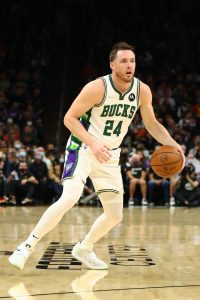 Due to that delay, Pat Connaughton signed a three-year free agent contract on November 23, 2020, which would normally make him ineligible to be extended until November 23, 2022. However, the NBA adjusted that two-year waiting period to better reflect certain stages of the offseason rather than adhering to specific dates on the calendar.
As a result, Connaughton was able to sign a new extension with the Bucks this year on July 18. Similarly, Lakers star LeBron James became extension-eligible on August 4 this year after signing his previous extension on December 3, 2020.
Going forward, the usual two- and three-year waiting periods will once again apply. For instance, after signing a four-year extension on July 6, 2022 that lengthened his contract to six total seasons, Devin Booker will become extension-eligible again on July 6, 2025. Connaughton, whose new three-year extension lengthened his contract to four total seasons, will be eligible to sign another extension on July 18, 2024.
How many years can a player receive on a veteran extension?
A veteran extension can be for up to five years, including the year(s) remaining on the previous contract. The current league year always counts as one of those five years, even if an extension is agreed to as late as June 30.
For instance, when John Konchar signed an extension earlier this summer with the Grizzlies, he had two years left on his current contract, which ran through 2023/24. He added three extra years via the extension, maxing out at five years overall.
If a player signs a “designated” veteran extension, he can receive up to six total years, as we cover in a separate glossary entry. Booker, Karl-Anthony Towns, and Nikola Jokic have all taken this route during the 2022 offseason after meeting the super-max criteria.
How much money can a player receive on a veteran extension?
The first-year salary in a veteran extension can be worth up to 120% of the salary in the final year of the player’s previous contract or 120% of the NBA’s estimated average salary, whichever is greater. Annual raises are limited to 8% of the first-year extension salary.
When Terry Rozier signed an extension with the Hornets a year ago, he added four extra years to the one year and $17,905,263 remaining on his previous deal. Because that $17.9MM cap hit greatly exceeds the league’s estimated average salary, Rozier was eligible to earn up to 120% of his final-year salary in the first year of his extension. As such, his new contract begins this season with a salary of $21,486,316, with 8% annual raises from there.
Dorian Finney-Smith, on the other hand, was only earning $4,000,000 when he signed an extension with the Mavericks in February. A 20% raise on that amount wouldn’t have been worth Finney-Smith’s while, but he was eligible to receive 120% of the NBA’s estimated average salary, which was $10,335,000 in 2021/22. As a result, Finney-Smith’s four-year extension with Dallas begins this season at $12,402,000.
In 2022/23, the NBA’s estimated average salary is $10,792,000, so an extension-eligible player earning less than that amount – such as Pelicans big man Larry Nance Jr. – would be able to sign an extension with a starting salary of up to $12,950,400.
A contract extension can’t exceed the maximum salary that a player is eligible to earn, so there are some instances in which a player won’t be able to get a full 20% raise on a new extension.
For instance, James’ new two-year extension is technically a maximum-salary contract, but his cap hit is this season is $44,474,988, which already exceeds the standard league-wide max. A full 120% raise on that figure would be $53,369,986, which will almost certainly exceed his maximum possible salary for 2023/24. The salary cap would have to increase to approximately $152.5MM for a raise of that size to be permitted, and currently the cap is only projected for $133MM.
Because a player’s own personal maximum salary on an extension is always at least 5% of his previous salary, James is assured of at least a 5% raise to $46,698,737 in the first year of his new deal. If the cap lands beyond its current $133MM projection, James’ raise could end up between 5% and 20%, since he’d be eligible for a starting salary worth 35% of next season’s cap.
Designated veteran extensions and renegotiated contracts have slightly different rules for salaries and raises than standard veteran extensions. You can read about those differences in our glossary entries on those subjects.
Can a player sign a veteran extension as part of a trade?
The NBA’s Collective Bargaining Agreement does allow for extend-and-trade transactions, but the rules governing them are more limiting than for standard veteran extensions.
A player eligible for an extension can sign one in conjunction with a trade, but he would be limited to three overall years and a starting salary worth 105% of the final-year salary on his previous deal. Subsequent annual raises are limited to 5% as well.
A player who receives an extension that exceeds those extend-and-trade limits becomes ineligible to be traded for six months. Conversely, a player who is involved in a trade becomes ineligible to sign an extension for six months if the extension would exceed the extend-and-trade limits.
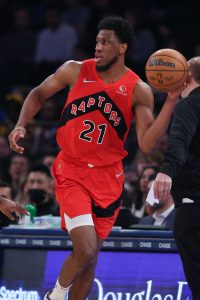 Thaddeus Young‘s two-year extension with the Raptors is an example of a recent extension that didn’t exceed the extend-and-trade limits — he took a pay cut from $14,190,000 to $8,000,000 and the deal lengthened his contract to three total years. Because that extension fell within the extend-and-trade parameters, Young could be dealt this month if Toronto wanted to do so.
Conversely, even though James’ new extension only covers three total years and will only start at 105% of his previous salary (assuming the current cap projection of $133MM is accurate), it exceeds the extend-and-trade limits by virtue of the 8% raise he’ll receive between the 2023/24 and ’24/25 seasons. As a result, he’s ineligible to be traded until February 18, which will almost certainly be after the 2023 trade deadline has passed.
An extension-eligible player can’t be extended-and-traded between the end of the season and June 30 if there’s a chance he could become a free agent that July. That rule applies to both veterans on expiring contracts and veterans with team or player options that have yet to be exercised.
For example, while Young is eligible to be traded now by the Raptors, he couldn’t have been dealt in conjunction with his extension in June.
What are the other rules related to veteran extensions?
There are many more minor rules and guidelines related to veteran extensions, including several involving bonuses and option years. A full breakdown can be found in Larry Coon’s CBA FAQ, but here are some of the notable ones most likely to come into play:
- A contract with an option can be extended if the player opts in or the team picks up the option.
- A contract with an option can also be extended if the option is declined, as long as the extension adds at least two new years to the deal and the first-year salary isn’t worth less than the option would have been. The only exception to this rule involves an early termination option — a contract with an ETO can’t be extended if the ETO is exercised, ending the contract early.
- A newly-signed extension can contain a player or team option, but not an early termination option.
- If a contract contains incentive bonuses, a veteran extension must contain the same bonuses. The bonus amounts can be increased or decreased by up to 8%, but they must still be part of the deal. An extension also can’t contain bonuses that weren’t part of the original contract.
- If a contract includes an unearned trade bonus, it doesn’t necessarily have to be applied to the extension. If the team and player elect not to carry over the trade bonus to the extension and the player is dealt before the extension takes effect, the application of the bonus would ignore the extension.
Note: This is a Hoops Rumors Glossary entry. Our glossary posts will explain specific rules relating to trades, free agency, or other aspects of the NBA’s Collective Bargaining Agreement. Larry Coon’s CBA FAQ was used in the creation of this post.
A previous version of this post was published in 2019.
Latest On Kyrie Irving, Lakers
Echoing an Adrian Wojnarowski report from earlier this week, Marc Stein confirms in his latest Substack article that the Lakers have assured LeBron James they’re willing to give up their 2027 and 2029 first-round picks in a trade that can help make the team a legitimate contender again.
Because they traded their 2024 first-round pick to New Orleans and gave the Pelicans the option to defer that pick to 2025, the Lakers are ineligible to trade a first-rounder earlier than 2027 due to the Stepien rule, which prohibits teams from leaving themselves without a first-round pick in consecutive future drafts.
However, L.A. could move its 2027 and 2029 picks without violating that rule, and Stein is the second reporter this week to suggest the club would be willing to surrender both those first-rounders in a trade for Nets guard Kyrie Irving. The seven-time All-Star is believed to be at or near the top of James’ wish list, with one report indicating that LeBron was “privately adamant” prior to signing his extension about wanting the Lakers to trade for his former teammate.
Crucially, Stein notes that it’s unclear whether or not the Lakers would insist on protecting those two first-round picks — that’s an important factor, since obviously a pair of lottery-protected first-rounders wouldn’t be nearly as valuable as two unprotected selections.
In any case, the Nets have thus far “steadfastly rejected” the concept of an Irving/Russell Westbrook swap that involves them acquire those two Lakers’ first-rounders, according to Stein, who says that Brooklyn apparently remains focused on acquiring win-now assets in any Kyrie trade.
While it’s possible that position eventually changes, especially if the Nets end up moving Kevin Durant, it appears for now that any trade sending Irving to L.A. would require a third team to take Westbrook and those draft picks and send win-now pieces to Brooklyn, Stein writes.
The Nets’ aversion to a Westbrook/Irving deal may also be linked to their desire to simply keep their current roster intact, ESPN’s Brian Windhorst suggested during an appearance on Get Up on Thursday (video link). Even though Kyrie seriously explored finding a new home before exercising his player option and Durant has demanded a trade, Brooklyn hasn’t shown any urgency to break up its core.
“I think Kyrie is invested in being a Brooklyn Net next year,” Windhorst said. “Obviously there was some turmoil with his contract extension not happening. He realizes his best path going forward to get the contract he wants in Brooklyn or elsewhere is to have a very good season. From what I can gather, it appears that he and the Nets are looking forward to meeting up in training camp.
“Now, whether Kevin Durant is there and his level of buy-in, that’s the big question,” Windhorst continued. “But right now, I think the Nets want to run this team back, and they’re hoping that Kevin Durant agrees. The way that they’re conducting trade talks and the prices that they are asking has teams out there thinking they don’t really want to trade Kevin Durant anyway, they want to bring this team back. We’ll see if Durant goes along with that, come training camp.”