
2018 Free Agent Stock Watch: Sacramento Kings
The Kings have known they’ll be mired in a years-long rebuild for a while now — and it’s not the fun kind of rebuild in which they can flaunt the potential of their youngsters while showing glimpses of hypothetical future greatness.
Unfortunately, the team sits tied for last in the Western Conference despite some forgettable campaigns from their rookies and sophomores, three of their regular starters coming in north of 30 years old and their most productive of the bunch being a 17-year veteran.
Don’t expect a major depth chart overhaul next summer when the team hits free agency. The club’s hands are somewhat tied in terms of roster flexibility, leaving the Kings little choice but to wait on the development of their in-house assets.
Vince Carter, SF, 41 (Down) – Signed to a one-year, $8MM deal in 2017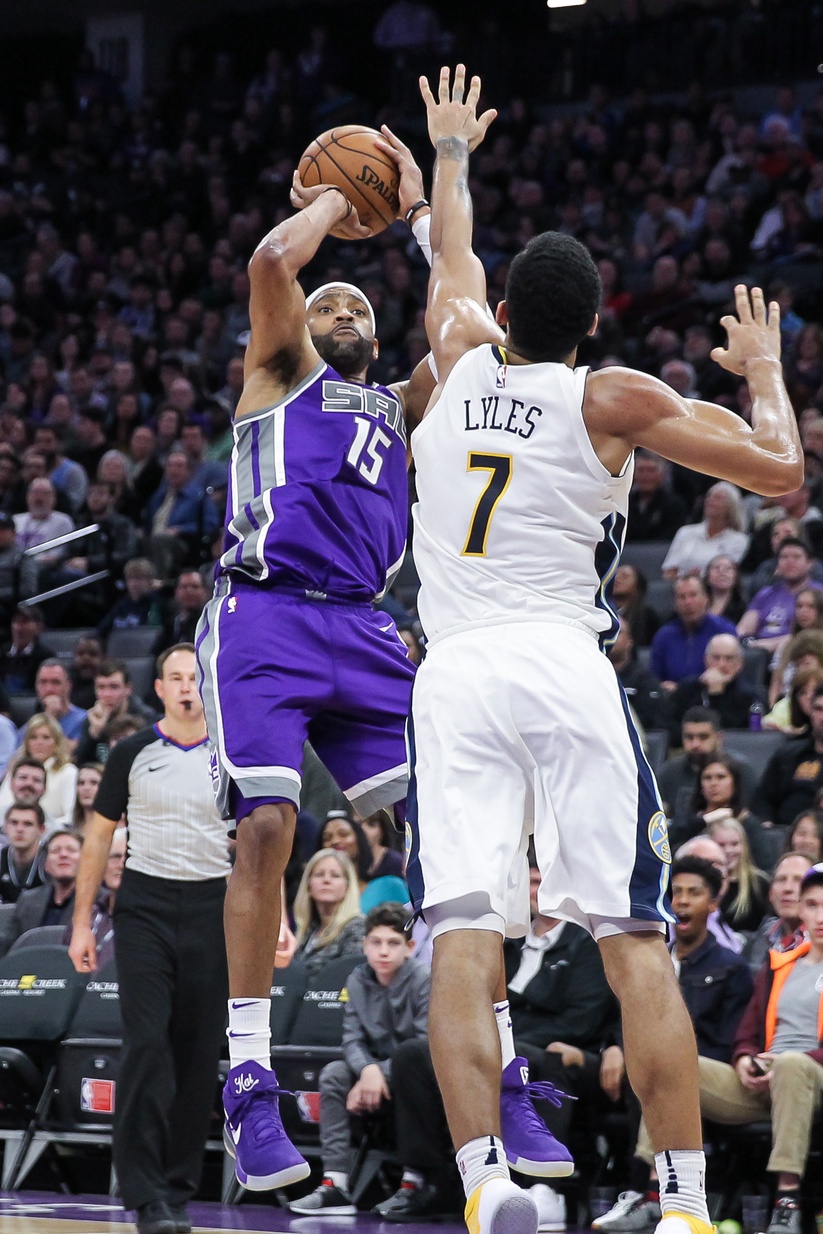
The Kings threw a pile of money at Carter last summer to clog their depth chart and offer the occasional nugget of sage advice to the youth around him. By all accounts, they’ve gotten just what anyone might have expected. While it’s admirable that the former All-Star is still capable of dropping 20-plus points and dragging his team to random unexpected victories, such performances are of little consequence to a franchise that should be focusing on getting more out of its prospects. Carter supposedly remains intent on playing in 2018/19, but it’s rather anticlimactic to picture his 21st season coming in Sacramento.
Kosta Koufos, C, 29 (Down) – Signed to a four-year, $33MM deal in 2015
Koufos, a moderately efficient career backup, finessed a substantial long-term contract out of the Kings back in 2015, but few players have seen the value of their skillsets deflate more than Koufos. Suddenly a nine-year veteran, Koufos would be wise to accept his player option for $8.4MM.
Garrett Temple, SG, 32 (Up) – Signed to a three-year, $24MM deal in 2016
Temple has carved out a role for himself as a versatile veteran swingman. This is the type of vet that the Kings should be committing to rather than paying top dollar for novelty greybeards. The market will be squeezed next summer, so expect Temple back on board for his $8MM player option. Still, if next offseason’s economy looks similar to last year’s, he could benefit from testing the waters.
Photo courtesy of USA Today Sports Images.
Community Shootaround: LaVar Ball
Adjusting to the NBA is a challenging process for any rookie. It has to be a lot more difficult when your father is in the habit of creating outrageous headlines.
That’s the experience for Lakers point guard Lonzo Ball, whose dad LaVar is a master at getting the family noticed in the media. The latest example was a tirade against L.A. coach Luke Walton, who has lost control of the team and no longer has the support of his players, at least according to LaVar Ball.
“You can see they’re not playing for Luke no more,” Ball said from Lithuania, where his other two sons are playing in a professional league. “Luke doesn’t have control of the team no more. They don’t want to play for him. … Nobody wants to play for him. I can see it. No high-fives when they come out of the game. People don’t know why they’re in the game. He’s too young. He’s too young. … He ain’t connecting with them anymore. You can look at every player, he’s not connecting with not one player.”
It was a distraction the Lakers didn’t need with the team mired in a long losing streak. It became the dominant topic of conversation in Los Angeles this weekend, with Walton, some of his players and opposing coaches all commenting on the situation. The Lakers’ lack of an immediate response also became a story when nobody in the front office came forward to defend Walton.
This isn’t the first time Ball has gone after Walton, and the Lakers thought it was enough of an issue that team president Magic Johnson and GM Rob Pelinka met with Ball in late November to tell him to ease up on the public comments. If that meeting had any effects on Ball, they clearly have worn off.
Our question for tonight is what should the Lakers do next? Is there a way they can keep LaVar Ball from attacking their coach or is this a risk they knew they were taking when they drafted Lonzo? Jump into our comments section and give us your response.
Hoops Rumors’ 2018 10-Day Contract Tracker
For the first two and a half months of the NBA season, the majority of the league’s teams maintained full 15-man rosters, with many of those clubs keeping at least one or two players on non-guaranteed deals. As of today, however, all of those non-guaranteed contracts became fully guaranteed. Many clubs cut ties with players before that happened, and there are now several teams with open roster spots.
On January 5, teams became eligible to fill those open roster spots by signing players to 10-day contracts, and the bulk of the signings that take place between now and April will be of the 10-day variety. Hoops Rumors has created a database that allows you to keep on top of those deals, tracking every 10-day signing all season long.
The 10-Day Contract Tracker includes information on all 10-day contracts signed from the 2006/07 season on, giving you a chance to identify trends regarding your favorite teams and players. The search filters in the database make it easy to sort by team, player and year. Just be sure to write a player’s last name first if searching in that field. You can even see whether a player and team signed a second 10-day contract, and if the short-term deals led to an agreement that covered the rest of the season.
For instance, if you want to see how many 10-day deals current Pelicans guard DeAndre Liggins has signed over the course of his career, you can find that information here. Similarly, if you want to see all the 10-day contracts that the Bucks – who opened a roster spot when they waived Liggins – have signed in recent years, you can do so here. You can also identify which 10-day deals are currently active, since those contracts are marked with an asterisk.
A link to our 10-Day Contract Tracker can be found at any time in the Tools menu at the top of the page, or in the right sidebar under “Hoops Rumors Features” on our desktop site. On our mobile site, you can find it on our “Features” page. We’ll be keeping it up to date for the rest of the season, so be sure to check back to keep tabs on the latest signings as they become official.
Recap Of Non-Guaranteed Contract Decisions
January 7 represented a key date for the NBA players who were still on non-guaranteed contracts for the 2017/18 season. While their salaries won’t technically become guaranteed until January 10, the players who stuck with their teams through Sunday are now assured of those guaranteed salaries. If released today, they wouldn’t clear waivers by the start of January 10, so they’ve survived the cut.
Tracking those salary guarantee decisions can be a little tricky, since teams intending to guarantee their non-guaranteed players’ salaries don’t actually need to take any action — it’s simply a matter of letting the deadline pass without waiving those players.
Based on reports from over the weekend and the latest updates from a pair of NBA transaction logs, it seems safe to assume that if we haven’t heard by now that a player was waived, he’s on track to earn a guaranteed salary. So we’ll use the space below to break down those decisions from around the league.
The following players will have their non-guaranteed 2017/18 salaries become fully guaranteed on Wednesday:
- Khem Birch (Magic): $815,615
- Isaiah Canaan (Suns): $1,069,308 salary ($997,547 cap hit)
- Tyler Cavanaugh (Hawks): $679,919
- Spencer Dinwiddie (Nets): $1,524,305
- Dorian Finney-Smith (Mavericks): $1,312,611
- Bryn Forbes (Spurs): $1,312,611
- Marcus Georges-Hunt (Timberwolves): $1,312,611
- Treveon Graham (Hornets): $1,312,611
- Jerami Grant (Thunder): $1,524,305
- Gerald Green (Rockets): $947,248 salary ($872,854 cap hit)
- Devin Harris (Mavericks): $4,402,546
- Richaun Holmes (Sixers): $1,471,382
- Jarrett Jack (Knicks): $2,328,652 salary ($1,471,382 cap hit)
- Sheldon Mac (Wizards): $1,312,611
- T.J. McConnell (Sixers): $1,471,382
- Alfonzo McKinnie (Raptors): $815,615
- Eric Moreland (Pistons): $1,739,333
- Raul Neto (Jazz): $1,471,382
- David Nwaba (Bulls): $1,312,611
- Isaiah Taylor (Hawks): $1,312,611
The following players were waived within the last few days before their salaries could become fully guaranteed:
- Andrew Bogut (Lakers)
- Joel Bolomboy (Bucks)
- Note: Bolomboy signed his non-guaranteed contract on Sunday before being waived.
- Bobby Brown (Rockets)
- DeAndre Liggins (Bucks)
- Damien Wilkins (Pacers)
Bogut, Liggins, and Wilkins remain on waivers, so their salaries could still become guaranteed if they’re claimed by a new team. That’s unlikely, however.
Salary information from Basketball Insiders was used in the creation of this post.
Weekly Mailbag: 1/1/18 – 1/7/18
We have an opportunity for you to hit us up with your questions in this, our weekly mailbag feature. Have a question regarding player movement, the salary cap or the NBA draft? Drop us a line at HoopsRumorsMailbag@Gmail.com.
Do you think the Wizards will go after Tyreke Evans before the trade deadline or will it be Jordan Clarkson and Julius Randle in a trade? — Gregory Younger
Bench strength is an annual issue in Washington, and obviously Randle and Clarkson would be two nice additions with bright futures. The problem is the Lakers only want expiring contracts in return to maximize their cap room for free agency. Clarkson is making more than $11.5MM this year and Randle is close to $4.15MM, leaving the Wizards unable to match salaries without sending back long-term contracts. Their most expensive expiring deals belong to Tim Frazier at $2MM and Mike Scott and Chris McCullough, each at $1,471,382. Evans is a much more realistic target at age 28 and with a $3.29MM contract. Memphis is going to want draft picks in return, so the Wizards will have to decide if Evans is worth parting with a future first-rounder.
What players could Detroit trade for that would best fit their needs, and what would they have to give up to get them? — Mark Holmes
The Pistons are in the market for help at forward, and the Bulls’ Nikola Mirotic could be an intriguing name to watch. Mirotic reportedly hasn’t changed his mind about wanting out of Chicago after being hospitalized in a pre-season skirmish with teammate Bobby Portis, and he has expressed a willingness to waive his no-trade clause if it would get him to a contender. Detroit could use another outside shooter, and Mirotic continues to sizzle from 3-point range, connecting at 47% through 17 games. Vince Ellis of the Detroit Free Press suggested last month that Brooklyn’s DeMarre Carroll could be a trade option, but a knee injury he suffered last night may affect his availability between now and the February 8 deadline.
Does Portland need to make a trade deadline move to create a stronger playoff team? — Baylor The Great, via Twitter
The Trail Blazers are among several Western Conference teams that could use another piece or two, and at 20-18 they’re far from a lock to make the postseason. Salary cap concerns will affect any moves as Portland still has one of the league’s top payrolls at more than $122MM. The only way for the Blazers to make a significant deal is to break up their backcourt of Damian Lillard and C.J. McCollum, who are both signed to hefty deals through 2020/21 or to give up center Jusuf Nurkic, who will be negotiating an extension this summer. The Blazers could also decide to become sellers to get their cap situation under control.
Community Shootaround: Andrew Bogut
The Andrew Bogut experiment in Los Angeles is over, as the Lakers waived him today to avoid having to fully guarantee his $2,328,652 contract. Bogut and his agent offered his services throughout the NBA last summer, attempting to show that he was fully recovered from a fractured left tibia. However, the response was lukewarm and he wound up signing a one-year, partially guaranteed deal with L.A. shortly before the start of training camp.
The 33-year-old proved to be an awkward fit for the Lakers and averaged just 1.5 points, 3.3 rebounds and 9.0 minutes of playing time in 21 games. He is expected to clear waivers Monday and hit the open market again, hoping to catch on with a contender for a playoff run.
The Cavaliers, who signed Bogut last March but lost him to the injury in his first game, reportedly aren’t interested in bringing him back. That raises the question of which contending teams might line up for his services.
The Celtics contacted Bogut in August and could be on the radar again, writes Nick Metallinos in an ESPN article, although fellow Australian center Aron Baynes already fills a similar role in Boston. Another possibility, Metallinos suggests, are the Bucks, who made Bogut the first player taken in the 2005 draft and who are expected to open a roster spot by waiving DeAndre Liggins. Milwaukee has been in need of help in the middle since moving Greg Monroe to Phoenix in the Eric Bledsoe trade, and Bogut would be an inexpensive addition. They also reportedly had contact with Bogut before he joined the Lakers.
Even though Bogut would have liked more playing time in Los Angeles, he was realistic about his situation and believes he benefited by showing the league he is fully recovered.
“The whole goal for me was just to come in relatively healthy from the broken leg, and just be ready to play,” Bogut said last month. “I knew there wasn’t going to be a whole lot of minutes [with the Lakers] because I was the 15th guy signed to the roster.”
We want your opinion on Bogut. Which team is the best fit for him, and do you believe he can still help a conteder? Jump into our comments section and leave your response.
Hoops Rumors Originals: 12/30/17 – 1/6/18
Every week, even during the holidays, we at Hoops Rumors strive to create interesting original content to complement our news feed. Below are our original segments and features from the last 7 days:
- Given the new year, Luke Adams detailed the important NBA dates and deadlines coming up in January, 2018.
- In two different Community Shootaround posts, we asked:
- Which team, the Celtics or the Sixers, would more greatly benefit from receipt of the Lakers‘ 2018 first round pick?
- How do you expect the Clippers so-far underwhelming 2017/18 season to play out?
- In a Weekly Mailbag segment, Arthur Hill answered questions involving the latest trade rumors surrounding the Bucks, the asking price for Bulls frontcourt players Nikola Mirotic and Robin Lopez, and LaVar Ball’s junior basketball league.
- Luke Adams revisited the Hoops Rumors Glossary to analyze 10-day contracts and the Ted Stepien Rule.
- We reminded our readers of the new Hoops Rumors feature, 2017/18 NBA Reverse Standings.
- Our Free Agent Stock Watch focused on the Charlotte Hornets.
- Chris Crouse offered fantasy hoops advice focusing on Marquese Chriss, James Harden, and even newly-signed Gerald Green, among others.
- We polled our readers, asking:
- Should the Hornets look to trade All-Star point guard Kemba Walker?
- Which team represents the biggest threat to the defending champion Warriors?
Fantasy Hoops: Chriss, Green, Capela, LaVine
Hope everyone is enjoying 2018 thus far. Check out some fantasy basketball notes to start your year off right:
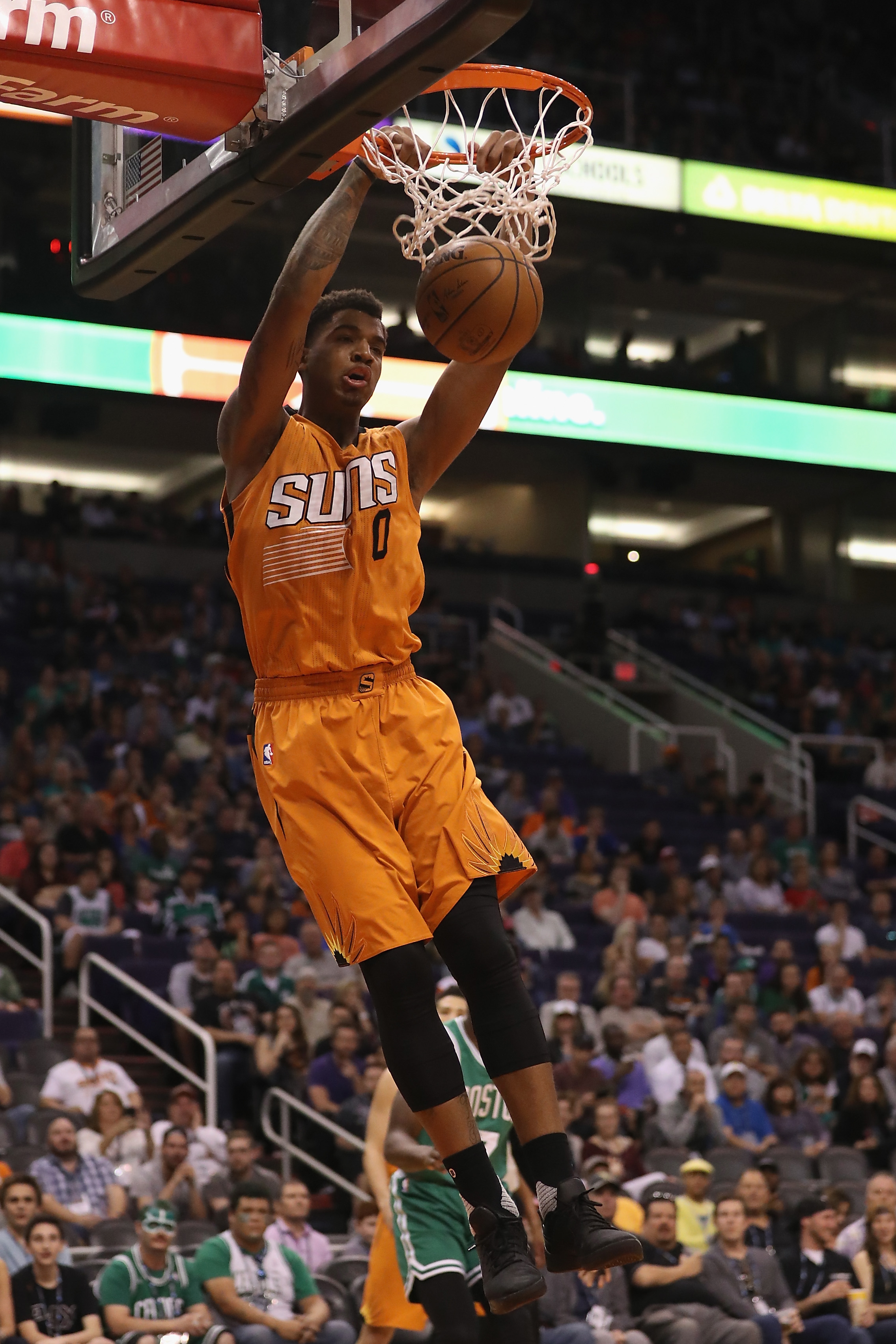
 Marquese Chriss has started to pick up steam. Over his last four games, he’s averaging 14.8 points, 7.5 rebounds, 1.8 steals and 1.5 blocks per game while hitting nearly three shots from behind the arc per contest and making nearly 56.8% of his shots from the field. He’s available in approximately 70% of ESPN leagues, but that figure should be much lower. Scoop him if he’s available in yours.
- James Harden, who will miss at least the next two weeks, led all players in points per game during the month of December with 33.6 per contest. While he’s out, take a look at newly signed Gerald Green. Over the past week, Green is averaging 21.0 points per game while nailing 21 of his 35 attempts from behind the arc. That kind of efficiency won’t continue, but the volume makes him a solid fill-in for those with an available bench spot.
- Another Rockets player to watch during Harden’s absence is Clint Capela. The big man is seeing a slight uptick in attempts (11.0 per game vs 8.9) since Harden hit the sidelines in addition to producing at his usual useful rates in the rebounds, blocks, and field goal percentage categories.
- Zach LaVine is nearing his debut for the Bulls. Check to see if he is available in your league, as he is in nearly 46% of ESPN leagues.
- Kristaps Porzingis had some interesting comments following a recent loss, telling ESPN’s Ian Begley that he was tired. It’s a situation worth monitoring as the Knicks could opt to hold the big man out more frequently in order to help keep him fresh.
Hoops Rumors Glossary: Ted Stepien Rule
While a rule like the Gilbert Arenas provision can flatter its namesake, the late Ted Stepien, former owner of the Cavaliers, may have preferred not to go down in history as the reference point for the Ted Stepien rule. Stepien owned the Cavs in the early 1980s, and made a number of trades that left the franchise without first-round picks for several years. As a result, the NBA eventually instituted a rule that prohibited teams from trading out of the first round for consecutive future seasons.
Because the Stepien rule applies only to future draft picks, teams are still permitted to trade their first-rounders every year if they so choose, but they can’t trade out of the first round for back-to-back future seasons. For instance, since the Rockets have traded their 2018 first-round pick to Atlanta, they aren’t allowed to trade their 2019 first-rounder. Following the 2018 draft though, the Rockets will regain the right to trade that 2019 first-round pick, since their ’18 first-rounder will no longer be considered a future pick.
The Stepien rule does allow a team to trade consecutive future first-round picks if the team has acquired a first-rounder from another team for either of those years. So if Houston were to trade for a new 2018 first-rounder, that would give the Rockets the flexibility to move their 2019 pick without having to wait until after the 2018 draft.
Teams are permitted to include protection on draft picks. This can create complications related to the Stepien rule, which prevents teams from trading a first-round pick if there’s any chance at all that it will leave a team without a first-rounder for two straight years. For example, the Raptors have traded a lottery-protected 2018 first-round pick to Brooklyn. That traded 2018 pick is protected through 2023, and as long as there’s still a chance it won’t convey immediately, the Raptors are prevented from unconditionally trading any of their next few first-round picks — their 2020 first-rounder is trade-eligible, but only conditionally.
[RELATED: Trade restrictions on future draft picks by team]
Teams will have to consider the Stepien rule over the next few weeks as they mull trading draft picks in deals for immediate help. Miami, for instance, is one of the teams most significantly impacted by the Stepien rule at the moment. As part of their Goran Dragic deal with the Suns, the Heat will send their 2018 and 2021 first-round picks to Phoenix, so the Stepien rule currently prevents them from also trading their first-rounders in 2019, 2020, or 2022 — moving any of those selections would leave the team without first-round picks in consecutive future seasons.
Here are a few more rules related to trading draft picks:
- For salary-matching purposes, a traded draft pick counts as $0 until the player signs a contract.
- The “Seven Year Rule” prohibits teams from trading draft picks more than seven years in advance. For instance, during the 2017/18 season, a 2024 draft pick could be traded, but a 2025 pick could not be dealt.
- A team can add protection to a pick it has acquired as long as there wasn’t already protection on the pick. For example, when the Celtics flipped the Nets’ 2018 first-round pick to the Cavaliers, Boston could have tried to include top-three protection on the pick.
Note: This is a Hoops Rumors Glossary entry. Our glossary posts will explain specific rules relating to trades, free agency, or other aspects of the NBA’s Collective Bargaining Agreement. Larry Coon’s Salary Cap FAQ was used in the creation of this post.
An earlier version of this post was published in 2012 by Luke Adams.
2018 Free Agent Stock Watch: Charlotte Hornets
The Hornets are committed to a core that hasn’t been able to get the franchise over the hump and likely won’t be able to do so as key components of the rotation age out of their primes.
Much of the organization’s most recent woes can be attributed to injuries and health-related struggles but week-by-week that plucky, purple-shirt-guy-inspired squad that pushed the Heat to seven games in the first-round of the 2016 postseason seems like a distant memory.
Making matters worse for Hornets fans is that there isn’t exactly help in sight. The club projects to break camp close to $20MM over the salary cap and the contracts set to come off their books don’t represent much relief.
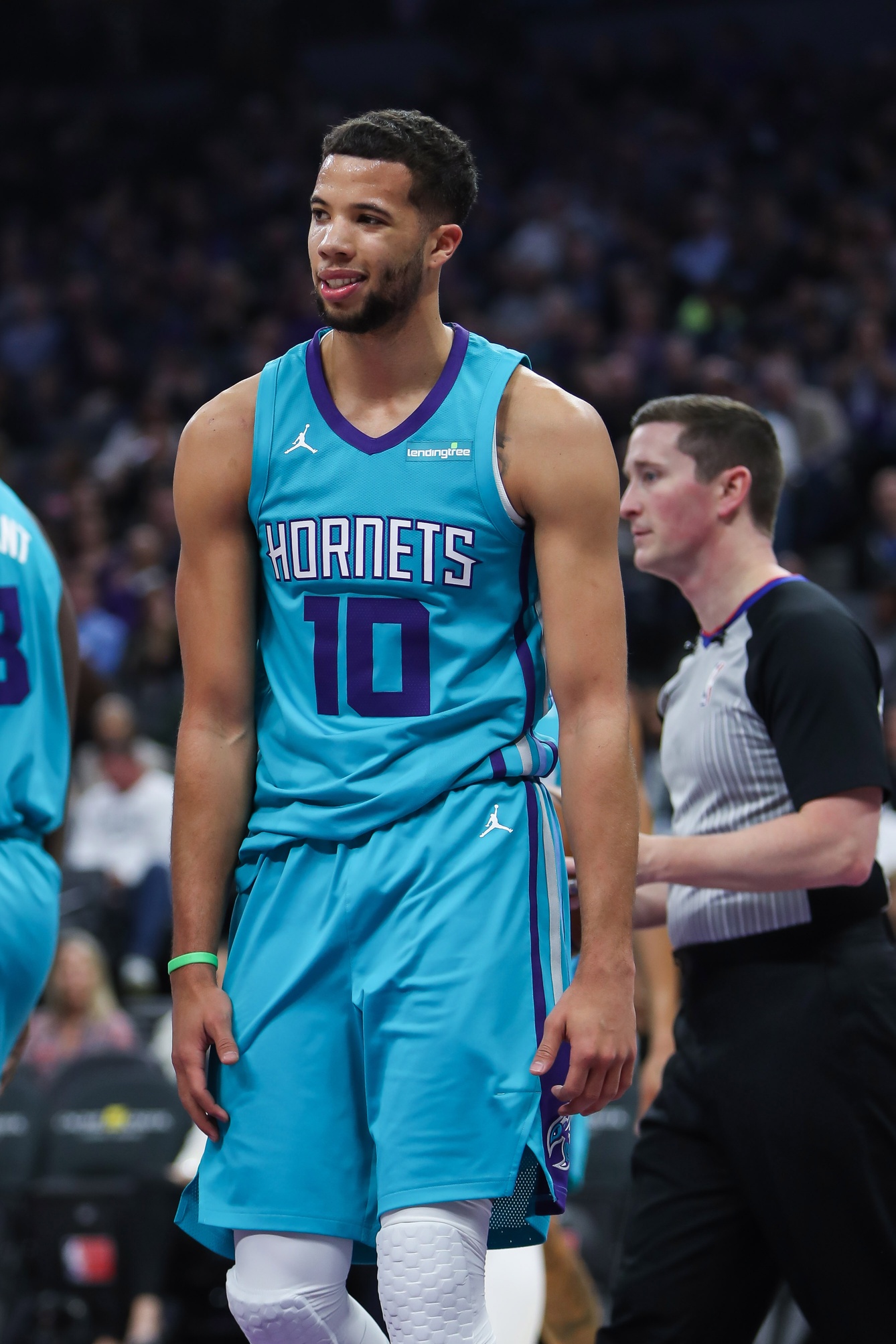 Michael Carter-Williams, PG, 26 (Down) – Signed to a one-year, $2.7MM deal in 2017
Desperate for a reliable backup point guard, the Hornets tried their luck on a former Rookie of the Year. Still just 26 years old, Carter-Williams was an intriguing option to be had for the minimum but bringing him back after a (thus far) career-worst shooting year is a different story. In theory Carter-Williams can fill the stat sheet if given an opportunity, but it’s hard to imagine he’s moved the needle enough at this point in the season to convince the front office to bring him back.
Johnny O’Bryant, PF, 24 (Up) – Signed to a two-year, $1.7MM deal in 2017
The Hornets, in need of healthy bodies to round out their rotation, have plugged O’Bryant into a bigger role of late and the forward has done a respectable job of producing in the time that he’s been given. If Charlotte continues to struggle in 2018, expect the organization to feature their younger players more often. That’s a perfect recipe for O’Bryant to make his case as one of the few in-house growth opportunities the franchise has available.
Photo courtesy of USA Today Sports Images.