
Hoops Rumors Originals: 12/9/17 – 12/16/17
Every week, we at Hoops Rumors strive to create interesting original content to complement our news feed. Below are our original segments and features from the last 7 days:
- Our Weekly Mailbag addressed questions on Luol Deng‘s future with the Lakers, the trade market for Lou Williams and the possibility of a Marc Gasol deal.
- In Community Shootarounds, we asked for your input on the All-NBA First Team, the Eastern and Western playoff races, whether the Thunder should trade Paul George, and Carmelo Anthony‘s return to New York.
- Luke Adams opened the Hoops Rumors Glossary to look at renegotiations and roster limits.
- We examined the teams that are carrying open roster spots.
- Our Free Agent Stock Watch focused on the Dallas Mavericks.
- We compiled a list of the 93 players who became trade eligible December 15.
- Chris Crouse offered fantasy hoops advice focusing on Nikola Mirotic, Marc Gasol and Rondae Hollis-Jefferson.
Fantasy Hoops: Mirotic, Gasol, Hollis-Jefferson
Nikola Mirotic has thrived since returning to action, posting 19.5 points and 5.8 rebounds per contest while shooting 57.1% from the field. Since Mirotic’s debut this season, a Bulls team that won three of its first 23 games has gone 4-0, and the franchise recognizes the power forward’s value.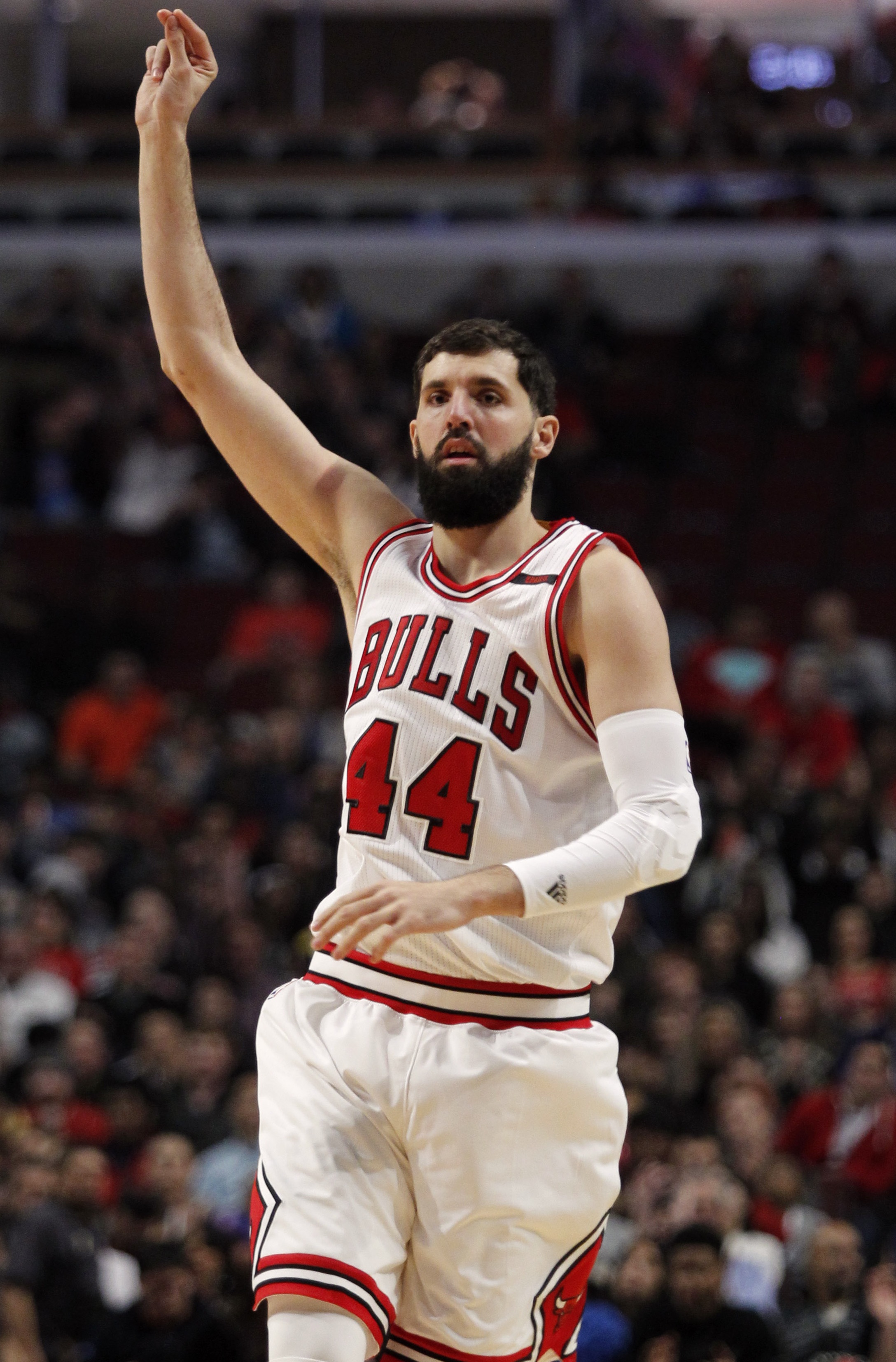
“He does a lot of little things that don’t show up in the box score,” coach Fred Hoiberg recently said. “He’s in the right spot defensively, he’s in a stance, he knows where to be, he understands the game plan.”
Chicago led our reverse standings for much of the first quarter of the season and though the Bulls insist they’re not tanking, Mirotic’s success may only provide them with further motivation to ship him elsewhere when he becomes trade-eligible on January 15. We heard earlier in the week that the Bulls were gauging Mirotic’s value on the market and his stock likely only improved after a 29 point, 11-for-18 performance against the Jazz on Wednesday night.
Don’t expect Mirotic to continue with this level of production. Two of his four games, including the Utah contest, came with rookie Lauri Markkanen sitting out, so Mirotic is unlikely to maintain his current 25.4 usage percentage. When Markanen returns, Mirotic should still remain involved in the offense, especially if the Bulls are showcasing him for a trade, as I alluded to in a previous edition of Fantasy Hoops. However, expect a cutback in production to occur. That, along with the chances of him being dealt elsewhere, makes Mirotic a sell-high candidate despite that fact that many fantasy players likely just picked him up.
The list of players I would target include Bobby Portis, Brook Lopez, Darren Collison, Al-Farouq Aminu and Spencer Dinwiddie. These are all players I have in the tier above Mirotic, but they could be undervalued in your leagues for various reasons.
Marginal moves can sometimes be key to turning teams around — just ask former Sixers GM Sam Hinkie (who should be an Executive of the Year candidate) or current Nets GM Sean Marks, both of whom have done a great job finding value in the margins.
If your season isn’t going as planned, identifying players to buy low and sell high on could be your way to turn it around. And for those who just enjoyed Mirotic’s great week of play, another opportunity awaits.
Here’s more notes and analysis from around the league:
- The Hawks have been one of the best match-ups for opposing centers, allowing the most rebounds and third-highest field goal percentage to opposing fives over their last 10 contests. Target Marc Gasol, despite the high sticker price, in daily contests tonight.
- The Heat will take on the Hawks on Monday, and center Bam Adebayo could be a player to target for that contest. Adebayo has had mixed results as a fill-in for Whiteside, but if the $98MM man doesn’t return to the over the weekend, Adebayo becomes an intriguing, super-cheap option to consider in daily.
- Rondae Hollis-Jefferson has seen an increase in usage since the Nets shipped out Trevor Booker. Having attempted 10.2 shots per game before the Jahlil Okafor trade, RHJ has attempted 12.5 since then. He may lose some touches once Okafor debuts, but the combo forward contributes in enough categories to remain a fantasy asset.
- Cavaliers point guard Jose Calderon deserves some attention after scoring a season-high 17 points against the Lakers on Thursday. That performance followed up a 14-point, four-assist showing against the Hawks, in which he hit four shots from behind the arc and added a steal. He’s far from a must-add, but Calderon could be useful as a spot starter in season-long leagues and he’s a nice low-price option in daily, especially on Saturday against a Jazz team that has allowed opposing point guards to shoot 46.0% from the field (23rd in the league) over its last 10 games.
Fantasy questions? Take to the comment section below or tweet me at @CW_Crouse.
Statistics are current through Friday morning. Photo courtesy of USA Today Sports Images.
Hoops Rumors Glossary: NBA Roster Limits
The rules governing the number of players an NBA team can carry on its roster vary depending on the time of year. During the regular season, teams aren’t allowed to carry more than 15 players on their rosters, except in rare instances. Generally, when a club with 15 players on its roster acquires a new player, it must waive someone to clear a spot. In the offseason though, teams are permitted to carry up to 20 players on their rosters.
The NBA’s new Collective Bargaining Agreement has complicated roster counts to some extent by introducing two-way contracts, which allow each team to carry two extra players. Someone on a two-way deal is essentially a G League player, but can spend up to 45 teams with his NBA team, and can’t be poached by a rival NBA club, as we explain in our FAQ.
During the regular season, two-way players don’t count toward the 15-man limit, meaning teams can essentially have 17 players under contract. However, two-way players do count toward the 20-man limit in the offseason. If a club is carrying 20 players on standard NBA contracts in August, it can’t sign a player to a two-way deal without waiving someone.
[RELATED: 2017/18 NBA Roster Counts]
A team ravaged by injuries can sometimes get an extra spot on its regular-season roster via a hardship exception. The NBA can grant this exception when a team has at least four players who have missed three consecutive games and will continue to miss time. Just this week, the Suns were granted an injury exception because Brandon Knight, Alan Williams, Davon Reed, and Devin Booker are all sidelined. Phoenix signed Isaiah Canaan, and now temporarily has a 16-man roster. When one of those players – most likely Booker – is ready to return, the Suns will have to get back to the 15-man limit by waiving Canaan or another player.
A club is also permitted to add a 16th man to its regular season roster if it has a player on the suspended list. A player who is suspended by his team for four or more games may be placed on the suspended list following the third game of his ban, while a player suspended by the NBA for six or more games can be placed on the suspended list following the fifth game of his ban. Teams can’t make use of the suspended list for shorter suspensions.
For instance, Knicks center Joakim Noah received a 20-game suspension from the NBA back in March. He served eight games last season, meaning New York was able to place him on the suspended list to open the 2017/18 campaign. That allowed the Knicks to carry a 16th player for their first 12 games of the season before Noah returned, at which point the team waived Mindaugas Kuzminskas to get back down to 15 players.
The fewest number of players an NBA team can have on its roster during the regular season is 14, not counting two-way players. Still, a team can dip to 13 or even 12 for a limited time, under special circumstances — in those instances, the team must get back up to 14 players within two weeks.
Note: This is a Hoops Rumors Glossary entry. Our glossary posts will explain specific rules relating to trades, free agency, or other aspects of the NBA’s Collective Bargaining Agreement. Larry Coon’s Salary Cap FAQ was used in the creation of this post.
Earlier versions of this post were published in 2012 and 2013 by Luke Adams.
93 NBA Players Become Trade-Eligible
It’s December 15, which means today’s the day that most of the players who signed new contracts this past offseason become trade-eligible for the first time. In total, 93 players will have those trade restrictions lifted today.
The NBA’s Collective Bargaining Agreement states that a free agent who signs with an NBA team can’t be traded for three months or until December 15, whichever is later. So, players who signed new contracts after September 15 aren’t eligible to be dealt yet. Additionally, there are several players who met a specific set of criteria when they signed their new deals and can’t be traded until January 15.
Besides those players though, nearly everyone in the NBA is now trade-eligible, which means that teams eager to talk trades can begin doing so in less hypothetical terms — there aren’t many roadblocks left in their way. Of course, most deals still won’t be completed until closer to the February 8 deadline, but today represents the unofficial start of NBA trade season for 2017/18.
[RELATED: Five notable players who become trade-eligible in December]
The full list of players who are becoming trade-eligible today can be found below. Players who have the ability to veto trades in 2017/18 are marked with an asterisk.
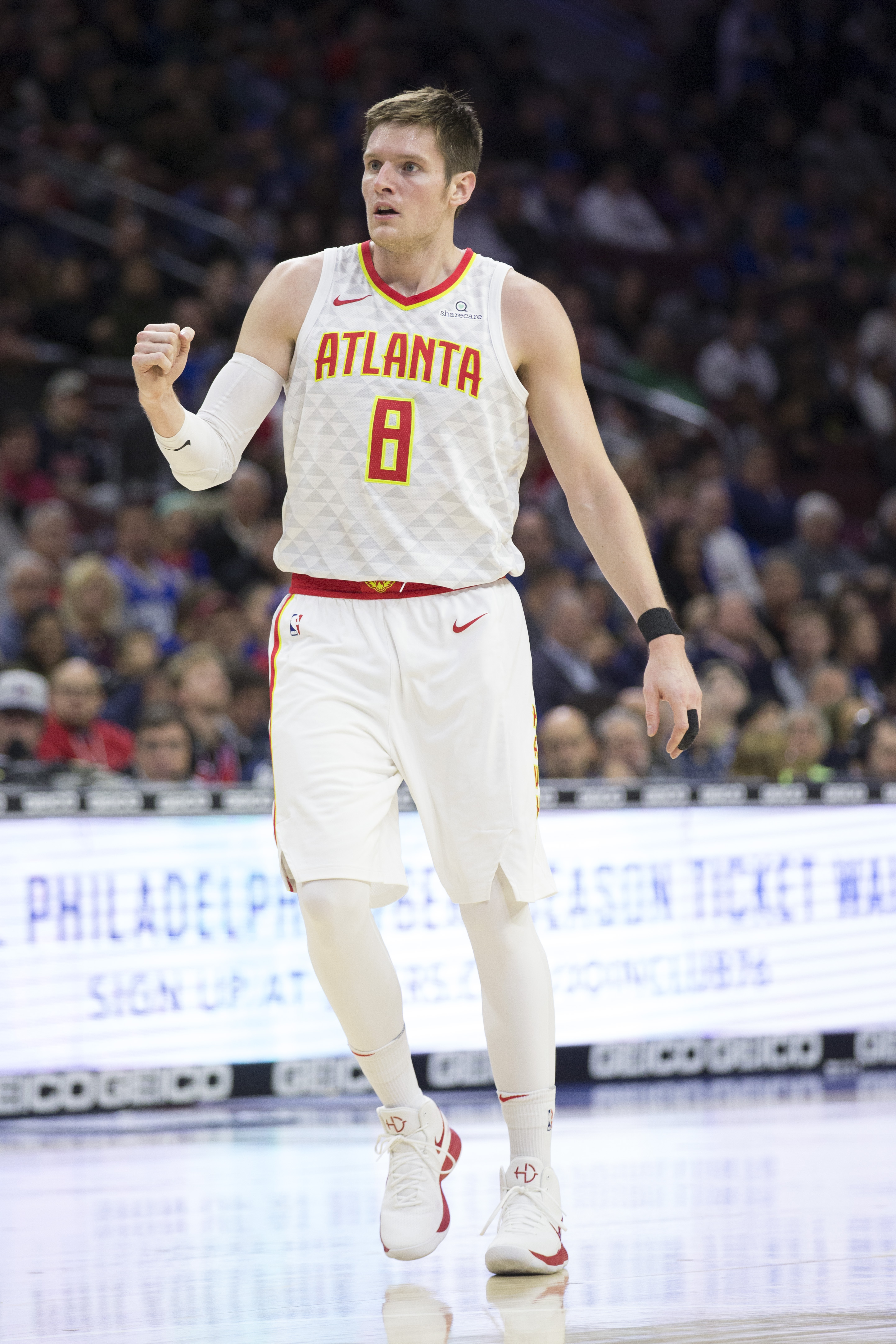
Atlanta Hawks
Boston Celtics
Brooklyn Nets
Charlotte Hornets
Chicago Bulls
Cleveland Cavaliers
2018 Free Agent Stock Watch: Dallas Mavericks
The Mavericks are in a curious position as an NBA franchise, suspended in a unique limbo between rebuilding and (sorta) contending. Thank Dirk Nowitzki for most of it, as team owner Mark Cuban seems to have insisted that the Mavs field a semi-competent roster in the future Hall of Famer’s final years.
While the club has seemingly acknowledged the writing on the wall and started to amass long-term building blocks – most recently, ninth overall pick Dennis Smith Jr. – it’s unlikely that the Mavs will fully give into an outright rebuild so long as Nowitzki is on board for 2018/19 (which, for reasons discussed below, we’re going to assume to be the case).
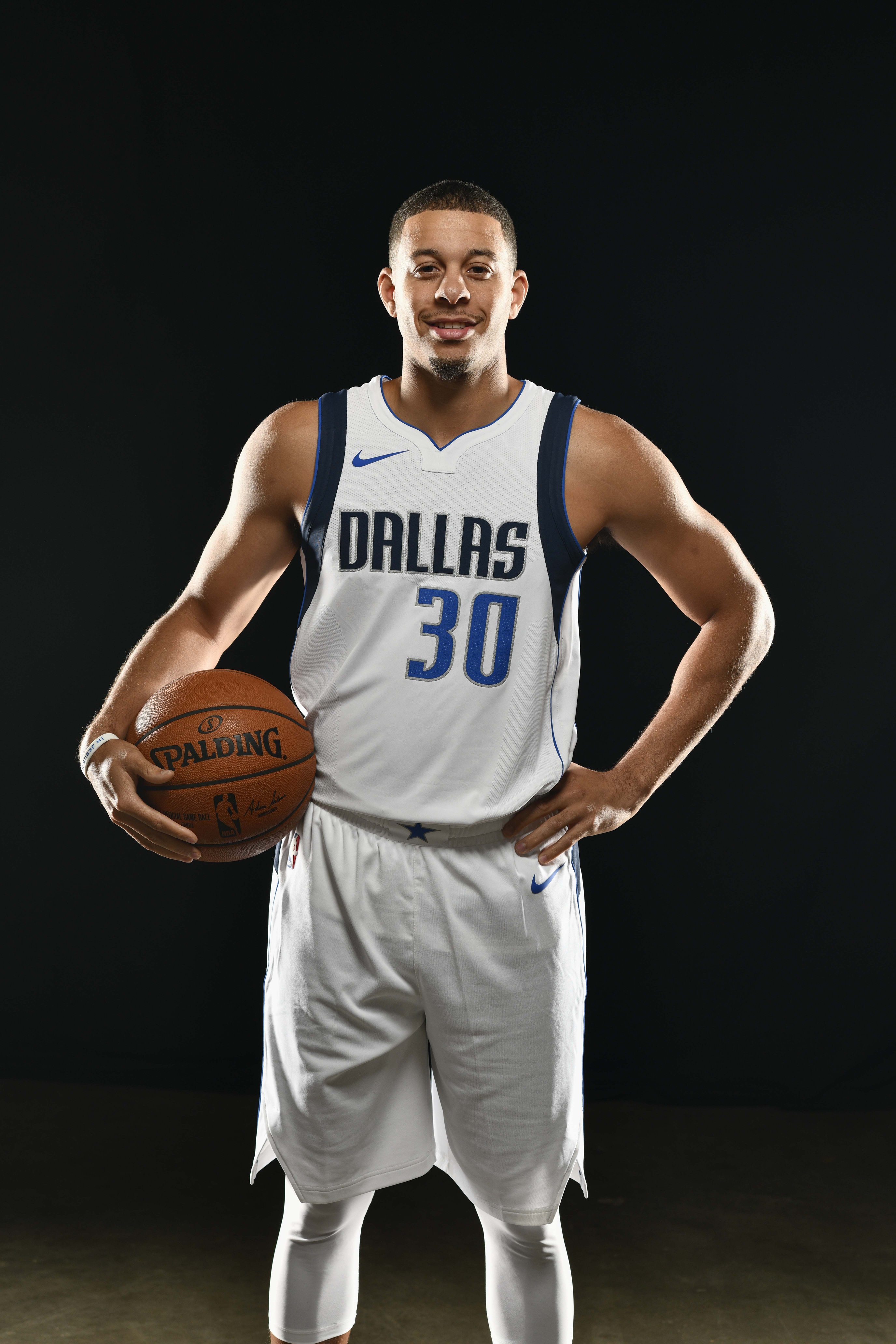 Seth Curry, PG, 27 (Down) – Signed to a two-year, $6MM deal in 2016
Curry has yet to see the court this season on account of a leg injury that may now require surgery. Even at full health, however, it’s not likely that Curry would have siphoned minutes away from either lottery pick Dennis Smith Jr. or several other niche players in Dallas’ backcourt rotation, a reality that casts doubt on his future with the franchise.
Devin Harris, SG, 35 (Down) – Signed to a four-year, $17MM deal in 2014
While Harris has produced admirably off the bench for the Mavs, it doesn’t make sense for a team attempting to usher in a new era to retain a 35-year-old reserve in an already crowded backcourt. Harris could be a sneaky value add for a contender late in the free agency process next summer.
Yogi Ferrell, PG, 25 (Up) – Signed to a two-year, $2MM deal in 2017
Ferrell carved out a role for himself as a rotation piece on the Mavs last season but he probably won’t garner much interest as a restricted free agent next summer given that his ceiling seems somewhat capped. Still, he could provide solid long-term value in Dallas if the team does decide to part ways with Curry and/or Harris.
Wesley Matthews, SF, 31 (Down) – Signed to a four-year, $70MM deal in 2015
The Mavs poached Matthews from an elite Trail Blazers squad hopeful that the swingman’s two-way game would help keep their aging core relevant in the West. Through three seasons, Matthews has posted a relatively uninspiring 12.9 points per game but will almost certainly return to Dallas considering how unlikely it would be for him to exceed his $19MM 2018/19 player option on the open market.
Josh McRoberts, PF, 31 (Down) – Signed to a four-year, $23MM deal in 2014
The Mavs absorbed the final year of McRoberts’ contract over the summer, yielding a future second-round pick from the Heat in the process. Considering that the 30-year-old has been sidelined with a knee injury since joining the organization, he’ll be hard-pressed to earn a significant contract after this season. McRoberts may be able to fill a rotation spot somewhere – maybe even in Dallas – but he’ll presumably have to do so on a minimum salary.
Salah Mejri, C, 32 (Down) – Signed to a three-year, $3MM deal in 2015
While Mejri has played a modest role for the Mavs in each of the past three seasons, he won’t command much on the open market as a 32-year-old free agent with career averages south of five points per game.
Nerlens Noel, C, 24 (Up) – Signed to a one-year, $4MM deal in 2017
It’s been less than a year since the Mavs plucked a disgruntled Noel away from the Sixers, but any notion that the team was eager to include the 23-year-old in their long-term plans has quickly faded. It’s hard to picture Noel commanding the big money he supposedly aspired to land last summer but even harder to picture him back in Dallas next season after how head coach Rick Carlisle has handled his minutes so far this season. Realistically the 2016 lottery pick’s value falls much higher than his $4MM qualifying offer and, once the free agency dominoes start falling next summer, he should find a team happy to throw him a more significant long-term offer.
Dirk Nowitzki, PF, 40 (Down) – Signed to a two-year, $10MM deal in 2017.
Nowitzki has said that his decision (yes, his decision, even though it’s formally and contractually the team’s) will be based on how he feels over the course of this season. For what it’s worth, Cuban hopes to see him return and thinks there’s good chance that he does so in order to break the record for most seasons with one franchise.
Photo courtesy of USA Today Sports Images.
Community Shootaround: Trading Paul George
What do you do when your “super team” turns out to be less than super?
That’s the question in Oklahoma City, where the future of Paul George has suddenly become one of the hottest topics in the NBA. Many expected the Thunder to challenge for Western supremacy after dealing for George and Carmelo Anthony over the offseason, but OKC has a losing record at 13-14 a third of the way through the season.
The Thunder knew George wasn’t guaranteed to be a long-term investment when they acquired him from the Pacers. He’s almost certain to opt out of a $20.7MM salary for next season and become an unrestricted free agent. His desire to join his hometown Lakers is well known and was the main reason Indiana chose to part with him.
If the Thunder are somehow able to re-sign George, finances will become a major issue for the team. Russell Westbrook‘s Designated Veteran Extension kicks in next season, boosting his salary to $35.35MM. Financial realities will likely force Anthony to bypass his early termination option and return for another year at nearly $28MM. Add in more than $24MM for Steven Adams, and those four contracts will put the Thunder well over next season’s projected cap of $101MM. Even if George were to opt in, OKC would be far into luxury tax territory with a potential salary topping $137.5MM.
Mitch Lawrence of Forbes believes a deal involving George may be coming before the February 8 trade deadline. He states that George, Westbrook and Anthony are all used to being used in isolation and haven’t been able to develop chemistry as a unit. The problem is that George’s trade value might be lower now than it was during the summer. Sending him to the Lakers may seem like a solution, but an unidentified Eastern Conference GM says L.A. wouldn’t be willing to part with two young players, and the rest of the league views George as a “rental.”
Taking the opposite position are Sam Amick and Jeff Zillgitt of USA Today, who don’t expect the Thunder to trade George or fire coach Billy Donovan. They report that the “internal dynamic” among the three stars remains strong and there is still hope for a turnaround.
We want to know what you think. Should the Thunder try to move George now so they don’t lose him with no return, or should they wait and try to work out their salary issues next summer? Please leave your thoughts in the comments section below.
NBA Teams With Open Roster Spots
Nearly one hundred players who signed new contracts this past offseason will become trade-eligible on Friday, and while that doesn’t mean we’ll immediately see NBA teams make a flurry of trades, it does mean that clubs figure to start looking a little more seriously at making moves.
Up until this point in the 2017/18 season, roster moves have been few and far between. Outside of a pair of trades involved disgruntled players (Eric Bledsoe and Jahlil Okafor), there have only been a handful of signings and cuts, as teams have been mostly content to assess their rosters to determine what they have.
With the regular season’s two-month mark approaching, however, there will likely be a few more transactions completed in the coming weeks — and especially in the new year. In addition to having more of their players become trade-eligible, teams will also be able to start signing players to 10-day contracts early in January. Those 10-day deals are useful tools for teams that want to take a look at players without committing a roster spot and a salary to them for the entire season.
With roster activity expected to pick up in the near future, it’s worth taking a look at which teams have the flexibility to sign a player or to take on an extra player in a two-for-one trade without waiving anyone.
With the help of our roster counts page, here are the teams that currently have an opening on their respective 15-man NBA rosters:
- Atlanta Hawks
- Boston Celtics
- Charlotte Hornets
- Detroit Pistons
- Houston Rockets
- Indiana Pacers
- Los Angeles Clippers
- Minnesota Timberwolves
- Note: The Timberwolves are also the only team with an open two-way contract slot.
- Oklahoma City Thunder
- Philadelphia 76ers
- Portland Trail Blazers
- Toronto Raptors
- Washington Wizards
While all of the teams listed above have a single open roster spot, some of those clubs have the flexibility to easily create another opening without waiving a player on a guaranteed contract. For instance, one of the Raptors’ 14 players on NBA contracts is little-used rookie forward Alfonzo McKinnie, who has only played 25 minutes for the team all season. McKinnie’s salary is non-guaranteed, so if Toronto wanted to create an extra roster spot, the team could waive McKinnie without taking on much dead money.
Along those lines, the following teams currently have full 15-man rosters, but are carrying at least one player on a non-guaranteed salary:
- Brooklyn Nets (Spencer Dinwiddie)
- Chicago Bulls (Kay Felder, David Nwaba)
- Dallas Mavericks (Dorian Finney-Smith, Devin Harris, Jeff Withey)
- Los Angeles Lakers (Andrew Bogut)
- Milwaukee Bucks (DeAndre Liggins)
- New York Knicks (Jarrett Jack)
- Orlando Magic (Khem Birch)
- San Antonio Spurs (Bryn Forbes)
- Utah Jazz (Raul Neto)
Hoops Rumors Glossary: Renegotiations
Fans often wonder if NBA Team X can renegotiate its contract with Player Y, as is common practice in the National Football League. The answer is almost always no, and it’s a firm no if the follow-up question is whether the sides can renegotiate the value of the contract downward. Unlike NFL teams, an NBA club can’t create extra cap flexibility by renegotiating a contract to push present-day cap hits into future years.
However, renegotiations are allowed to make an NBA contract more lucrative, and they can happen as long as a specific set of circumstances are in place, as the Sixers showed last month. Philadelphia renegotiated its contract with Robert Covington as part of a long-term extension agreement. The move gave Covington a huge raise for 2017/18, increasing his current-year salary from just $1,577,230 to $16,698,103.
Only contracts that cover four or more seasons can be renegotiated, but that rule doesn’t apply to rookie scale deals — even though they run for four years, they can’t be renegotiated. Renegotiations can only occur after the third anniversary of a contract signing, an extension, or a previous renegotiation (assuming the previous renegotiation lifted the salary in any season by 5% or more). That’s why Covington’s new deal was agreed to on November 15, as he initially signed with the Sixers on November 15, 2014.
Perhaps most importantly, teams can’t renegotiate any contracts if they’re over the cap, and they can only increase the salary in the current season by the amount of cap room that they have. In Covington’s case, the Sixers were under the cap by $15,120,873, and put that entire amount toward the forward’s renegotiation.
Another set of rules restricts just how much can change in a renegotiation. The raises for any seasons that follow the first renegotiated season in a contract are limited to 8%. That’s also true of salary decreases, though if a renegotiation happens at the same time as an extension, as was the case with Covington, the player’s salary can drop by as much as 40% from the last season of the existing contract to the first season of the extension.
The 76ers took advantage of that rule with Covington, who will see his salary decrease by over 37% in 2018/19 – from $16,698,103 to $10,464,092 – before he begins to receive 8% annual raises in 2019/20. Structuring the deal in that manner will allow Philadelphia to preserve as much cap room as possible during the summer of 2018.
Here are a few other rules related to contract renegotiations:
- Teams can’t renegotiate contracts between March 1 and June 30, so the last day of February is always the deadline to complete renegotiations in a given league year.
- Renegotiations can’t occur as part of a trade, and if a player waives a portion of his trade kicker to facilitate a trade, he’s ineligible to renegotiate his contract for the next six months.
- In order for a signing bonus to be included in a renegotiation, the contract must be extended as well.
- Two-way contracts can’t be renegotiated.
Renegotiating a contract to include a significant raise for the current season, like the one Covington received, can be a clever way of incentivizing a long-term extension for a player who would otherwise reach free agency. However, an extensive set of rules limits the appeal of that sort of deal, and teams generally require substantial cap room to pull it off, so contract renegotiations are rare.
Note: This is a Hoops Rumors Glossary entry. Our glossary posts will explain specific rules relating to trades, free agency, or other aspects of the NBA’s Collective Bargaining Agreement. Larry Coon’s Salary Cap FAQ was used in the creation of this post.
An earlier version of this post was published in 2015 by Chuck Myron.
Community Shootaround: Western Playoff Race
As is the case over in the Eastern Conference, the teams at the top of the Western Conference standings as the 2017/18 season nears its two-month mark are unsurprising. While it’s notable that the Rockets (21-4), currently riding a 10-game winning streak, have held off the Warriors (22-6) for the No. 1 spot so far, we expected those two clubs to hold top seeds, along with the Spurs, who have improbably gone 19-8 without Kawhi Leonard.
After the top three though, things get a little messier. The Timberwolves (16-11) and Nuggets (14-12) were popular picks to make the leap into the top eight this season, and so far they’ve delivered on that promise, but neither club has been dominant. They’re followed by a pair of .500 teams led by a star backcourt and frontcourt duo respectively, in the Trail Blazers (13-13) and Pelicans (14-14).
For all the talk coming into this season of the Western Conference being more competitive than ever, the eighth seed is held by a sub-.500 club, with the Jazz (13-14) hanging on for now. It seems like just a matter of time until the Thunder (12-14) figure things out and make their way into the playoff picture, but we’ve been expecting that for weeks and it still hasn’t happened.
Further down the standings, teams like the Mavericks, Kings, and Suns don’t appear to be postseason threats, as expected. But it’s a little surprising to see the Grizzlies (8-19) in the bottom four along with them. The two Los Angeles teams round out the conference, with identical 10-15 records — both clubs remain within striking distance of a playoff spot, but the Clippers will need to get healthy and the Lakers will need more consistent production from their young players.
We’ve still got a lot of basketball to play before playoff seeds are determined, but based on what you’ve seen so far this season, which eight teams do you expect to make the postseason in the West? Can middling teams like the Blazers, Pelicans, and Jazz hold off current lottery teams? Will the Thunder displace one of them? Is there another dark horse contender for a postseason berth in the West?
Jump into the comment section below to share your thoughts on the race for the playoffs in the Western Conference!
Community Shootaround: Eastern Playoff Race
A shaky start to the season by the Cavaliers and a season-ending injury to Gordon Hayward on opening night created some uncertainty back in October about the Eastern Conference playoff picture this season. However, as we near the two-month mark of the 2017/18 campaign, the top of the standings in the East look like what we’d expect — the 23-5 Celtics lead the way, followed by the Raptors (17-7) and Cavs (19-8).
After those top three teams, there are a couple more familiar contenders. The Bucks (15-10) took a roundabout route to fourth place in the East, starting off slow and then catching fire after acquiring Eric Bledsoe. As for the Wizards, they’ve been a little underwhelming, with their 14-12 record tying them for sixth in the conference. But once John Wall gets fully healthy, it wouldn’t be a surprise to see Washington make a strong second-half run.
Outside of those five teams, the Eastern Conference playoff race is a bit less predictable. The Pacers, who were expected to be a lottery team, are currently riding a four-game winning streak to a 16-11 overall record, good for fifth in the conference. The Pistons (14-12) and the Knicks (13-13) round out the current playoff picture in the East, though neither team has played its best ball lately — Detroit, in particular, has struggled, having lost its last six games.
The Bulls and Hawks are out of the playoff race entirely, as they battle for the best odds at 2018’s first overall pick. The Hornets (9-16), Magic (11-17), and Nets (10-15) are probably long-shots for the postseason too, though they could hang around within striking distance of that No. 8 seed. The current lottery teams that represent the greatest playoff threats are the Sixers (13-13) and Heat (12-13), who have been inconsistent, but have real upside.
We’ve still got a lot of basketball to play before playoff seeds are determined, but based on what you’ve seen so far this season, which eight teams do you expect to make the postseason in the East? Are the Pacers for real? Can the Pistons and/or Knicks hang on to a top-eight seed? Will the Sixers and/or Heat crack the top eight, or will another lottery team make a run at a playoff spot? And when it comes to seeding, will the Celtics hang onto the No. 1 spot?
Jump into the comment section below to weigh in on the Eastern Conference’s race for the playoffs and let us know what you think!