
Offseason In Review: Atlanta Hawks
Over the next several weeks, Hoops Rumors is breaking down the 2016 offseason for all 30 NBA teams, revisiting the summer’s free agent signings, trades, draft picks, departures, and more. We’ll evaluate each team’s moves from the last several months and look ahead to what the 2016/17 season holds for all 30 franchises. Today, we’re focusing on the Atlanta Hawks.
Free agent signings:
- Dwight Howard: Three years, $70.5MM.
- Kent Bazemore: Four years, $70MM. Fourth year player option.
- Malcolm Delaney: Two years, $5MM.
- Kris Humphries: One year, $4MM.
- Jarrett Jack: One year, minimum salary. Waived.
Camp invitees:
- Will Bynum: One year, minimum salary (summer contract). Waived.
- Matt Costello: Two years, minimum salary ($50K guaranteed). Waived.
- Ryan Kelly: One year, minimum salary (summer contract). Waived.
- Josh Magette: One year, minimum salary (summer contract). Waived.
- Richard Solomon: One year, minimum salary (summer contract). Waived.
Contract extensions:
- Dennis Schroder: Four years, $62MM. Rookie scale extension. Goes into effect in 2017/18. Includes $2MM annually in unlikely incentives for a max value of $70MM.
Trades:
- Acquired cash ($2.47MM) from the Cavaliers in exchange for the draft rights to Kay Felder (No. 54 pick).
- Acquired the draft rights to Taurean Prince (No. 12 pick) from the Jazz in a three-way trade in exchange for Jeff Teague (to Pacers).
Draft picks:
- 1-12: Taurean Prince. Signed to rookie contract.
- 1-21: DeAndre’ Bembry. Signed to rookie contract.
- 2-44: Isaia Cordinier. Will play overseas.
Departing players:
Other offseason news:
- Attempted to re-sign Al Horford in free agency. Tried to get in on Kevin Durant sweepstakes.
- Kyle Korver and Tiago Splitter eligible for veteran contract extensions. Tim Hardaway Jr. eligible for rookie scale extension until October 31.
- Promoted Darvin Ham to replace Kenny Atkinson as lead assistant coach.
Check out our salary cap snapshot for the Atlanta Hawks right here.
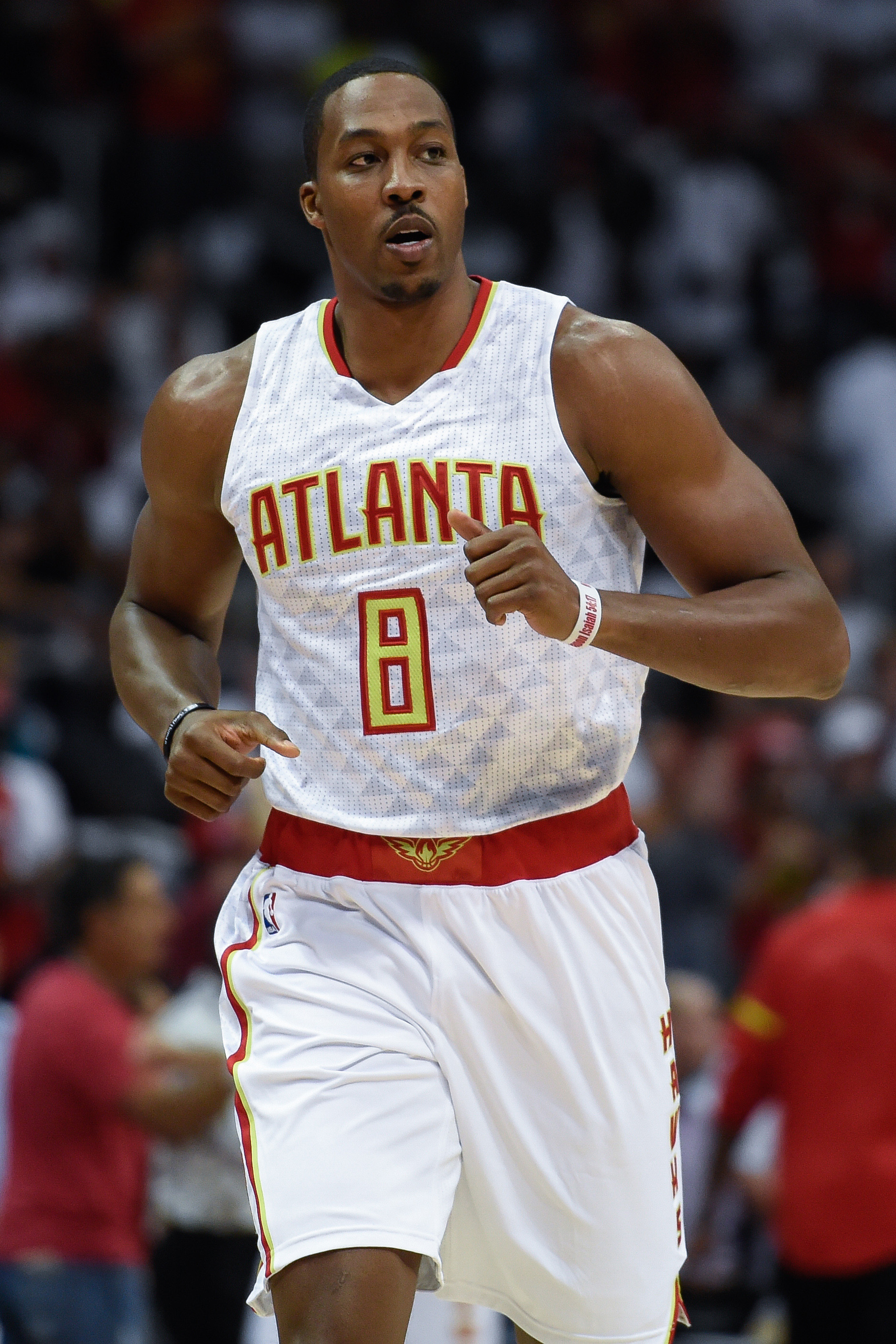 It was a mere two seasons ago that the Hawks won a franchise-best 60 games and advanced to the Eastern Conference Finals. Atlanta regressed to 48 wins in 2015/16 and a second-round playoff ouster at the hands of the eventual NBA Champs, the Cavaliers. While there’s certainly no shame in losing to Cleveland, it marked the last ride of Atlanta’s core players of recent years.
The Hawks enter 2016/17 a markedly different team, and while they should remain competitive in the East, it would be extremely difficult to argue that they are a better club than has taken the court the past few campaigns. The outcome of the 2016/17 season will rest on how coach/executive Mike Budenholzer will adjust to the departures of two key players.
The most significant change in Atlanta was the departure of Al Horford, who had manned the paint for the team the past nine years. The 30-year-old signed a maximum salary deal with the Celtics after the Hawks had reportedly balked at offering up that amount to retain him. While it would have maintained continuity and better PR if the team had re-signed Horford, I can understand the Hawks being hesitant to offer a long-term max deal to a big man on the wrong side of 30. Teams often end up paying big money for past performance rather than current output, which likely would have been the case if Atlanta re-signed Horford.
The franchise had a solid backup plan to mitigate the loss of Horford, signing unrestricted free agent and Atlanta native, Dwight Howard, to a three-year, $70.5MM pact. The addition of Howard doesn’t come without risk given his injury issues the past few seasons, at times questionable locker room presence and will to win. But landing Howard on just a three-year deal for less than the max should be considered a win for the Hawks. Howard should be motivated to prove he wasn’t the problem in Houston, where the pairing of he and James Harden failed to work on any level. His offense output won’t measure up to Horford’s, but he is an upgrade defensively and on the boards. If Howard can remain healthy, and that’s in no way a given, this is a move that could pay off handsomely for Budenholzer and company.
The other significant player change, and one that I think will have a more adverse effect on the Hawks than the loss of Horford, was the trade of Jeff Teague to the Pacers for the rights to Taurean Prince, who was selected No. 12 overall in this year’s NBA Draft. Jettisoning Teague signaled a changing of the guard, with the team turning over the reigns to Dennis Schroder, who had openly expressed his desire to become an NBA starter. I would be more comfortable with the switch if the Hawks had more depth at the one, but as it currently stands, 27-year-old rookie Malcolm Delaney is the only other point guard on the roster. If Schroder is injured or falters, things could get ugly in Atlanta pretty quickly. It still remains to be seen if Schroder can be effective as a starter in leading the offense as well as make up for the loss of Teague’s scoring. I like Schroder’s potential, but he’ll need to become a far more consistent outside shooter if Atlanta is to be successful as a team. The Hawks are banking their future on the German after signing him to a four-year, $62MM rookie-scale extension.
While a lottery pick was a fair return for Teague, who can hit unrestricted free agency at season’s end, I’m not sure it was worth the risk for the Hawks. This is a team built to win now, so parting with a proven commodity such as Teague for Prince doesn’t make as much sense to me as retaining the veteran point guard — even if he could have departed next summer with the team not receiving anything in return. Prince has the potential to become a solid two-way player, but he’s not someone who will improve the Hawks in 2016/17. This trade could come back to haunt Budenholzer if Schroder under-performs or misses any significant stretch of time.
The third major decision the Hawks made this offseason was to re-sign Kent Bazemore to a four-year, $70MM pact. The 27-year-old enjoyed a breakout season in 2015/16 for Atlanta, averaging 11.6 points, 5.1 rebounds and 2.3 assists, with a slash line of .441/.357/.815 over 75 appearances. While it’s difficult not to root for a player like Bazemore, whose energy and enthusiasm is infectious, signing him to a deal with an average annual salary of $17.5MM is a major risk. If he doesn’t live up to the contract, it will severely hamper Atlanta’s ability to add to its roster the next few seasons.
One other offseason development that could have an impact on the team’s future was the Hawks’ reported attempts to trade Paul Millsap. The team feeling out the market for Millsap was more about trying to carve out cap space when there still was a chance to re-sign Horford, than any dissatisfaction with the player, but it could still affect his willingness to re-sign with Atlanta should he opt out of his deal next summer. The 31-year-old has a player option worth $21,472,407 for 2017/18, and opting out may be his best shot at securing one last big money long-term pact in his career. Millsap has gone on record saying he hasn’t made a decision yet regarding the option, telling Chris Vivlamore of The Atlanta Journal-Constitution, “I think the plan is to see how this season goes and go from there. I can’t predict what is going to happen. For me, it’s focus on basketball. Get through this year, try to get a championship for this team first of all. We’ll deal with all that during the summer time when we have all our options on the table.”
The Hawks will likely take a small step back this campaign after losing two key starters from a season ago. With a number of teams in the East improving themselves, it’s difficult to make the case that Atlanta will be able to contend for an NBA title, much less win the Conference this season. The franchise still has more than enough talent to make the playoffs, as long as Schroder can remain healthy and continue to improve his game. If he or Howard sustain a significant injury, things could become dicey rather quickly. Thankfully, the franchise has one of the better coaches in the league in Budenholzer, who should be able to squeeze enough out of this roster to make the team competitive on a nightly basis.
Salary information from Basketball Insiders used in the creation of this post. Photo courtesy of USA Today Sports Images.
Hoops Rumors Originals: 10/23/16-10/29/16
Here’s a look back at the original content and analysis generated by the Hoops Rumors staff this past week.
- As part of our Offseason In Review Series, we looked at the following teams:
- Will Joseph highlighted some of the better basketball blogs around in his weekly installment of Hoops Links.
- We ran down the players with fully guaranteed salaries who were waived this season. We also ran down which teams currently have 15 players with fully guaranteed deals on their rosters.
- Luke Adams examined a number of candidates eligible to ink rookie-scale extensions.
- We ran down which players can’t be traded until January 15th. We also ran down players who can’t be dealt until December 15th.
- Arthur Hill answered reader questions in our Weekly Mailbag. Here’s how you can submit your own questions for our mailbag feature.
- We ran down the salary rankings of the power forwards and centers of the Eastern Conference.
- We asked readers to vote on the win total over/unders for the teams of the Pacific Division. Here’s a recap of all the divisional results.
- We ran down the teams possessing enough cap flexibility to make waiver claims.
- In our Community Shootarounds this week we discussed:
- What do you expect out of Joel Embiid during his first season?
- Your feelings on possible NBA expansion.
- You can stay up to date on any contract extensions agreed to this season with our tracker.
- If you haven’t already, be sure to download the Trade Rumors app for your iOS or Android device.
Offseason In Review: Charlotte Hornets
Over the next several weeks, Hoops Rumors is breaking down the 2016 offseason for all 30 NBA teams, revisiting the summer’s free agent signings, trades, draft picks, departures, and more. We’ll evaluate each team’s moves from the last several months and look ahead to what the 2016/17 season holds for all 30 franchises. Today, we’re focusing on the Charlotte Hornets.
Free agent signings:
- Nicolas Batum: Five years, $120MM. Fifth year player option.
- Marvin Williams: Four years, $54.5MM. Fourth year player option.
- Ramon Sessions: Two years, $12.27MM. Second year team option.
- Roy Hibbert: One year, $5MM.
- Christian Wood: Two years, minimum salary. Second year team option.
- Brian Roberts: One year, minimum salary.
Camp invitees:
- Andrew Andrews: One year, minimum salary (summer contract). Waived.
- Perry Ellis: One year, minimum salary (summer contract). Waived.
- Treveon Graham: Two years, minimum salary ($75K guaranteed)
- Rasheed Sulaimon: One year, minimum salary (summer contract). Waived.
- Mike Tobey: Two years, minimum salary ($75K guaranteed). Waived.
Trades:
- Acquired Marco Belinelli from the Kings in exchange for the draft rights to Malachi Richardson (No. 22 pick).
- Acquired cash from the Grizzlies in exchange for Troy Daniels (sign-and-trade).
Draft picks:
- None
Departing players:
Other offseason news:
- Cody Zeller eligible for contract extension until October 31.
- Acquired D-League rights to 12 players in D-League expansion draft. Named Noel Gillespie head coach of expansion Greensboro Swarm.
Check out our salary cap snapshot for the Charlotte Hornets right here.
With a regular-season record of 48-34, the 2015/16 Charlotte Hornets had the most successful year of any squad in the current iteration of the franchise. The last Charlotte team to win that many games was led by players like Eddie Jones, David Wesley, Anthony Mason, and Derrick Coleman, way back in 1999/2000, just a couple years before the previous version of the franchise moved to New Orleans.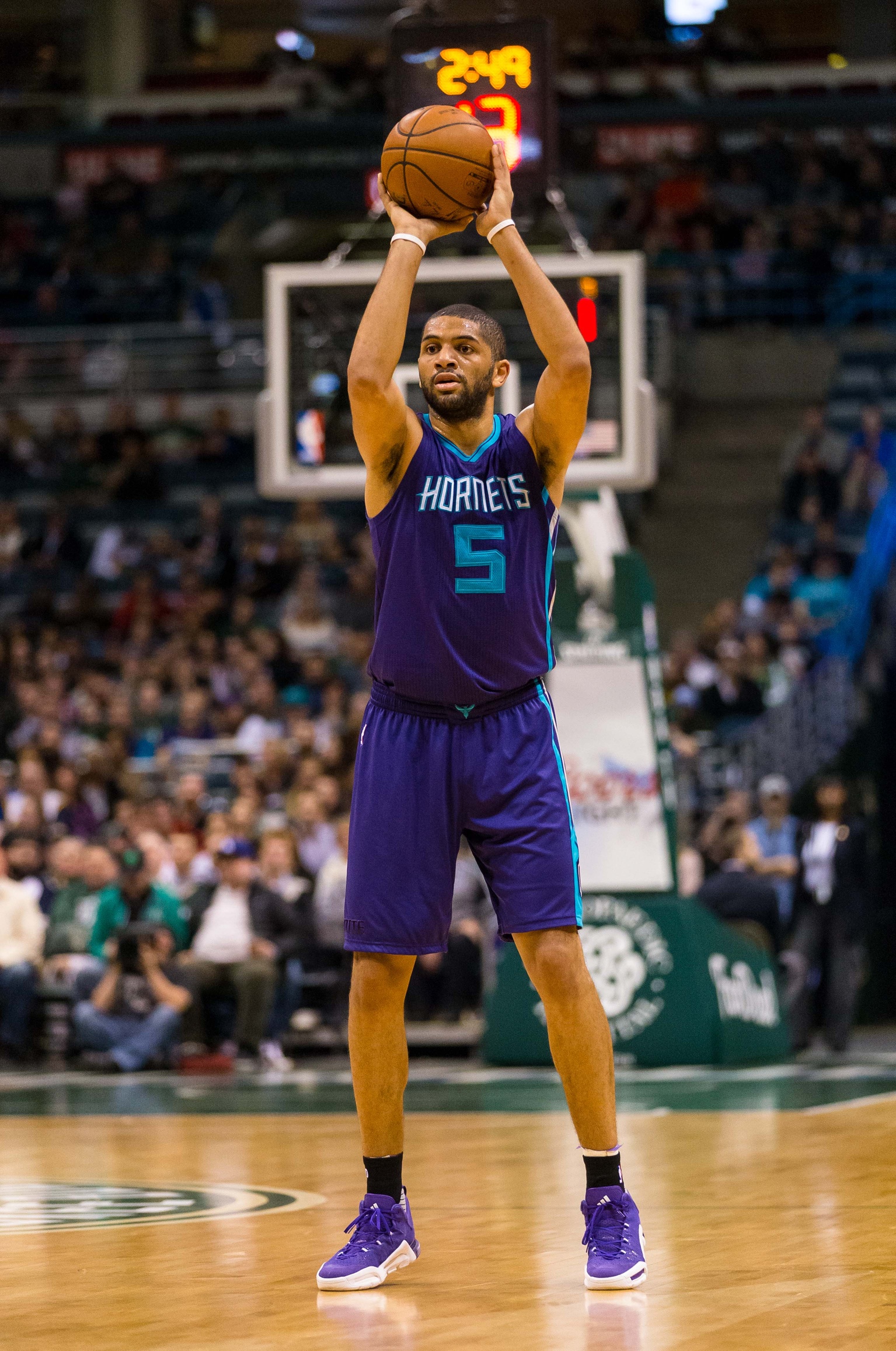
The Hornets still weren’t able to get over the hump in the postseason, falling in seven games to the Heat in a tough first round series. Charlotte hasn’t made it past the first round of the playoffs since re-entering the NBA as the Bobcats in 2004, but this past spring represented the first time the team avoided a sweep. The season as a whole was a clear sign the Hornets were headed in the right direction, which made it unfortunate that so many of the club’s key players were on expiring contracts.
Heading into the offseason, Nicolas Batum, Courtney Lee, Marvin Williams, Jeremy Lin, and Al Jefferson were on track for unrestricted free agency. Those five players were all among Charlotte’s top eight in minutes per game in 2015/16, and one of those eight players was Michael Kidd-Gilchrist, who only appeared in seven contests due to shoulder injuries. The other two — Kemba Walker and Cody Zeller — remain under contract, along with Kidd-Gilchrist and Frank Kaminsky, but when the summer began, it appeared the Hornets would look a lot different in 2016/17 than they did last year.
Recognizing as they entered the summer that they couldn’t afford to keep all of their free agents, the Hornets prioritized the players they wanted to re-sign and explored less expensive ways to replace the others. That meant honing in on Batum and Williams, two three-and-D wings who were major contributors last season. Neither player is a volume scorer, but they’re both capable of making a couple three-pointers per game, chipping in a few rebounds, and playing tough defense.
Batum, the more dynamic player of the two, and the one with the longer track record, got the bigger payday, inking a five-year, $120MM pact to remain in Charlotte. Williams’ four-year, $54.5MM deal was more modest, but it still represented an impressive number for a player who was long known as the guy the Hawks drafted instead of Chris Paul.
With Batum and Williams locked up on the wing, Walker manning the point, and big men like Zeller and Kaminsky ready to take on larger roles, the Hornets looked to replace players like Lin, Lee, and Jefferson on the cheap.
While Lin inked a three-year, $36MM contract with the Nets, Charlotte landed Ramon Sessions on a more affordable two-year, $12MM+ pact that features a team option in year two. Sessions is certainly no star, but he’s a perfectly capable backup who played behind John Wall in 2015/16, averaging 9.9 PPG and 2.9 APG. He was a more efficient scorer last season than Lin, and should be capable of holding his own as a possible short-term starter if Walker misses any time with injuries.
Like Lin, Lee landed a $12MM annual salary from a rival suitor in July, inking a four-year, $48MM deal with the Knicks. By the time things get serious between Lee and the Knicks, the Hornets had already addressed that hole in their lineup, sending their first-round pick to the Kings in exchange for Marco Belinelli. The deal earned more praise from NBA observers for Sacramento than Charlotte, which was fair — Belinelli’s calling card is his three-point shot, but he struggled with his accuracy last season, making a career-low 30.6% of his shots from the outside.
Still, the deal made some sense from the Hornets’ perspective. The 22nd overall pick almost never turns into more than a solid role player, so giving it up for Belinelli presented little risk and gave Charlotte a rotation-ready veteran. The 30-year-old will make just under $13MM over the next two years, a very fair price given what many free agent shooters signed for this summer. Additionally, before last season, Belinelli had a career three-point percentage of 39.2%, having never made less than 35.7% in a season, meaning he’s a solid candidate for a bounce-back campaign.
Having found a backup point guard and a shooter off the bench for about half the price of what Lin and Lee were making, the Hornets managed to do the same thing at center — rather than re-signing Jefferson to a three-year, $30MM deal like the one he received from the Pacers, Charlotte got a bargain on Roy Hibbert, who will make $5MM on his new one-year contract with the Hornets.
Hibbert looks pretty far removed from his days as an All-Star center in Indiana, but his situation last season in Los Angeles, where he was practically a spectator for Kobe Bryant‘s farewell tour, didn’t give him a chance to show his strengths. Unlike Jefferson, who is a talented scorer but doesn’t contribute much on the other end of the floor, Hibbert gives the Hornets a capable defender and rim protector. He’s the sort of shot blocker the team didn’t have on its roster last season, and his presence will give head coach Steve Clifford a little more flexibility to try different things on defense this year.
After winning 48 games last season, the Hornets were given an over/under of 42.5 wins for this season by offshore oddsmakers, and when we conducted our preseason polls, more than 62% of our respondents voted that Charlotte would end up under 42.5 wins. That’s not a surprising assessment. Outside of perhaps Walker, the team has little star power, and the deals signed by Lin, Lee, and Jefferson total more than $100MM — that’s a lot of talent to lose.
Still, I disagree with the notion that the Hornets will take a noticeable step backward this season. Charlotte’s summer moves seemed designed to keep the team in contention in the short term, rather than to significantly retool with an eye toward the future. The Hornets did well to supplement their core pieces with inexpensive approximations of the complementary players they lost, but guys like Sessions, Belinelli, and Hibbert almost certainly won’t become building blocks in Charlotte, and the team gave up its first-round pick. Those moves suggest a win-now approach, and I think the roster is strong enough – and Clifford is a talented enough head coach – that such an approach is viable. I expect to see the Hornets back in the playoffs in the East next spring.
In order to continue improving though, the Hornets will have to count on a strong bounce-back performance from Kidd-Gilchrist, along with major positive development for Kaminsky. Most importantly, they’ll need Batum and Williams to deliver on the huge investments the team made in them. As savvy as some of Charlotte’s minor offseason additions were, those moves would be overshadowed by a larger-scale misfire if either the Batum or Williams signing goes south.
Salary information from Basketball Insiders used in the creation of this post. Photo courtesy of USA Today Sports Images.
Eastern Conference Salary Rankings: Centers
Hoops Rumors is in the process of ranking the salaries, separated by conference, for each NBA player by position. We’ve already looked at the point guards, shooting guards, small forwards, power forwards and centers of the Western Conference and we’ve now turned our attention toward the East, by running down the conference’s point guards, shooting guards, small forwards and power forwards. Now to finish up — here are the centers.
All told, the teams in the east have committed a total of $337,304,182 in cap hits this season to the men who man the middle. The average conference salary for centers this season is currently $9,637,262, with Al Horford topping the list with $26,540,100 to account for on his year-end W-2 form.
It should be noted that teams won’t necessarily pay out every dollar listed here. There are quite a few players who have non-guaranteed or partially guaranteed contracts. Some of those players won’t make it out of the preseason, while others will be sweating it out until January 10th. That’s when teams must waive players with no specific guarantee date written into their contracts to avoid having to guarantee their salaries for the rest of the season. In addition, incentive clauses that a player either triggers or fails to meet can leave a player with more or less money than his cap hit reflects. Still, the purpose of this list is to show the relative pay scale by position, which is why all contracts are included in this post.
I should also add that not every player listed below will play at the five spot this season, as some will likely see some time at power forward To maintain uniformity, I used their positions listed on the teams’ official rosters to determine which list to include them on. So if you see a player who isn’t expected to play the five for his team this season listed below, that’s why.
The Eastern Conference’s centers are listed below, in descending order of salary:
- Al Horford [Celtics] — $26,540,100
- Dwight Howard [Hawks] — $23,180,275
- Andre Drummond [Pistons] — $22,116,750
- Hassan Whiteside [Heat] —$22,116,750
- Brook Lopez [Nets] — $21,165,675
- Greg Monroe [Bucks] —$17,145,838
- Bismack Biyombo [Magic] —$17,000,000
- Joakim Noah [Knicks] —$17,000,000
- Ian Mahinmi [Wizards] —$15,944,154
- Tristan Thompson [Cavaliers] —$15,330,435
- Jonas Valanciunas [Raptors] —$14,382,023
- Robin Lopez [Bulls] — $13,219,250
- Miles Plumlee [Bucks] —$12,500,000
- Marcin Gortat [Wizards] —$12,000,000
- Nikola Vucevic [Magic] —$11,750,000
- Al Jefferson [Pacers] — $10,230,179
- Tiago Splitter [Hawks] — $8,550,000
- Tyler Zeller [Celtics] — $8,000,000
- Boban Marjanovic [Pistons] — $7,000,000
- Roy Hibbert [Hornets] — $5,000,000
- Joel Embiid [Sixers] —$4,826,160
- Jahlil Okafor [Sixers] —$4,788,840
- Nerlens Noel [Sixers] —$4,384,490
- Kelly Olynyk [Celtics] —$3,094,013
- Justin Hamilton [Nets]— $3,000,000
- Frank Kaminsky [Hornets] — $2,730,000
- Jakob Poeltl [Raptors] —$2,703,960
- Myles Turner [Pacers] — $2,463,840
- Lucas Nogueira [Raptors] —$1,921,320
- Kevin Seraphin [Pacers] — $1,800,000
- Chris Andersen [Cavaliers]—$1,551,659
- Guillermo Hernangomez [Knicks] —$1,375,000
- Edy Tavares [Hawks] — $1,000,000
- Stephen Zimmerman [Magic] —$950,000
- Marshall Plumlee [Knicks] —$543,471
Players Who Can’t Be Traded Until December 15
On Thursday, we examined the list of players who can’t be traded by their current teams until at least January 15. Those players all meet a certain specific set of criteria, having re-signed with their own teams using Bird rights or Early Bird rights and received a raise of at least 20%. However, that list is small compared to the list of players whose trade eligibility will return on December 15.
If a player signed a free agent contract with an NBA team this offseason, the CBA’s rules prevent him from being traded until three months after the signing or December 15, whichever is later. So if a player was signed prior to September 16 and doesn’t meet the criteria noted above for our list of January 15 players, he’ll become trade-eligible on December 15.
With teams generally looking to take stock of their rosters and where they stand in their respective conference over the first several weeks of the season, few clubs will get serious about exploring the trade market until mid-December anyway. Once this summer’s free agent signees become trade-eligible, teams will have more options and greater flexibility.
Listed below are the players who won’t become trade-eligible until December 15, sorted by team…
Atlanta Hawks
Boston Celtics
Brooklyn Nets
Charlotte Hornets
Chicago Bulls
Players Who Can’t Be Traded Until January 15
The NBA’s in-season trade market typically doesn’t pick up until the winter, since players who signed free agent contracts in the offseason aren’t eligible to be moved until December 15. By that point, with the regular season approaching the two-month mark, teams have a better idea of where they stand, how they want to approach the rest of the season, and which players they might want to trade.
While most players around the NBA will be trade-eligible at that point, not all of them will be. The NBA’s rules for recently-signed players dictate that those players can be dealt as of December 15 or three months after they signed, whichever comes later. So a player like Metta World Peace, who signed with the Lakers on September 23, wouldn’t be eligible to be traded until December 23.
Finally, there’s a separate group of players that won’t become trade-eligible until January 15, and those are the guys we’ll focus on in this post. These players all meet a specific set of criteria: Not only did they re-sign with their previous team this offseason, but they got a raise of at least 20%, their salary is worth more than the minimum, and their team was over the cap, using Bird or Early Bird rights to sign them.
Here’s the list of players who cannot be traded until January 15, 2017.
- Nicolas Batum (Hornets)
- Bradley Beal (Wizards)
- Tarik Black (Lakers)
- Mike Conley (Grizzlies)
- Allen Crabbe (Trail Blazers)*
- Jamal Crawford (Clippers)
- DeMar DeRozan (Raptors)
- Andre Drummond (Pistons)
- Evan Fournier (Magic)
- Manu Ginobili (Spurs)*
- Maurice Harkless (Trail Blazers)
- LeBron James (Cavaliers)*
- Tyler Johnson (Heat)*
- Meyers Leonard (Trail Blazers)
- Dirk Nowitzki (Mavericks)*
- Miles Plumlee (Bucks)
- Austin Rivers (Clippers)
- J.R. Smith (Cavaliers)
- Lance Thomas (Knicks)
- Marvin Williams (Hornets)
- Tyler Zeller (Celtics)
Note: Players marked with an asterisk also have the ability to veto trades during the 2016/17 league year.
Information from Basketball Insiders was used in the creation of this post.
NBA Teams With 15 Fully Guaranteed Salaries
With R.J. Hunter poised to officially join the Bulls, the only NBA team with an open roster spot will be adding a 15th man, meaning every one of the league’s 30 clubs will be at the regular-season roster limit. However, that doesn’t mean those teams are locked into those 15 players for the season.
As we saw in the days leading up to opening night, plenty of teams were willing to cut ties with players on fully guaranteed salaries, with the increased cap giving clubs a little extra flexibility to eat salary. Still, generally speaking, teams will be less inclined to waive a player if his 2016/17 salary is already fully guaranteed, preferring to cut a non-guaranteed salary if they need to make an addition.
So, with the season underway, it’s worth taking a look at which teams have 15 fully guaranteed salaries on their roster and which teams are carrying a non-guaranteed contract or two. Those non-guaranteed deals will perhaps give those clubs a little extra flexibility up until January 10, at which point everyone still on an NBA roster has his salary become fully guaranteed.
Here are the teams with 15 fully guaranteed salaries on their roster:
- Boston Celtics
- Brooklyn Nets
- Detroit Pistons
- Indiana Pacers
- Los Angeles Clippers
- Milwaukee Bucks
Meanwhile, the following teams are carrying 14 fully guaranteed salaries, with just one player on a non-guaranteed or partially guaranteed deal:
- Atlanta Hawks: Mike Muscala (partial)
- Dallas Mavericks: Dorian Finney-Smith (partial)
- Denver Nuggets: Jarnell Stokes (partial)
- Golden State Warriors: JaVale McGee (partial)
- Miami Heat: Rodney McGruder (partial)
- Minnesota Timberwolves: John Lucas III
- New Orleans Pelicans: Lance Stephenson (partial)
- New York Knicks: Ron Baker (partial)
- Oklahoma City Thunder: Semaj Christon (partial)
- Phoenix Suns: Derrick Jones (partial)
- Portland Trail Blazers: Tim Quarterman (partial)
- Sacramento Kings: Ty Lawson
- Toronto Raptors: Fred VanVleet (partial)
- Utah Jazz: Jeff Withey
That leaves nine teams dedicating multiple roster spots to players on non-guaranteed or partially guaranteed salaries early in the season. That doesn’t necessarily mean these teams are more likely to make back-of-the-roster moves over the next couple months, but it gives them a little more financial flexibility to do so. Here are those nine teams:
- Charlotte Hornets: Treveon Graham (partial), Aaron Harrison
- Cleveland Cavaliers: DeAndre Liggins (partial), Jordan McRae
- Houston Rockets: Kyle Wiltjer (partial), Bobby Brown
- Los Angeles Lakers: Thomas Robinson, Metta World Peace
- Memphis Grizzlies: Vince Carter (partial), JaMychal Green (partial), Troy Williams (partial)
- Orlando Magic: Arinze Onuaku, Damjan Rudez
- Philadelphia 76ers: Robert Covington (partial), Jerami Grant, T.J. McConnell, Hollis Thompson
- San Antonio Spurs: Bryn Forbes (partial), Nicolas Laprovittola
- Washington Wizards: Danuel House (partial), Sheldon McClellan (partial), Daniel Ochefu (partial)
The 30th team? Those aforementioned Bulls, who had been carrying 13 guaranteed salaries, as well as Cristiano Felicio‘s non-guarantee deal. Depending on whether or not R.J. Hunter‘s new contract is guaranteed, Chicago will either fall into the second or third group above.
Community Shootaround: Joel Embiid
More than two years after being drafted out of Kansas, Sixers center Joel Embiid is about to make his NBA debut. The promising big man lost two seasons of his career to a balky right foot, which caused him to undergo two major surgical procedures while Philadelphia fans wondered if he was a wasted pick.
The Sixers knew Embiid had physical problems when they drafted him third overall in 2014. He sat out the final month of his lone season with the Jayhawks because of a stress fracture in his back. In a workout about a week before the draft, the Cavaliers medical staff discovered a broken navicular bone in his foot. Cleveland passed on him, taking Andrew Wiggins instead. When Milwaukee followed with Jabari Parker, former Sixers GM Sam Hinkie saw a worthwhile gamble.
“I sniffed opportunity the moment it happened,” he said at the time. “The moment it happened. The moment he got hurt, we thought we might get him and we might be just the organization with just the set of owners and we might the one to do it.”
Unfortunately for the Sixers, that broken bone never healed enough for Embiid to play. He broke it again and required a second surgery in 2015. Meanwhile, the grumbling in Philadelphia grew louder about Embiid’s commitment to the rehab process.
But the news on Embiid turned around early this year. Visits to the Aspetar medical facility in Qatar provided encouraging results in the areas of body weight, sleep, body mass assessment and healing. For the first time since he joined the Sixers, there was actual hope that he could take the court.
Fast forward to this preseason and Embiid has shown flashes of being the player that scouts saw at Kansas. He averaged just 14.7 minutes in seven preseason games, but put up 11.4 points, 6.0 rebounds and nearly a block per game. He also gained confidence while playing on his formerly injured foot. “I just got better every game [in the preseason], defensively, offensively,” he said.
That brings us to tonight’s question: What do you expect out of Embiid during his first season? The Sixers plan to be careful with him, starting him on a minutes restriction of 20 per night. Do you think he can be Rookie of the Year? Will he need time to adapt to the game after being sidelined for two seasons? Or will the worst-case scenario happen and will his right foot give out again?
Take to the comments section below to share your thoughts and opinions on Embiid. We look forward to what you have to say.
Five Rookie-Scale Extension Candidates To Watch
After having set their 15-man rosters for the start of the regular season on Monday, many NBA teams will have more decisions to make by next Monday. October 31 is the deadline for clubs to exercise 2017/18 options on rookie contracts and to sign players entering the final year of their rookie deals to extensions.
While most of those team option decisions are fairly straightforward, those extension negotiations will be trickier. Teams and players must not only decide how many years and dollars they would be willing to accept — they also must determine if it even makes sense to complete an extension now, before a deal on a new Collective Bargaining Agreement is reached.
A new CBA isn’t expected to change rookie-scale extensions significantly, but that’s not set in stone yet, and as Zach Lowe of ESPN.com reports, there may be slight changes to restricted free agency. Currently, the cap holds for restricted free agents are either 200% or 250% of their previous salaries. Those figures may increase to 250% and 300% in the new CBA, according to Lowe, who points out that the tweak could affect teams who hold off on rookie extensions in the hopes of maximizing their cap space the following summer.
For instance, last fall, the Wizards and Pistons held off on extending Bradley Beal and Andre Drummond, respectively, since agreeing to new deals at that point would have meant both players counted against their respective teams’ caps for $22MM+ as soon as this year’s July moratorium ended. Instead, since they were unsigned at the end of the moratorium, their teams were able to work around their modest cap holds to sign other free agents, then go over the cap to lock up their RFA stars to max deals. Increased cap holds for RFAs may serve as a minor deterrent for that practice.
Despite the uncertainty involved in working out an extension now, several teams and players will still engage in talks and see if they can come to an agreement. With next Monday’s deadline fast approaching, here are five extension-eligible players we’ll be keeping an eye on:
1. Dennis Schroder (Hawks)
Within his previously-linked piece, Lowe reports that Schroder and the Hawks are talking about a potential extension. However, it may be tricky to pin down the point guard’s value at this point. If Atlanta is especially optimistic about Schroder’s chances of taking Jeff Teague‘s old starting job and running with it, it could make sense to try to lock him up now, before his value skyrockets. But Schroder knows he’s in line for a major opportunity this season, and won’t want to accept a deal that pays him for his past production.
If the Hawks are willing to do a Reggie Jackson-like deal for Schroder, perhaps the two sides could work something out. But both the team and the player have reason to proceed with caution and wait to see how Schroder handles the full-time starting job, so they may wait until next summer.
2. Rudy Gobert (Jazz)
The Jazz will almost certainly have to offer Gobert a maximum-salary deal to retain him, so it may just a matter of whether they do it now or later. If they can get the big center to accept anything lower than the max this week, it probably makes sense to lock him up. If not, there’s no real rush. Still, Utah currently has the opportunity to extend both Gobert and Derrick Favors, and signing both players long-term would be a strong move for the franchise with Gordon Hayward facing potential unrestricted free agency in 2017.
3. Steven Adams (Thunder)
The Thunder have three extension candidates, in Adams, Victor Oladipo, and Andre Roberson. Roberson isn’t as crucial a piece as the other two players, and Oladipo is reportedly seeking a max deal, making Adams a logical target this week. Like the Jazz with Gobert, the Thunder are probably better off locking up Adams sooner rather than later if he’s willing to take something below the max, as Giannis Antetokounmpo did with the Bucks. With Kevin Durant and Serge Ibaka no longer in the mix in Oklahoma City, Adams is poised to take another huge step forward this year, and would have plenty of suitors willing to give him huge offer sheets next July.
4. Kentavious Caldwell-Pope (Pistons)
Stan Van Gundy has said the Pistons would like to extend Caldwell-Pope before Monday’s deadline, and the team has reportedly engaged in negotiations with both KCP and teammate Reggie Bullock. Caldwell-Pope won’t come cheap though. A recent report from Vince Ellis of The Detroit Free Press suggested that the shooting guard’s camp may have be seeking an annual salary in excess of $20MM. And given the contracts signed this summer by two-guards and wings like Nicolas Batum, C.J. McCollum, and Evan Turner, that asking price doesn’t seem particularly unreasonable. If it comes down, the two sides could reach a compromise, but I’d expect KCP to play out the season without a new deal lined up.
5. Gorgui Dieng (Timberwolves)
Dieng and teammate Shabazz Muhammad are both eligible for extensions, but the big man appears to be the more likely candidate for a new deal this week. New head coach Tom Thibodeau is reportedly fond on Dieng, and Minnesota has plenty of long-term cap flexibility to lock up core pieces. Darren Wolfson of 1500 ESPN Twin Cities reported last month that no meaningful talks had occurred for either Dieng or Muhammad, and suggested he expects both players to reach restricted free agency. But those extension talks could get more meaningful in the next few days, with a deadline looming, so it’s worth keeping an eye on the Wolves.
Other notable extension candidates to watch:
- Alex Len (Suns)
- Ben McLemore (Kings)
- Nerlens Noel (Sixers)
- Kelly Olynyk (Celtics)
- Mason Plumlee (Trail Blazers)
- Otto Porter (Wizards)
- Cody Zeller (Hornets)
Offseason In Review: Orlando Magic
Over the next several weeks, Hoops Rumors is breaking down the 2016 offseason for all 30 NBA teams, revisiting the summer’s free agent signings, trades, draft picks, departures, and more. We’ll evaluate each team’s moves from the last several months and look ahead to what the 2016/17 season holds for all 30 franchises. Today, we’re focusing on the Orlando Magic.
Free agent signings:
- Evan Fournier: Five years, $85MM. Fifth year player option.
- Bismack Biyombo: Four years, $68MM. Fourth year player option.
- D.J. Augustin: Four years, $29MM
- Jeff Green: One year, $15MM.
Camp invitees:
- Cliff Alexander: One year, minimum salary (summer contract). Waived.
- Branden Dawson: One year, minimum salary (summer contract). Waived.
- Ramon Galloway: Contract details not yet known. Waived.
- Nick Johnson: One year, minimum salary (summer contract). Waived.
- Kevin Murphy: One year, minimum salary (summer contract). Waived.
- Arinze Onuaku: One year, minimum salary (summer contract)
- Damjan Rudez: One year, minimum salary (summer contract)
Trades:
- Acquired Serge Ibaka from the Thunder in exchange for the draft rights to Domantas Sabonis (No. 11 pick), Victor Oladipo, and Ersan Ilyasova.
- Acquired the Trail Blazers’ own 2019 second-round pick and cash ($1.2MM) from the Trail Blazers in exchange for the draft rights to Jake Layman (No. 47 pick).
- Acquired Jodie Meeks from the Pistons in exchange for a 2019 second-round pick.
- Acquired cash ($75K) from the Trail Blazers in exchange for Shabazz Napier.
- Acquired C.J. Wilcox and cash ($230K) from the Clippers in exchange for Devyn Marble and the Cavaliers’ 2020 second-round pick.
Draft picks:
- 2-41: Stephen Zimmerman: Signed for three years, $2.993MM. Second and third years non-guaranteed.
Departing players:
- Dewayne Dedmon
- Ersan Ilyasova
- Brandon Jennings
- Devyn Marble
- Shabazz Napier
- Andrew Nicholson
- Victor Oladipo
- Jason Smith
Other offseason news:
- Hired Frank Vogel as head coach to replace Scott Skiles.
- Jodie Meeks recovering from foot surgery, expected to return in November.
- Serge Ibaka eligible for veteran contract extension.
Check out our salary cap snapshot for the Orlando Magic right here.
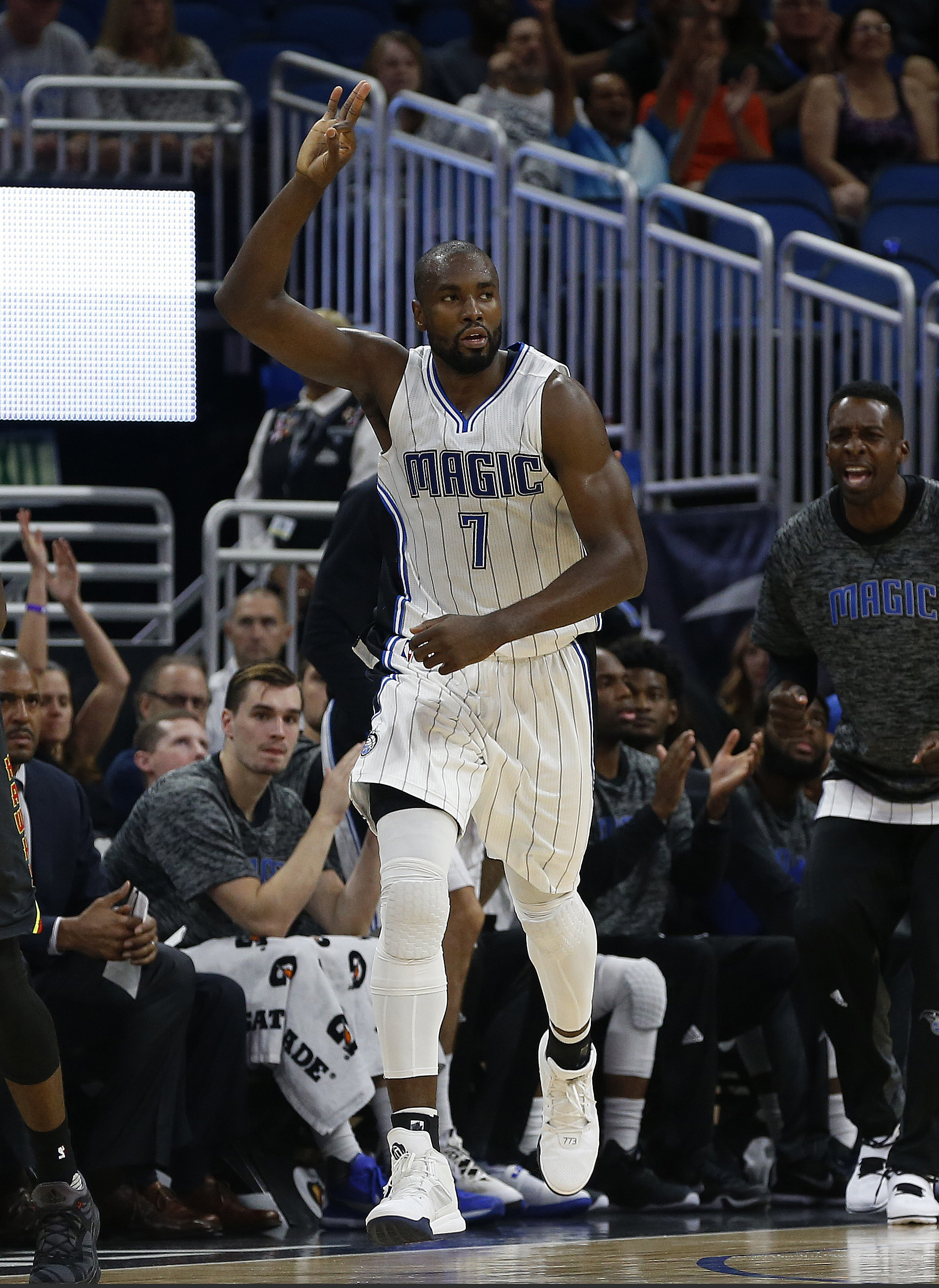 The Magic’s 2015/16 season was a disappointing one, with the team finishing with a record of 35-47 and missing the playoffs for the fourth straight year. Their head coach, Scott Skiles, resigned over differences in philosophy with the front office and the team entered the summer still searching for an identity and lacking a star player to build around. What followed was an active and somewhat puzzling offseason, with the franchise making a number of changes that arguably made the team better, but raised quite a few questions about how the pieces will fit together cohesively this year.
Orlando’s first move of the offseason was to replace Skiles, who never seemed like the right fit with the franchise anyway. Skiles has always been a taskmaster who has quickly worn out his welcome at past coaching stops, and whose old-school style wasn’t the right blend with the plethora of young players on the team’s roster. GM Rob Hennigan made a solid move in hiring Frank Vogel, who was let go by the Pacers despite his years of solid work with the franchise. Vogel is a much better fit for this group of players and he should quickly be able to turn around the culture of the team.
With a new head coach in place, Hennigan then turned toward reworking the team’s roster. The GM’s biggest and riskiest move of the summer was the draft night trade with the Thunder that shipped out Victor Oladipo, Ersan Ilyasova and the rights to Domantas Sabonis, the 11th overall pick, in exchange for versatile and athletic forward, Serge Ibaka.
This is a swap that I have extremely conflicted feelings about. Ibaka has the potential to emerge as a star in Orlando now that he is out of the shadows of Russell Westbrook and Kevin Durant in Oklahoma City. The 27-year-old is a solid all-around defender whose outside shooting and athleticism will give Vogel some interesting and exciting possibilities on offense. However…there are a number of negatives to his acquisition that I find difficult to overlook.
First off, the team gave up quite a bit to acquire him. Oladipo has been somewhat of a disappointment since being selected in the draft lottery, with his offensive game not quite evolving the way the franchise had hoped. But he is a solid three-and-D player who still has a lot of upside. Skiles was definitely the wrong coach to bring out Oladipo’s best, and I would have loved to have seen what Vogel could have gotten out of the player. While Ilyasova is nowhere near the defender and rebounder that Ibaka is, when all things are said and done, his scoring output won’t be that far removed from what Ibaka’s numbers have been throughout his career. Plus, Sabonis is one of the more polished players in this year’s draft class, and he could end up being a solid rotation player for years to come.
There is also a question of fit for Ibaka, especially when coupled with a number of the team’s other moves this offseason. The addition of Ibaka will either force former lottery pick Aaron Gordon to shift to small forward, a position his shaky outside shooting may not be best suited for, or to the bench, will will stunt his growth as a player. Then there’s Jeff Green, who was signed to a one-year, $15MM deal by Orlando. This is an addition that I fail to see the logic in for the Magic. Green is a versatile player who can man either forward spot, but he’s not a great defender and his offensive game has been steadily on the decline. The money that went to Green could have been better spent to plug other holes on the roster, and the minutes he’ll soak up would be better allocated to developing the younger players on the team who’ll now be forced to sit as Green plays out his one-year deal. Plus, if you were going to pay a forward that much, it would have made far more sense to simply hold onto Tobias Harris, whose skillset would have been tailor-made for Vogel’s system.
Another signing that was somewhat odd for the Magic, given their roster makeup, was the addition of rebounding monster, Bismack Biyombo. I have no issues with Biyombo as a player. He’s a hard-worker who will fight for every rebound like it was his last and play solid defense every second he’s on the court. But with Nikola Vucevic already on the roster, unless the Magic intend to find a taker for the 25-year-old in the trade market, it creates another playing time logjam for the team. Either Vucivic, who is earning $11,750,000 this year and under contract for two more season beyond this one, or Biyombo, who is set to earn $17MM each of the next four seasons, will be coming off the bench. That’s an expensive luxury for a non-contender to have.
There were two other questionable acquisitions made by Orlando this offseason. First up, the trade with Detroit to acquire Jodie Meeks and his expiring contract. In 63 total games over the last two years, including just three in 2015/16 due to injury, Meeks averaged 10.9 points and 0.9 steals per game while shooting 35.3% from three-point range. If healthy, which he currently is not, Meeks can provide a spark off the bench. But…why did the Magic feel the need to add him to the mix when it potentially takes away playing time from 2015 lottery pick Mario Hezonja? The second-year player has a wealth of potential, despite what he showed during his rough rookie campaign. Meeks doesn’t move the dial enough in my book for him to be worth acquiring, and this is an area where the money spent on Green could have been better allocated and used to sign a higher impact player on the wing.
The other addition I alluded to in the previous paragraph was the signing of point guard D.J. Augustin to a four-year, $29MM deal. I understand the team’s concerns regarding Elfrid Payton, whose outside shooting doesn’t strike fear into the hearts of defenders. But I question the move to give Augustin, who has dealt with nagging injuries the past few seasons, a four-year commitment. While he has a clear fit in the team’s rotation, unlike a number of the team’s other offseason additions, his $7,250,000 salary, coupled with Biyombo’s and Green’s makes for a rather expensive bench. It feels to me like Hennigan overreacted this offseason to the Magic’s deficiencies and threw too much money at the problem, rather than waiting to see what Vogel would be able to correct through coaching and rapport.
One move made by Hennigan that I can find no fault in, is re-signing restricted free agent Evan Fournier to a five-year, $85MM pact. The 23-year-old enjoyed a breakout season for Orlando in 2015/16, starting a career-high 71 of 79 games for the team and notching career-best marks in several other categories, including PPG (15.4), APG (2.7), RPG (2.8), and 3PT shots made per contest (2.0). He also had a very respectable shooting line of .462/.400/.836. Given the current economics of the game thanks to the new TV contract and salary cap bump that comes along with it, keeping the talented young wing in the fold for approximately $10MM below the max should be considered a win. With Oladipo now gone, this clears the way for Fournier to continue to evolve as a player, and hopefully, become a star in the East. Granted, that size contract always carries with it some risk, but this is one that should pay off for the team over the life of the deal.
I’d wager that if the Magic can remain healthy as a team in 2016/17, finishing with 40-45 wins is within the realm of possibility. The presence of Vogel alone should be good for a five win improvement over last season. However, there are far too many rotation questions thanks to the seemingly ill-fitting parts the team added over the summer. Orlando needs to be active prior to the trade deadline and attempt to make a big trade to land another star to place alongside Ibaka, consolidating its roster depth in the process. Hopefully the team will do well enough to convince Ibaka that Orlando is his best option for a long-term home when he hits free agency this coming offseason. If the forward were to depart next July, it would be disastrous for the franchise and set it back years as a result.
Salary information from Basketball Insiders used in the creation of this post. Photo courtesy of USA Today Sports Images.