
Hoops Rumors Community Shootaround: Griffin Trade
The Pistons were expected to make some sort of move before the trade deadline to improve their playoff prospects. But did anyone see this coming?
Likewise, the Clippers were shopping a couple of their veterans, namely Lou Williams and DeAndre Jordan. But how many thought they’d move Blake Griffin this quickly after re-signing him to a five-year, $171.1MM contract over the summer?
Both organizations made very different decisions regarding the direction of their franchises by agreeing to a blockbuster deal on Monday. The Pistons took on Griffin and his huge contract along with a couple of reserves. Detroit shipped two starters, Tobias Harris and Avery Bradley, along with Boban Marjanovic and two draft picks to the Clippers. Los Angeles will get a first-rounder in the June draft unless it’s a top-four pick.
Harris and Bradley lead the Pistons in scoring, though Bradley’s production has dipped since he suffered a groin injury in December. Harris has become an above-average 3-point shooter this season and his contract expires after next season. Bradley is on an expiring deal.
The Clippers gave themselves major cap relief by dealing Griffin’s contract and picked up two solid veterans along with a likely lottery pick. Detroit received a perennial All-Star to pair up with Andre Drummond in the frontcourt, though Griffin’s injury history adds to the risk. But the Pistons clearly weren’t going anywhere with their current roster and now have a marquee player who might bring some more fans into the usually half-empty Little Caesars Arena.
That brings us to our question of the day: Who do you think will benefit the most from the blockbuster trade involving Blake Griffin, the Clippers or the Pistons?
Please share your thoughts in the comments section. We look forward to what you have to say.
Two Teams Remain Below 2017/18 Salary Floor
When we discuss the NBA’s salary cap, we often refer to a team’s position in relation to either the cap itself or to the luxury tax line. For the 2017/18 season, the league has a salary cap of $99.093MM, with a luxury tax threshold of $119.266MM. With the exception of a few potential taxpayers and a few clubs with cap room, most team salaries fall between those two figures.
There’s at least one more key figure related to the salary cap though, and that’s the salary floor, as it’s informally known. The salary floor, which is 90% of the salary cap, is the minimum amount that a team must spend on its roster in a given NBA season. For 2017/18, that amount is $89,183,700.
While it’s possible that more teams will dip below the salary floor based on moves they make at the trade deadline, for now there are just two teams below that line, according to Basketball Insiders’ salary data. Those teams are the Mavericks ($85,669,472) and the Bulls ($83,223,828).
Both the Mavs and Bulls are actually functioning as over-the-cap teams at the moment, since they have various mid-level and trade exceptions that they haven’t renounced — added to their respective team salaries, those exceptions take them over the $99.093MM cap line. Still, that exception money isn’t technically being spent on any players right now, so it doesn’t count toward each club’s minimum salary.
Under the NBA’s old Collective Bargaining Agreement, it was fairly easy for teams below the salary floor to game the system. At the deadline, a team could simply acquire a highly-paid player whose cap hit would take the team over the salary floor, despite the fact that the club would only owe that player a prorated portion of his salary.
For instance, a year ago, the Sixers took on Andrew Bogut‘s $11MM+ salary as part of the deal that sent Nerlens Noel to Dallas. Bogut’s full $11MM+ cap hit counted for minimum team salary purposes for Philadelphia, but the Mavs had already paid a majority of the center’s salary, since the trade happened with less than two months left in the season. In other words, despite only having to pay about $3MM that was left on Bogut’s contract, the Sixers were able to artificially put an extra $8MM toward the calculation of their minimum team salary.
The league’s new Collective Bargaining Agreement closed that loophole. Now, players traded or acquired during the season will only count toward a team’s minimum salary for the amount that they were paid by that team. So the Bulls can’t simply acquire a player earning $7MM to get above the salary floor — if 40% of the season remains, that player would only count for $2.8MM toward Chicago’s minimum team salary, with the other $4.2MM applying to his old club’s minimum team salary.
With those new rules in mind, it will be interesting to see how the Bulls and Mavericks approach the trade deadline. In order to reach the salary floor based on the new guidelines, each team would have to use nearly all of its remaining cap room. While Chicago and Dallas should be willing to take advantage of that cap space to take on a contract or two if it means acquiring some extra assets in the process, that sort of deal may not be worth it if it adds major long-term money to the books. In that case, it may simply make more sense for the teams to finish the year below the salary floor, then make up the difference at season’s end by paying out the shortfall to their players.
Weekly Mailbag: 1/22/18 – 1/28/18
We have an opportunity for you to hit us up with your questions in this, our weekly mailbag feature. Have a question regarding player movement, the salary cap or the NBA draft? Drop us a line at HoopsRumorsMailbag@Gmail.com.
With the injury to DeMarcus Cousins, would the Pelicans be in the market for Nikola Mirotic? — Drew Keys
Mirotic wants to go to a contender, which the Pelicans are, and the Bulls want a first-rounder in return, which the Pelicans have, so a deal is certainly possible. He’s averaging 17.1 points and 6.4 rebounds per game — not “Boogie” levels of course, but it’s probably as good as New Orleans is going to find at a reasonable cost. Mirotic is making $12.5MM this season, with a team option for the same amount next year. That option doesn’t have to be exercised until June 29, so the Pelicans should have a much clearer picture of Cousins’ recovery status by then. New Orleans still plans to be a buyer at the deadline and Mirotic would figure to be on their radar. The main concern is that a team outside the playoff picture like Utah can offer the Bulls a better draft pick.
What is keeping teams like Detroit, Denver, Indiana or New Orleans from trading their first-rounder for Tyreke Evans? — Chad B.
Most deadline deals don’t get done until the last minute because teams are waiting to see if the offers improve. The Grizzlies are almost certain to trade Evans, who has been a huge bargain this year at $3.29MM, especially after the news that Mike Conley will miss the rest of the season, eliminating any hope of the playoffs. Memphis is already over the cap for next season and doesn’t have Bird rights on Evans. The mid-level exception is available, but Evans is sure to get better offers on the open market. All four teams you mention would be excellent fits for Evans, although New Orleans will be concentrating on front-line help after losing Cousins. Keep an eye on the Wizards, Celtics and Sixers as well, as they all could use a scoring boost off the bench. The question is whether anyone will give up a first-rounder for a player who could be a half-season rental. Memphis could have a lot of offers to sort through over the next 11 days.
Do you think Aaron Gordon could be the guy the Celtics need right now? They could absorb his contract via the Disabled Player Exception. — Nicolas Galipeau
The Celtics would love to add Gordon, but the Magic aren’t eager to part with him. Gordon will become a restricted free agent in July after failing to reach an agreement on an extension, but don’t assume the Magic are done with him. He has taken a major step forward this season, averaging 18.4 points and 8.3 rebounds per night, and Orlando will likely match any offer he gets in free agency. The Celtics have a March 10 deadline to use the $8.4MM DPE, and their best options probably aren’t available yet. Look for Boston to be active after the trade deadline when buyout season begins.
Community Shootaround: Trading Marc Gasol
A disastrous season in Memphis got even worse today with the announcement that Mike Conley will have heel surgery and miss the rest of the season. Conley appeared in just 12 games this year and hasn’t been on the court since mid-November.
It’s the latest in a long string of bad news for the Grizzlies, who are 17-31 and mired in 12th place in the Western Conference. Memphis is seven games out of a playoff spot, but only three games from the top in our latest Reverse Standings, which means a high lottery pick could be in the cards for a franchise whose roster got very old while making seven straight playoff appearances.
If the Grizzlies are ready to rebuild, one obvious place to start is with Marc Gasol. The veteran center, who will turn 33 on Monday, is having a typically productive year, averaging 18.0 points, 8.5 rebounds and 4.0 assists in 47 games. He’s a three-time All-Star and probably would have received more consideration this season if Memphis were higher in the standings.
The Grizzlies’ front office continues to say it plans to hang on to Gasol, but the team’s financial situation may force a move. Memphis has three gigantic contracts on its books in Gasol, Conley and Chandler Parsons, and if all three remain, the team won’t have significant cap space until the summer of 2020.
Conley probably has three seasons left on the record-setting contract he signed in the summer of 2016. He will make more than $30.5MM next season, more than $32.5MM in 2019/20 and has a player option worth more than $34.5MM in 2020/21. Parsons, who has only played 26 games this season, still has two more years and more than $49.2MM left on his deal. Gasol is owed nearly $24.12MM next season with a player option for nearly $25.6MM in 2019/20. Conley won’t be dealt because of the surgery, and Parsons’ injury history makes his contract among the most untradable in the league. So that leaves Gasol.
In addition to giving themselves some cap flexibility, the Grizzlies should be able to get a nice package of young talent and draft picks in return. The Cavaliers and Bucks have been tied to trade rumors involving DeAndre Jordan, and both would surely be interested in Gasol. The Celtics, among others, could also get involved.
We want to hear from you. Should the Grizzlies start the rebuilding process by trading Gasol, and what should they ask for in return? Jump into the comments section below and give us your opinion.
Hoops Rumors Originals: 1/20/18 – 1/27/18
Every week, the Hoops Rumors writing team creates original content to complement our news feed. Here are our original segments and features from the past seven days:
- As part of our Community Shootaround discussions, we focused on the following questions:
- Should the Cavaliers be willing to part with the Nets‘ first round pick?
- What should the draft look like for the NBA All-Star starters?
- Our 2018 Free Agent Stock Watch focused on the the Suns and the Warriors.
- With the trade deadline less than two weeks away, we identified several players in the Atlantic, Northwest, and Central divisions who could be on the move.
- None of the last five NBA deadlines have featured fewer than eight deadline-day swaps, and there have always been a couple more moves made leading up to the deadline. We took a look at the last five NBA trade deadlines.
- Additionally, we took a look at five potential trade deadline buyers who are looking to upgrade their roster but don’t possess a 2018 first-round pick.
- Chris Crouse’s weekly fantasy basketball feature zeroed in on the recent struggles of the Cavaliers.
- We posted three separate polls, asking:
- Who will win the All-Star Game; Team LeBron or Team Steph?
- In the wake of the Cavaliers’ struggles, which team will win the Eastern Conference?
- Which teams will not make the Western Conference Playoffs?
2018 Free Agent Stock Watch: Golden State Warriors
The Warriors may be on the precipice of breaking new luxury tax records but that seems like a suitable trade off for their run as one of the most dominant franchises in NBA history.
Sure, they’ll inevitably need to finesse things with their four core superstars but that doesn’t mean the club can’t still make a handful of responsible moves in the summer of 2018 to make their lives slightly simpler when push comes to shove.
The Warriors issued a pile of short-term deals last summer and may be in position to do so again. At the end of the day, retaining flexibility and not overpaying for players that aren’t business critical will be their top priorities.
Omri Casspi, SF, 30 (Up) – Signed to a one-year, $2.1MM deal in 2017
Casspi has bounced around the NBA over the course of the past nine seasons, occasionally showing glimpses of solid value as a rotation player but his role with the Warriors may be his most relevant yet. While Casspi’s 16.1 minutes per game are the second least of his career (he played sparingly for the Cavs in 2012/13), he’s shown that he’s a competent bit character in Golden State’s title defense and the organization should look to retain that. Casspi can plug into the Warriors rotation when needed, as evidenced by the 8.4 points and 5.3 rebounds per game he averaged in 14 December games, but his modest resume doesn’t demand consistent time or big-time money. It seems like both parties would benefit from his return on another cheap deal but don’t rule out other contending hopefuls trying to poach him away.
Kevin Durant, PF, 29 (Up) – Signed to a two-year, $53MM deal in 2017
After taking a discount so that the Warriors could retain players like Andre Iguodala and Shaun Livingston, Durant will have the chance to turn down his player option and go after a bigger contract now that the team’s other core pieces are in place. Durant is on a short list of players with enough clout to bounce from short-term deal to short-term deal, retaining future flexibility and keeping general managers on their toes but he could also ink a four-year max pact and go about his business. While Durant strikes me as the type of personality that may prefer the latter, he could potentially opt for the former if for no other reason than to give the organization options as they gear up for their forthcoming years-long battle with the repeater tax.
Kevon Looney, C, 22 (Down) – Signed to a three-year, $3.8MM deal in 2015
The Warriors made the decision to turn down the fourth-year of Looney’s rookie contract because at that point he hadn’t been able to show much value over the course of two injury plagued seasons. Looney has had a bit more of a chance to showcase his skills in 2017/18 but not enough to warrant major free agency interest. The Dubs may be able to bring Looney back on a minimum deal next season if they like the intangibles that he brings outside of game days but there’s no obvious case for it aside from the fact that they’ll need bodies and they know what he brings to the table.
Patrick McCaw, SG, 22 (Down) – Signed to a two-year, $1.9MM deal in 2016
The Warriors seem receptive to developing McCaw into a potentially reliable rotation player, as evidenced by their decision to start him six times already this season. To this point in the season, however, he hasn’t exactly flourished when given the opportunity. McCaw’s situation is much like Looney’s. He’ll be a cheap option that they’ve worked with in-house. Given the financial restraints that the front office will be dealing with due to the rest of the roster, they may be happy to retain a 22-year-old that they can at least potentially groom into a reliable rotation player.
JaVale McGee, C, 30 (Down) – Signed to a one-year, $2.1MM deal in 2017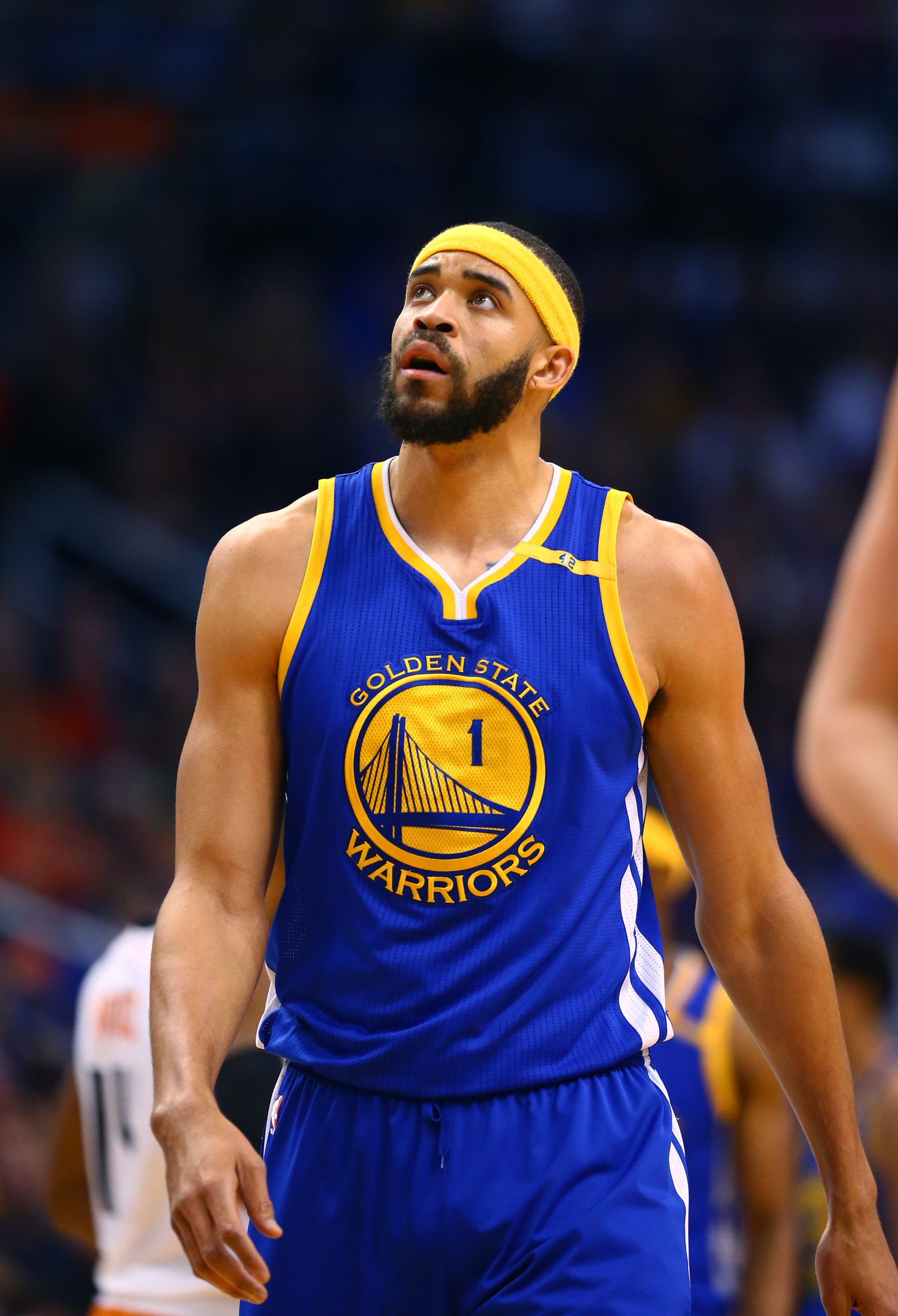
McGee put forth his most notable season in years when he debuted with the Warriors in 2016/17 but hasn’t replicated that success in 2017/18. Due to matchup issues in the small ball era and the emergence of rookie Jordan Bell, the team just doesn’t need McGee’s energy and length as much as it did in his first year with the team. Considering that the big man isn’t getting any younger, it’s hard to imagine him landing much on the market if all he could manage to yield after last year’s solid campaign was another one-year, minimum contract.
Zaza Pachulia, C, 34 (Down) – Signed to a one-year, $3.5MM deal in 2017
The Warriors have started Pachulia in all 109 of the games that he’s suited up in over the course of his two years with the franchise but this year his time on the court has dropped to its lowest point since 2009/10. Could that be an indication that the club is open to moving on in 2018? The Dubs gave Pachulia, a dinosaur in today’s game, more money than they needed to last summer but now that finances are even tighter, they may not be so generous. Expect Pachulia in a reserve role for the veteran’s minimum, if he’s even back in the Bay Area at all.
David West, C, 37 (Up) – Signed to a one-year, $2.3MM deal in 2017
West has been an extremely productive role player for the Warriors off the bench in 2017/18, exactly what basketball fans outside of northern California feared when the former All-Star decided to crawl onto the Dubs’ bandwagon in 2016. West has had old-man game since he broke into the league, so regression isn’t exactly an issue. Expect him back playing meaningful minutes with Golden State until he decides to retire.
Nick Young, SG, 33 (Down) – Signed to a one-year, $5.2MM deal in 2017
Young is a potent three-point shooter that slots in well with the rest of Golden State’s rotation but does he provide enough to justify what his $5M+ contract will amount to when the luxury tax bill is calculated? The Warriors may gauge Young’s receptiveness to returning on a cheaper deal in 2018/19. If he isn’t interested, expect him to pound the pavement and eventually land somewhere as a hired gun on a short-term deal. If logic prevails, he’ll be a valuable depth piece with the Warriors for years to come… but that might be a big if.
Photo courtesy of USA Today Sports Images.
Fantasy Hoops: Love, Hernangomez, Murray
Isaiah Thomas‘ return has had its highlights and lowlights. His season began with an efficient 17-point showing, but he followed up his Cavaliers debut by making just four of his next 22 shots from behind the arc. Thomas is shooting 39.1% from the field since putting on a Cavs uniform and it’s clear that he’s not 100% recovered from his hip injury. 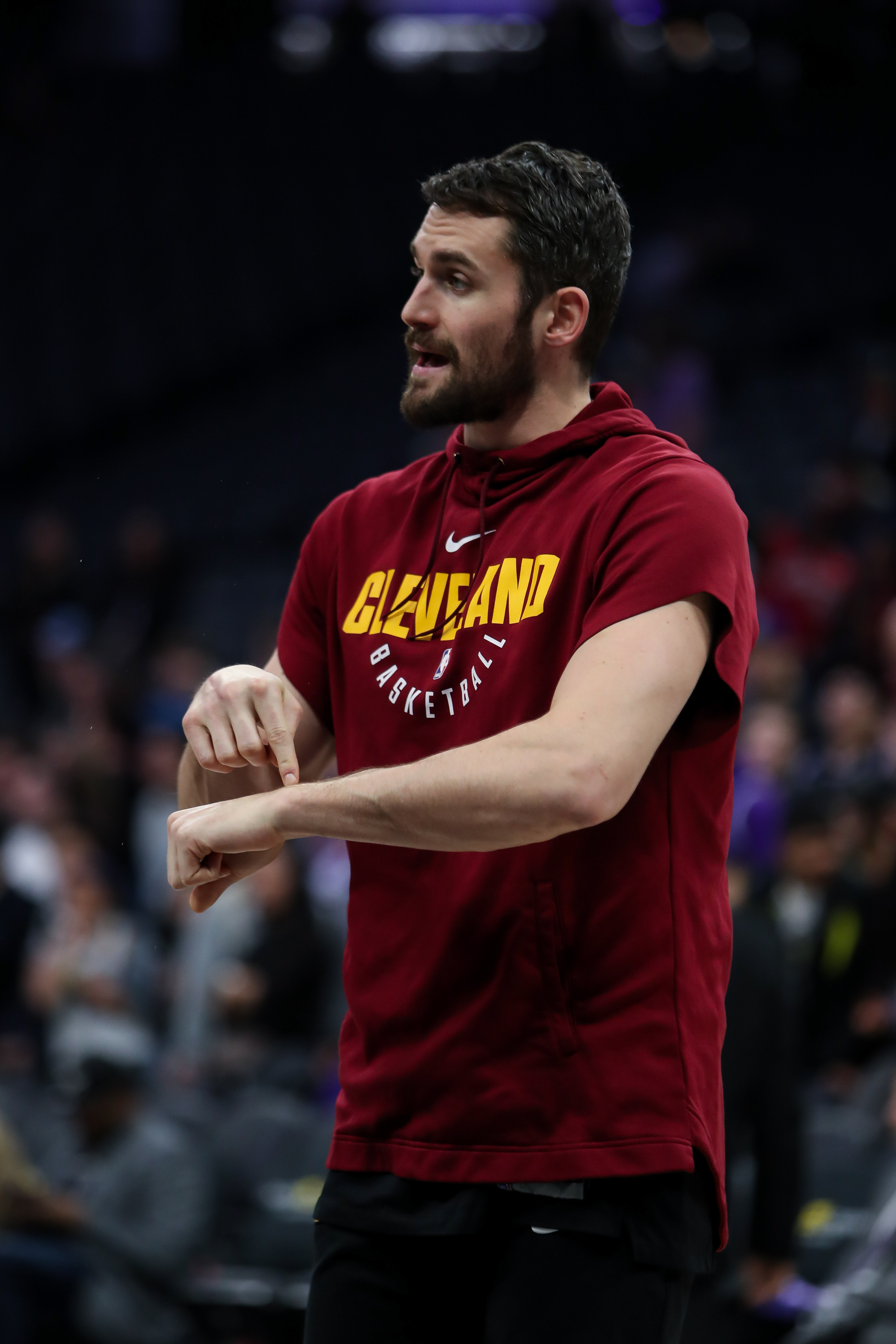
IT’s presence on the court has caused Kevin Love‘s fantasy stock to take a hit. The power forward is scoring 1.27 points per possession and has a 26.6% usage rate when Thomas is not on the floor this season, per NBAWowy. When the two players share the floor, Love’s numbers drop to 1.07 and 19.2%, respectively.
Cleveland is sliding down the standings and one would think the duo’s struggles on defense may force the team to send Thomas to the bench in order to stagger their minutes. That’s not happening yet — for now, Jae Crowder is the only player being pulled from the starting lineup by coach Tyronn Lue. Love will shift to power forward, and as long as he continues to share the court with the ball-dominant point guard, I’m not confident that Love’s fantasy stock will improve in the immediate future.
The potential addition of George Hill, who remains a fantasy asset despite Sacramento’s odd veteran rest plan, could push Thomas to the bench, though the deal to acquire him is far from a sure thing. Hill hasn’t been good on defense this season, but he has shown in the past that he’s more than capable of being a plus defender. He’s also not a player who needs the ball to make an impact, so he would mesh well with Love.
Again, the Hill trade is not imminent. Cleveland is looking to get better defensively either by making internal changes or by acquiring a defensive-minded player like Hill or DeAndre Jordan. An improved defense would mean fewer offensive possessions for everyone on the team and that might counteract any boost that Love gets from a reduction in court time with IT.
Of course, reports that Love was a target during a tense team meeting are also worth considering, though it sounds like he was far from the only Cav who was questioned behind closed doors. If there’s more to the rumors than the team is letting on, the Cavs could ostensibly demote Love to the bench and reduce his minutes — or they could deal him. A Love trade appears very unlikely at the moment, as does a demotion to the pine, but this has been another peculiar season for Cleveland. Would anything short of a LeBron James trade really be that surprising?
- The Jazz are reportedly among the teams that have shown interest in Willy Hernangomez, and if the Knicks deal him to Utah or any team, his stock would drastically rise. Pick him up now as a speculative stash, as the trade deadline is less than two weeks away.
- Pick up Clippers big man Montrezl Harrell. In the five games DeAndre Jordan missed, the Louisville product put up 15.0 points, 5.8 rebounds, 1.4 steals and 1.0 blocks per game while shooting 58.7% from the field. Jordan, who has been the subject of trade rumors, returned on Thursday and Harrell remained productive, knocking down four of seven shots while grabbing seven rebounds.
- If Dejounte Murray is somehow available, as he is in over 64% of ESPN leagues, scoop him up. He’s the Spurs‘ new starting point guard and has the potential to produce top results every night, as he did in his 19-point, 7-steal, 10-rebound performance against the Cavs earlier this week.
Fantasy questions? Take to the comment section below or tweet me at @CW_Crouse.
Missed an earlier edition of Fantasy Hoops? Check out the entire series here.
Statistics are current through Friday morning. Photo courtesy of USA Today Sports Images.
Seven Central Trade Candidates To Watch
The NBA trade deadline is less than two weeks away, and there’s no shortage of players around the league who could change teams. With that in mind, we’re taking a closer look at some of those top trade candidates, breaking them down by division.
While our focus will be primarily on teams expected to be sellers at the deadline, our lists may also include some players on contenders who could be used as trade chips when those teams look to make upgrades.
So far, we’ve covered the Southeast, Southwest, Atlantic, and Northwest. We’re examining the Central Division today, so let’s dive in and identify seven players who could be on the move on or before February 8…
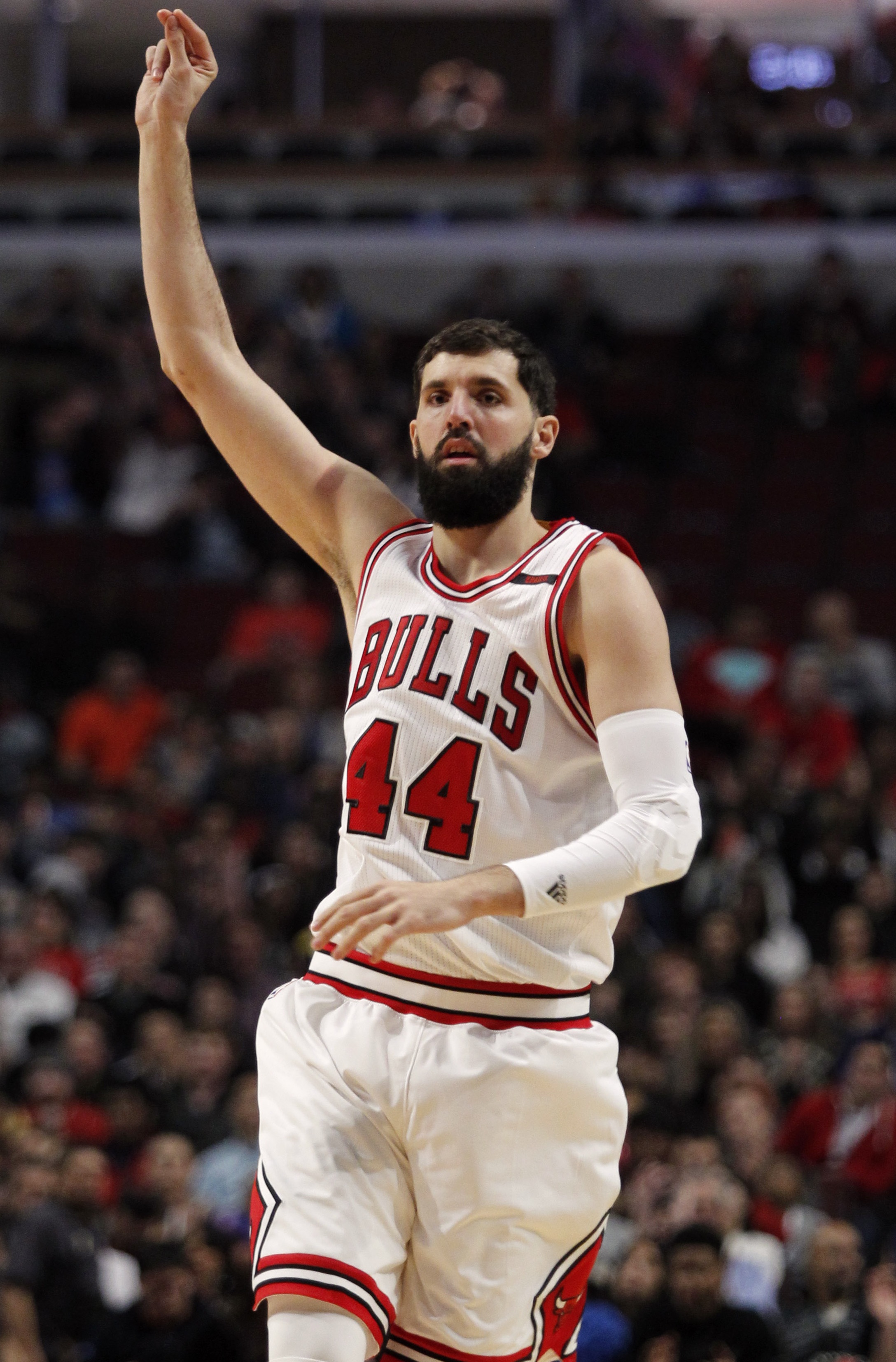
 Nikola Mirotic, PF (Bulls): A potential fit for the Jazz or Pistons, among other teams, Mirotic is a player whose trade potential we’ve discussed at length over the last couple months, so we won’t spend long revisiting it. Still, it’s worth reiterating what a terrific job Mirotic has done of boosting his own value this season — his 17.0 PPG, .475 FG%, .429 3PT%, and 6.5 RPG all blow away his previous career highs, albeit in a small sample (23 games). If he can continue playing anywhere close to that level, he’ll be a strong value at $12.5MM next season, and may even net the Bulls the first-round pick they’re reportedly seeking.
- Robin Lopez, C (Bulls): Compared to Mirotic, Lopez has flown under the radar this season as a trade candidate, but he finds himself in a pretty similar situation (minus the preseason scrimmage dust-up). The veteran center has a $13.79MM cap hit for this season, followed by one more guaranteed year worth $14.36MM, so he offers a little team control without necessitating a long-term commitment. A solid defender in the middle, Lopez has been his usual productive self this season, averaging a career-high 12.9 PPG with a .536 FG%. If big-name centers like DeAndre Jordan and Hassan Whiteside stay put at the deadline, Lopez would be a decent Plan B or C for a club seeking a frontcourt upgrade.
- Reggie Jackson, PG (Pistons): The Pistons reportedly explored potential Jackson trades last season, then did so again in the offseason. The veteran point guard hasn’t been mentioned in any legit trade rumors since opening night, but he’s still a subject of frequent speculation, since the Pistons are known to be surveying the trade market and Jackson’s contract makes him a logical outgoing piece in any major move. That contract – along with Jackson’s ongoing injury issues – will likely hurt his value until he shows he’s capable of once again being the sort of player he was during his first full season in Detroit (18.8 PPG, 6.2 APG). Nonetheless, there could be teams out there interested in an opportunity to buy low.
- Stanley Johnson, SF (Pistons): The eighth overall pick in the 2015 draft, Johnson has provided solid defense during his three NBA seasons in Detroit, but doesn’t offer much on the other end of the court — for his career, he’s shooting just 36.4% from the floor and 29.7% from outside. Still just 21 years old, Johnson has tantalizing upside and will remain on his rookie contract through 2019. He’s averaging a career-high 27.4 minutes per game for the Pistons this season in 35 contests (23 starts), but the team has reportedly been willing to discuss him in trade talks. Assuming Detroit’s asking price isn’t unreasonable, Johnson should be a prime target for a few rebuilding teams, especially if any of those clubs believe they could improve the young forward’s jump shot.
- Tristan Thompson, C (Cavaliers): The Cavaliers have several players who could be traded before this year’s deadline, and some are more likely to be dealt than Thompson. Channing Frye‘s expiring contract looks like a lock to be used in a trade, and there’s a good chance Iman Shumpert will be on the move as well. Still, those players are essentially just trade chips due to their cap figures — Thompson’s case is a bit more interesting, since he could actually provide multiyear value to a team in need of frontcourt help. Thompson is overpaid, with two years and $36MM left on his contract after this season, but he’s still only 26 years old and has more on-court value than a lot of bigs being paid at a similar rate (think Joakim Noah, Timofey Mozgov, Bismack Biyombo, and Ian Mahinmi). With Thompson playing fewer minutes than ever in Cleveland this season, his trade stock is at an all-time low, meaning the Cavs might even be willing to attach another asset or two in a deal.
- John Henson, C (Bucks): When Greg Monroe headed to Phoenix earlier this season in the Eric Bledsoe deal, the Bucks were probably hoping that second-year big man Thon Maker would take on a more substantial role. Although Maker’s minutes have increased, his production has slipped, and Milwaukee has had to rely more on Henson at center. The 27-year-old has been up to the task, averaging a respectable 8.6 PPG, 6.7 RPG, and 1.5 BPG with a career-best .587 FG%. Still, Henson’s skill-set is somewhat limited — he’s a decent piece off the bench, but he’s probably not the center the Bucks want on the court in crunch time in the playoffs. Henson’s $11.4MM cap hit makes him a candidate to be moved if the Bucks trade for another center, and while he has has two more guaranteed years left on his deal, his declining annual cap hits are at least a little team-friendly.
- Jabari Parker, F (Bucks): A trade package that includes Henson and rookie scale players like D.J. Wilson and Rashad Vaughn is likely the Bucks‘ preference, but if the opportunity to land an impact big man arises and offering Parker is required to get it done, the team will have to seriously consider it. It’s been a long time since Milwaukee had Parker, Giannis Antetokounmpo, and Khris Middleton healthy and in the lineup at the same time, so the chance to get a look at that trio down the stretch this season may be too intriguing for the franchise to pass up. Still, Parker is expected to get much more expensive in a few months when he reaches restricted free agency, and the Bucks already have nearly $106MM on their books for 2018/19. If the team plans to re-sign the former second overall pick, perhaps moving another contract to stay out of the tax, then he’ll stay put at the deadline. But if there are any doubts about Parker’s long-term future in Milwaukee, gauging his value on the trade market makes sense.
Here are a few more potential Central trade candidates to monitor:
- Jerian Grant, PG (Bulls): Grant still has a year and a half left on his rookie contract and the Bulls are reportedly gauging interest in him. Given his modest upside though, Grant is unlikely to bring back a significant return.
- Luke Kennard, SG (Pistons): If the Pistons target a big fish, Kennard may have to be up for discussion. I don’t expect him to be moved though.
- Matthew Dellavedova, G / Mirza Teletovic, PF (Bucks): While Henson is more likely to be the player included in a Bucks trade to make the salaries work, Dellavedova’s and Teletovic’s cap hits ($9.6MM and $10.5MM, respectively) could also be useful. It won’t be easy to move either contract though.
- J.R. Smith, SG (Cavaliers): Smith has been a mess since signing a lucrative four-year contract in the 2016 offseason. Dumping his contract probably isn’t viable at this point for the Cavaliers, but I’m sure they’ll explore it.
- Al Jefferson, F/C (Pacers): Another beneficiary of 2016’s league-wide spending spree, Jefferson is overpaid and underused. However, his $10MM salary for 2018/19 is only partially guaranteed for $4MM — that figure could be reduced further if he’s stretched, so he represents an expiring contract of sorts. The Pacers actually have a few contracts structured this way, but Jefferson is the only player on such a deal who isn’t a key rotation piece.
Photo courtesy of USA Today Sports Images.
Five Potential Buyers Without 2018 First-Round Picks
As the February 8 trade deadline approaches, many potential sellers around the NBA will be looking to get their hands on 2018 draft picks. Those picks are the simplest way for contending teams to upgrade their rosters without sacrificing a key rotation player or two of their own, and they’re coveted by rebuilding clubs looking to stockpile assets or add cheap young talent.
A year ago, six first-round picks were moved in trades within the last two weeks before the trade deadline. One of those picks was heavily protected and ultimately turned into two second-rounders, but the others resulted in players like Zach Collins, Harry Giles, Jarrett Allen, and Tony Bradley in the 2017 draft.
Although ESPN’s Bobby Marks (Twitter link) hears that that some league-wide reluctance to deal first-round picks for a quick fix, I expect to see at least one or two first-rounders change hands again this season. However, several contending teams have already moved their 2018 first-rounders.
The Ted Stepien rule also prevents those clubs from trading their 2019 first-round picks, which means that a 2020 selection is the earliest first-rounder they could dangle in trade talks. A pick that far down the road still has value, but it may not appeal to some sellers looking to accelerate their rebuilds or add talent for next year.
Here’s a look at five contending teams without 2018 first-round picks, with a breakdown of how the absence of a first-rounder could impact potential plans of a roster upgrade at the deadline:
Houston Rockets
- Traded 2018 first-round pick to: Los Angeles Clippers (top-3 protected) in deal for Chris Paul. The Clippers subsequently traded the pick to the Hawks.
- Next trade-eligible first-round pick: 2020. Since there are protections on their traded 2018 first-rounder, the Rockets could only trade their 2020 pick conditionally. However, a team acquiring that 2020 pick could be confident that it won’t be delayed, since the 2018 pick will definitely change hands this year.
- Potential impact: The Rockets look like a fairly well-rounded squad already, so the team may simply look to make an upgrade or two around the edges of its roster at the deadline. If that’s the case, no longer being able to put that 2018 first-round on the table shouldn’t be a problem.
Miami Heat
- Traded 2018 first-round pick to: Phoenix Suns (top-7 protected) in deal for Goran Dragic.
- Next trade-eligible first-round pick: 2023. In addition to their 2021 pick, the Heat also sent their 2021 first-rounder to Phoenix in the Dragic trade, essentially tying up their first-round picks for the next several years.
- Potential impact: The Heat haven’t been the subject of any major trade rumors, though they’ll always keep an eye out for potential stars to target. If they make an unexpected splash at this year’s deadline, they’ll probably have to use players like Hassan Whiteside and/or Justise Winslow as their key trade chips, rather than draft picks.
Milwaukee Bucks
- Traded 2018 first-round pick to: Phoenix Suns (top-10 protected and 17-30 protected) in deal for Eric Bledsoe.
- Next trade-eligible first-round pick: 2020. The unusual protections on the pick sent to the Suns mean that it may not change hands until as late as 2021, so the Bucks would only be able to trade their 2020 pick conditionally. Any team acquiring that 2020 first-round pick would have to be prepared for the possibility that it could end up becoming a 2022 or 2023 first-rounder instead.
- Potential impact: The Bucks are reportedly in the market for an impact center such as DeAndre Jordan of the Clippers, but their inflexibility with future first-round picks figures to complicate that hunt. In lieu of a first-rounder, Milwaukee could offer someone like Malcolm Brogdon or Jabari Parker.
Oklahoma City Thunder
- Traded 2018 first-round pick to: Utah Jazz (top-14 protected) in deal for Enes Kanter. The Jazz subsequently traded the pick to the Timberwolves.
- Next trade-eligible first-round pick: 2022. The Thunder have also traded away their 2020 first-rounder, which is top-20 protected, so their ’22 pick can only be moved conditionally. That leaves the club with essentially no first-round assets for now.
- Potential impact: The Thunder would benefit from a deal like the one the Wizards made at the deadline last season for Bojan Bogdanovic — adding a productive sixth or seventh man in exchange for a first-round pick and a bad contract (like Kyle Singler‘s) would make the club’s roster more dangerous and well-rounded. Without a first-rounder to dangle in trade talks though, it’s harder to see OKC’s path to that sort of upgrade.
Toronto Raptors
- Traded 2018 first-round pick to: Brooklyn Nets (top-14 protected) in DeMarre Carroll salary dump.
- Next trade-eligible first-round pick: 2020. Technically, the pick sent to Brooklyn is protected, so the 2020 pick would need to be moved conditionally. But that 2018 first-rounder will change hands this year, so a team acquiring Toronto’s 2020 pick would know it wouldn’t be delayed.
- Potential impact: A year ago, the Raptors were more than willing to part with draft picks at the deadline, sending a first-rounder to Orlando for Serge Ibaka and a pair of second-rounders to Phoenix for P.J. Tucker. With no 2018 selections in their arsenal, the Raps aren’t as well-equipped to address a need this time around, which makes them less likely to complete a deal.
Revisiting The Last Five NBA Trade Deadlines
The NBA’s 2018 trade deadline is now just 15 days away. A ton of players have already been mentioned in trade rumors, and many teams around the league are reportedly looking to buy or sell, but some NBA reporters have recently cited sources who believe that it may ultimately be a quiet deadline.
Of course, “quiet” is a relative term. Even if there are no franchise-altering deals completed at this year’s deadline, we should still expect to see several trades get done. After all, none of the last five NBA deadlines have featured fewer than eight deadline-day swaps, and there have always been a couple more moves made in the two weeks leading up to the deadline as well. In some years, those trades are just a little more interesting.
As we wait to see how eventful the 2018 trade deadline will be, let’s take a look back at the last five deadlines to get some context for what kind of activity we can expect this time around…
 2017
2017
- Deadline-day trades: 8
- Other trades in two weeks before deadline: 6
- Most notable players moved: DeMarcus Cousins (to Pelicans); Serge Ibaka (to Raptors); Jusuf Nurkic (to Trail Blazers); Lou Williams (to Rockets)
- Last season’s trade deadline actually ended up being pretty active, with plenty of moves being made before deadline day arrived. One All-NBA big man (Cousins) was traded in an unexpected blockbuster, with several other impact players on the move too. Cousins, Ibaka, and Williams netted first-round picks for the Kings, Magic, and Lakers, respectively, as did Bojan Bogdanovic for the Nets. The Blazers actually landed a first-rounder along with Nurkic in their swap with the Nuggets.
2016
- Deadline-day trades: 8
- Other trades in two weeks before deadline: 2
- Most notable players moved: Tobias Harris (to Pistons); Markieff Morris (to Wizards); Jeff Green (to Clippers)
- No massive deals went down at the 2016 deadline, though there were a few interesting moves, including one that ultimately didn’t happen — the Pistons, Rockets, and Sixers completed a three-way trade that included Donatas Motiejunas and a first-round pick, but the deal was voided due to the results of Motiejunas’ physical. The Grizzlies and Suns secured first-round picks for Green and Morris, respectively, while the Cavaliers sent a first-rounder to the Trail Blazers in order to dump Anderson Varejao‘s contract.
2015
- Deadline-day trades: 12
- Other trades in two weeks before deadline: 2
- Most notable players moved: Isaiah Thomas (to Celtics); Goran Dragic (to Heat); Reggie Jackson (to Pistons); Enes Kanter (to Thunder); Brandon Knight (to Suns); Will Barton (to Nuggets)
- 2015 was one of the most eventful deadlines in recent memory, with a dozen trades completed on the season’s final day for deals. Point guard trades ruled the day, with some of those acquisitions turning out better than others — the Celtics were certainly happy to give up Marcus Thornton and a protected first-round pick for Thomas, but the Suns and Bucks probably regret the three-way deal that sent Knight to Phoenix and Michael Carter-Williams to Milwaukee. That trade saw the Sixers acquire the future Lakers first-rounder that they ultimately used to move up for Markelle Fultz. In total, eight first-round picks changed hands in these 14 trades.
2014
- Deadline-day trades: 9
- Other trades in two weeks before deadline: 2
- Most notable players moved: Evan Turner (to Pacers); Andre Miller (to Wizards); Spencer Hawes (to Cavaliers)
- While 2014’s deadline was reasonably busy, most of the deals were modest moves — the fact that no first-round picks were involved in any of these trades reflects how quiet the deadline was. The Pacers‘ acquisition of Turner was probably the most notable deal, since Indiana parted ways with its longest-tenured player, Danny Granger, in that swap. Granger had spent his entire nine-year career with the Pacers at that point, but only played another 42 NBA games after being traded.
2013
- Deadline-day trades: 10
- Other trades in two weeks before deadline: 2
- Most notable players moved: J.J. Redick (to Bucks); Thomas Robinson (to Rockets); Marcus Morris (to Suns); Jordan Crawford (to Celtics)
- Robinson and Morris aren’t necessarily household names now and weren’t at the time, but the deals involving them were noteworthy since they were recent lottery picks — Morris was selected 14th in 2011, while Robinson was the fifth overall pick in 2012. Overall though, it was another deadline lacking in blockbusters, as no first-round picks changed hands in these 12 swaps. The Raptors‘ acquisition of Rudy Gay, which happened about three weeks before the 2013 deadline, was probably the biggest in-season move of the year.
Photo courtesy of USA Today Sports Images.