
Seven Northwest Trade Candidates To Watch
The NBA trade deadline is just over two weeks away, and there’s no shortage of players around the league who could change teams. With that in mind, we’re taking a closer look at some of those top trade candidates, breaking them down by division.
While our focus will be primarily on teams expected to be sellers at the deadline, our lists may also include some players on contenders who could be used as trade chips when those teams look to make upgrades.
So far, we’ve covered the Southeast, Southwest, and Atlantic. We’re examining the Northwest Division today, so let’s dive in and identify seven players who could be on the move on or before February 8…
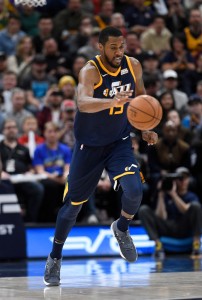 Derrick Favors, F/C (Jazz): This isn’t the first season in which Favors has been considered a trade candidate, but the case for moving him is now stronger than ever. He’s on an expiring contract, the 19-28 Jazz are slipping out of the playoff race, and Utah looks like a better team with a small-ball power forward playing alongside Rudy Gobert. When Gobert has been sidelined due to injuries, Favors has played his best, which suggests he’d be better suited as a center than a power forward for most NBA teams. There are several teams that could be fits for that sort of player, but given Favors’ looming unrestricted free agency, the Jazz may have to be willing to take back some long-term salary in order to land a decent draft pick or a young player in exchange for the veteran big man.
- Rodney Hood, SG (Jazz): In the wake of Gordon Hayward‘s offseason departure, Hood was identified as a prime breakout candidate and a key source of offense for the Jazz. However, injuries have once again slowed down the 25-year-old, who has played 60+ games in a season just once since entering the league in 2014. When he has played, Hood has been pretty effective, posting career-highs in several categories, including PPG (16.7) and 3PT% (.386). However, his injury history is an issue, and it’s no longer clear if he’s in Utah’s long-term plans. Hood will be a restricted free agent in the summer, which makes him a more appealing trade piece than a UFA-to-be like Favors, since a new team would be able to match any offers Hood receives. With the Jazz reportedly increasing their efforts to make a deal, teams in need of a scoring punch should be in on Hood.
- Joe Johnson, F (Jazz): Johnson made perfect sense on the 2016/17 Jazz roster as a veteran leader and a clutch-time scorer on a fairly young playoff team. He makes less sense on the current iteration on the Jazz, especially since his game has fallen off a cliff this season. Johnson’s average of 7.2 PPG is a career low, as is his dismal .258 3PT%. Unless the Jazz start to make a playoff push very soon, it seems unlikely that Johnson finishes the season in Utah — Steve Kyler of Basketball Insiders (Twitter link) hears that the veteran forward wants out. Of course, given his performance and his $10.5MM cap hit, Johnson may be end up being more of a buyout candidate than a trade candidate. It’s possible he could still help a contender, but at that salary – and at his age (36) – teams probably won’t pay much to find out.
- Kenneth Faried, PF (Nuggets): Given how long Faried has been the subject of trade rumors, it seems hard to believe that he still has one more year on his contract after this one. That extra guaranteed season could be problematic if and when the Nuggets look to move him — most teams won’t be looking to commit $13.76MM of next year’s cap to a somewhat one-dimensional player who is playing fewer minutes than ever this season. An off-and-on member of Denver’s rotation, Faried has averaged a modest 6.1 PPG and 4.8 RPG in 30 games (14.9 MPG) so far in 2017/18. The 28-year-old is still a solid rebounder and can finish at the rim, but he’s not a particularly strong rim protector on defense and he doesn’t shoot three-pointers — most NBA teams these days want their bigs to do one or the other. Moving Faried may require the Nuggets to attach an asset or two.
- Emmanuel Mudiay, PG (Nuggets): Mudiay has been a more efficient shooter in 2017/18 than he was in first two NBA seasons, particularly from three-point range (.387 3PT%). However, he’s still shooting just 39.1% overall, and he has once again seen his role reduced by the Nuggets. After starting 107 games in his first two seasons, the former No. 7 overall pick has come off the bench all year, having been usurped on the depth chart by Jamal Murray. Mudiay is still just 21 years old, and his rookie contract doesn’t expire until 2019, making him an intriguing trade target for a team that still believes in his potential. His trade value isn’t as high as it would have been a year or two ago, but it might be time for the Nuggets to get what they can.
- Maurice Harkless, F (Trail Blazers): Even after trading Allen Crabbe in the offseason, the Trail Blazers likely want to move off one more long-term contract in order to avoid ongoing luxury tax purgatory. The club may prefer to deal Evan Turner, who is earning $17MM+ annually, or Meyers Leonard, who has a contract similar to Harkless’ but barely plays. Still, of the three, Harkless represents the best combination of affordability (relative to Turner) and production (relative to Leonard). At $10.16MM, the 24-year-old’s salary isn’t an albatross, especially if he can match last season’s production (10.0 PPG, .503 FG%, .351 3PT%). Anyone on the Blazers’ roster not named Damian Lillard or C.J. McCollum should be available, so Harkless is hardly the only trade candidate in Portland, but he strikes me as one of the club’s most logical trade chips.
- Cole Aldrich, C (Timberwolves): Aldrich has only played 22 minutes this season for the Timberwolves, so perhaps it’s more accurate to identify Aldrich’s contract as the trade candidate rather than the player himself. The veteran center is earning $7.3MM and only has about $2MM guaranteed for 2018/19, making his deal essentially an expiring one. Minnesota reportedly dangled Aldrich and a draft pick in the offseason in an effort to add a shooter, and I’d expect the team to do the same at the deadline.
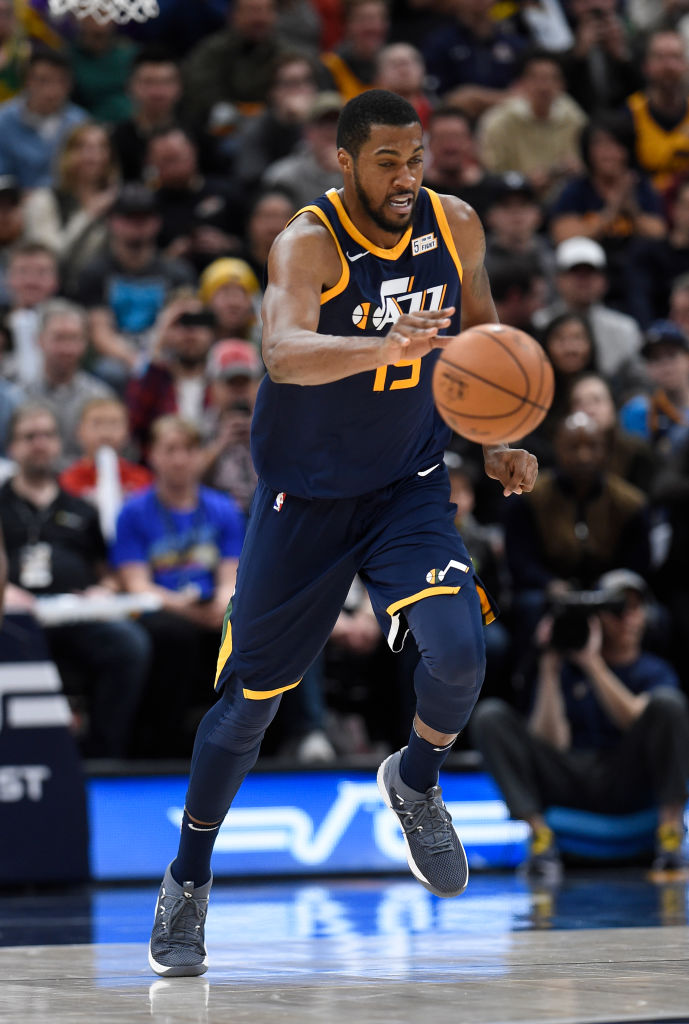
Here are a few more potential Northwest trade candidates to monitor:
- Alec Burks, SG (Jazz): Burks was identified earlier this month as a player drawing some interest on the trade market.
- Wilson Chandler, F (Nuggets): Like Faried, Chandler has been a longtime trade candidate in Denver. But he’s having a down year and the rumor mill this season has been pretty quiet.
- Kyle Singler, SF (Thunder): Singler, who has played 44 minutes this season, will be a candidate to be stretched in the offseason if the Thunder can’t include him in a trade. Alex Abrines or Patrick Patterson would draw more interest on the trade market, but Oklahoma City might be reluctant to give up a player who can hit outside shots.
- Ed Davis, F/C (Trail Blazers): The Blazers would rather trade longer-term contracts, and they probably still need Davis in their rotation. Still, with Zach Collins emerging, Davis makes an interesting trade candidate — moving his expiring contract could get Portland under the tax line this season.
- Gorgui Dieng, F/C (Timberwolves): Moving Dieng’s four-year, $62.8MM deal is a long shot, but he’s the most likely trade candidate of the Timberwolves‘ highest-paid players. With Taj Gibson now starting at the four, Dieng has seen his minutes slashed from 32.4 MPG a year ago to just 18.2 this season.
Community Shootaround: Drafting All-Star Starters
Last week, the NBA announced the 10 starters for this year’s All-Star Game. Barring injuries, the players on the court to start next month’s event will be the following 10:
- Backcourt:
- Kyrie Irving (Celtics)
- DeMar DeRozan (Raptors)
- Stephen Curry (Warriors)
- James Harden (Rockets)
- Frontcourt:
- LeBron James (Cavaliers)
- Giannis Antetokounmpo (Bucks)
- Joel Embiid (Sixers)
- Kevin Durant (Warriors)
- DeMarcus Cousins (Pelicans)
- Anthony Davis (Pelicans)
Although there are still five representatives from each conference among that group of starters, there will be a twist on the usual format this season. Top vote-getters James and Curry will each captain one All-Star squad, picking teams from the pool of players in what will essentially be a star-studded fantasy draft.
While that draft will ultimately include all 24 players named to the All-Star teams, James and Curry will focus first on the above group, filling out their starting lineups before moving on to the reserves. As explained on NBA.com, James will pick first from the group of those eight remaining starters, with Curry picking second. They’ll alternate after that until all the starters are off the board.
The NBA continues to say it won’t televise the event, so we may not actually get to see how the draft plays out, but it’s still fun to speculate. Will James use his first pick to select Curry’s Warriors teammate Durant? Will LeBron avoid selecting Kyrie? Will the star Pelicans bigs get separated? And, of course, who will be the last player picked?
We want to hear your two cents on how the draft will look for the All-Star starters, so jump into the comment section to make your predictions. What do you expect the two starting lineups to look like? Which players would you like to see team up? What order would you pick the All-Star starters in if you were drafting the teams?
Seven Atlantic Trade Candidates To Watch
The NBA trade deadline is just two and a half weeks away, and there’s no shortage of players around the league who could change teams. With that in mind, we’re taking a closer look at some of those top trade candidates, breaking them down by division.
While our focus will be primarily on teams expected to be sellers at the deadline, our lists may also include some players on contenders who could be used as trade chips when those teams look to make upgrades.
So far, we’ve covered the Southeast and Southwest. We’re examining the Atlantic Division today, so let’s dive in and identify seven players who could be on the move on or before February 8…
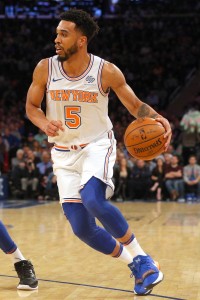 Courtney Lee, G/F (Knicks): Lee’s cap hit for this season is $11.75MM, and it will jump to $12MM+ for the following two seasons. That’s not great, especially since he’s already 32 years old, but there are many players with similar skill sets around the NBA who cost more. And many of those more expensive players aren’t knocking down shots as effectively as Lee is — his 13.6 PPG and .434 3PT% are career bests, and he has been the league’s best free throw shooter (.965 FT%). If the Knicks‘ recent slide continues and the club falls further out of the playoff picture in the East, Lee looks like a prime trade candidate — expensive enough that clearing his contract from the books would help the Knicks in the long term, but affordable and productive enough that he’d draw interest from contenders.
- Willy Hernangomez, C (Knicks): After a promising rookie campaign in 2016/17, Hernangomez has been turned into a benchwarmer this season due to New York’s logjam at center. While the Carmelo Anthony trade has turned out well for the Knicks as a team, the arrival of Enes Kanter in that deal has reduced Hernangomez’s role significantly, and the second-year big man would likely welcome a deal if it means he’ll see more minutes. The Knicks have reportedly received some calls on Hernangomez, but the former second-rounder is still just 23 years old and is on a very team-friendly deal. In other words, Steve Mills and Scott Perry aren’t just going to give him away.
- Kyle O’Quinn, C (Knicks): Rather than moving Hernangomez, the Knicks would probably like to find a taker for O’Quinn, who is a little older (28 in March) and a little more expensive ($4.09MM cap hit). O’Quinn doesn’t have Hernangomez’s upside, but the veteran center is posting career highs in several categories, including PPG (6.9), RPG (5.8), and FG% (.596). His $4.26MM player option for 2018/19 won’t appeal to clubs looking to keep their books as clean as possible next season, but it may not be a deal-breaker for some potential suitors. O’Quinn isn’t the answer for a team seeking an impact player in the middle, but he could be a decent investment for a team that just needs a little more depth up front.
- DeMarre Carroll, F (Nets): Carroll’s contract was viewed as so toxic during the 2017 offseason that the Raptors had to accept Justin Hamilton‘s unwanted contract and attach a first-round pick and a second-round pick to get the Nets to take it on. With just a year and a half now left on Carroll’s deal, it looks a little more palatable these days, especially since the veteran forward has been more effective in Brooklyn than he ever was in Toronto. Carroll is averaging career bests in PPG (13.0) and RPG (6.8), and while his shooting line (.409/.346/.773) still probably isn’t as high as the Nets would like, the 31-year-old has been a solid rotation player this season. His cap hit ($14.8MM) may make it difficult to deal him unless the Nets take back another undesirable contract, but Carroll’s trade value isn’t nearly as negative as it was just six months ago.
- Amir Johnson, F/C (Sixers): The Sixers‘ unusual 2017 free agent strategy saw the team overpay a pair of veterans to avoid having to commit to them for more than one year. The 76ers are getting what they hoped for from sharpshooter J.J. Redick, who is once again knocking down more than 40% of his three-point attempts, but Johnson has been somewhat underwhelming. With multiple options ahead of him at both power forward and center, Johnson is scraping out minutes where he can, but his 15.5 minutes per game are the least he has played since 2008/09. While Philadelphia presumably values Johnson’s veteran leadership in the locker room, his $11MM expiring contract would make sense as a trade chip if the club looks to make a move at the deadline.
- Jonas Valanciunas, C (Raptors): Valanciunas’ situation is similar to the one Ryan Anderson finds himself in for the Rockets, which we discussed last week. Both players are on lucrative contracts despite being unplayable against certain lineups — they were also both frequently mentioned in offseason trade rumors as their teams explored upgrades. As we noted when we discussed Anderson, once he stayed put through the offseason, he became less likely to be moved during the season. That’s also the case for Valanciunas, who continues to start for the Raptors despite averaging a career-low 21.0 MPG. If Toronto makes a deadline splash, Valanciunas looks like the most logical outgoing piece, but I’m not counting on that splash.
- The Celtics’ $8.4MM disabled player exception: It’s almost certainly cheating to include the Celtics‘ DPE here in place of a player, but the fact is that if Boston makes a deal, it seems more likely to involve this exception than any one player. Only three Celtics players – Kyrie Irving, Al Horford, and Gordon Hayward – are earning more than the $8.4MM this disabled player exception is worth, and those three players are extremely unlikely to be moved at the deadline. The Celtics also still have nearly $10MM in breathing room below the luxury tax line, meaning the team can afford to use its DPE to take on a player without sending out any salary in return. The fact that the DPE can only be used on a player with an expiring contract limits Boston’s options somewhat, but the team would still probably rather use the exception than surrender a rotation player or two in a trade.
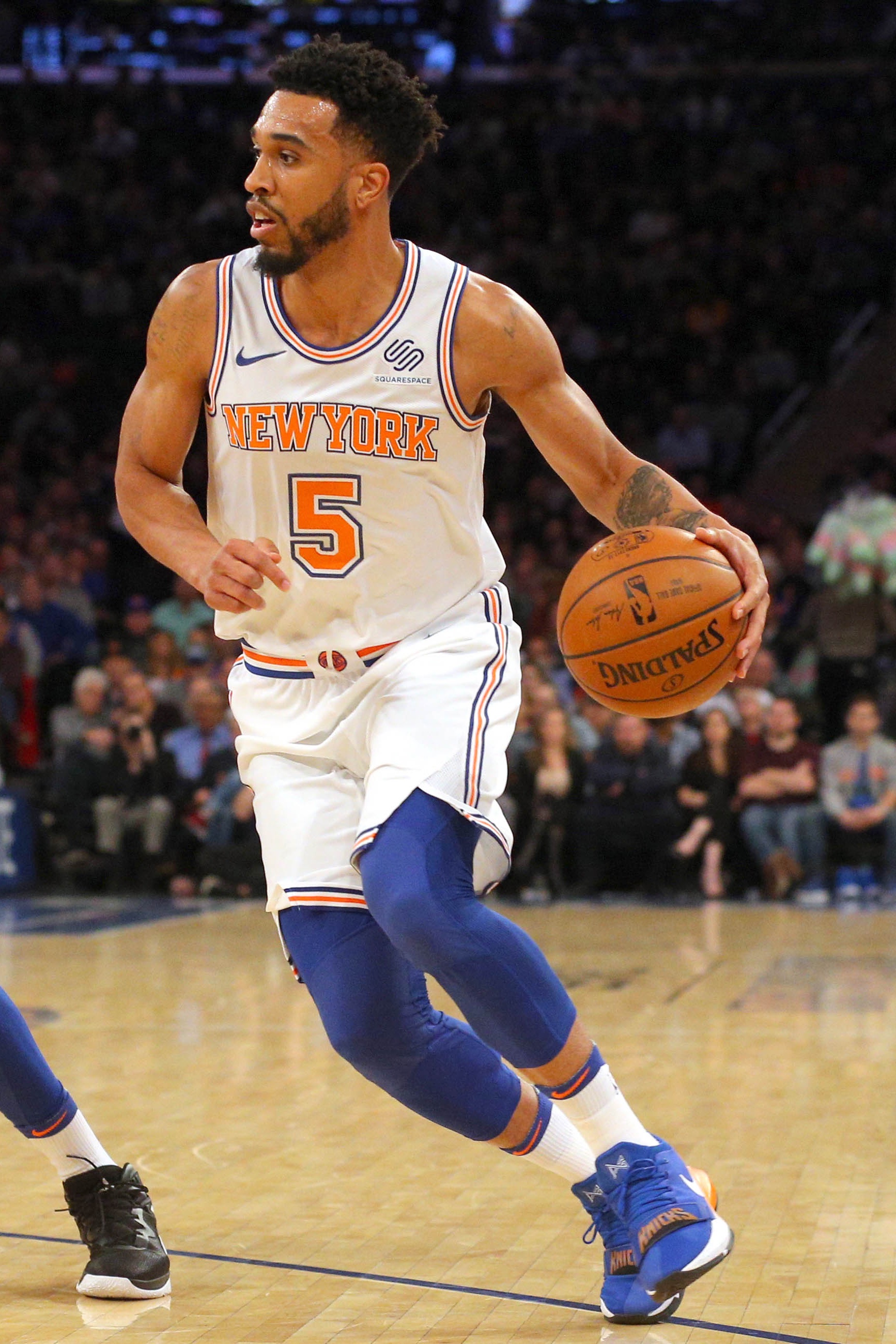
Here are a few more potential Atlantic trade candidates to monitor:
- Spencer Dinwiddie, PG (Nets): Dinwiddie has been a revelation for the Nets and he’s on a minimum salary contract through 2018/19. The club could sell high on him, with D’Angelo Russell penciled in as the point guard of the future, but I’d still be somewhat surprised to see him moved.
- Joe Harris, F (Nets): Another sell-high candidate for Brooklyn, Harris has made 38.7% of his three-point attempts with the Nets and will be an unrestricted free agent this summer.
- Joakim Noah, C (Knicks): The Knicks would certainly rather move Noah than either of the two centers listed above, but his contract will make it virtually impossible.
- Jerryd Bayless, G (Sixers): While Bayless has been a solid rotation piece for the Sixers, getting his $8.58MM salary for 2018/19 off the books might be a smart long-term play.
- Lucas Nogueira, C (Raptors): Nogueira has fallen behind Jakob Poeltl on the Raptors‘ depth chart and will be a restricted free agent this summer. If another team wants to roll the dice on him, he could probably be had.
- Bruno Caboclo, F (Raptors): The same goes for Caboclo, a former first-round pick and a 2018 RFA-to-be who hasn’t developed like the Raptors hoped.
Photo courtesy of USA Today Sports Images.
2018 Free Agent Stock Watch: Phoenix Suns
The Suns have salvaged what initially looked like a lost season and that has done wonders for their direction heading forward. While nobody is going to confuse interim coach Jay Triano‘s team of upstarts for a contender in the making just yet, the new regime immediately changed the culture of the young organization.
Whether or not Triano remains at the helm, the Suns are in an enviable position with a lengthy list of promising prospects that Triano has helped develop. As a result, Phoenix is a semi-intriguing free agency destination that will, conveniently, have boat loads of cap space to boot.
While it may not seem like much yet, the Suns are slowly building toward something. A summer of shrewd, responsible decisions could put them in an even better position for the future.
Isaiah Canaan, PG, 27 (Up) – Signed to a one-year, $1.1MM deal in 2017
Canaan has bounced around over the course of a five-year NBA career and may have found himself a home in Phoenix. The point guard immediately usurped Mike James as the club’s primary backup point guard, and his skills as a volume scorer off the bench have come in handy. Even if Brandon Knight figures to factor into the club’s 2018/19 point guard rotation, there will be plenty of room for Canaan to slot in somewhere as a functional combo option. Expect him back at a reasonable price.
Alex Len, C, 25 (Up) – Signed to a one-year, $4.2MM deal in 2017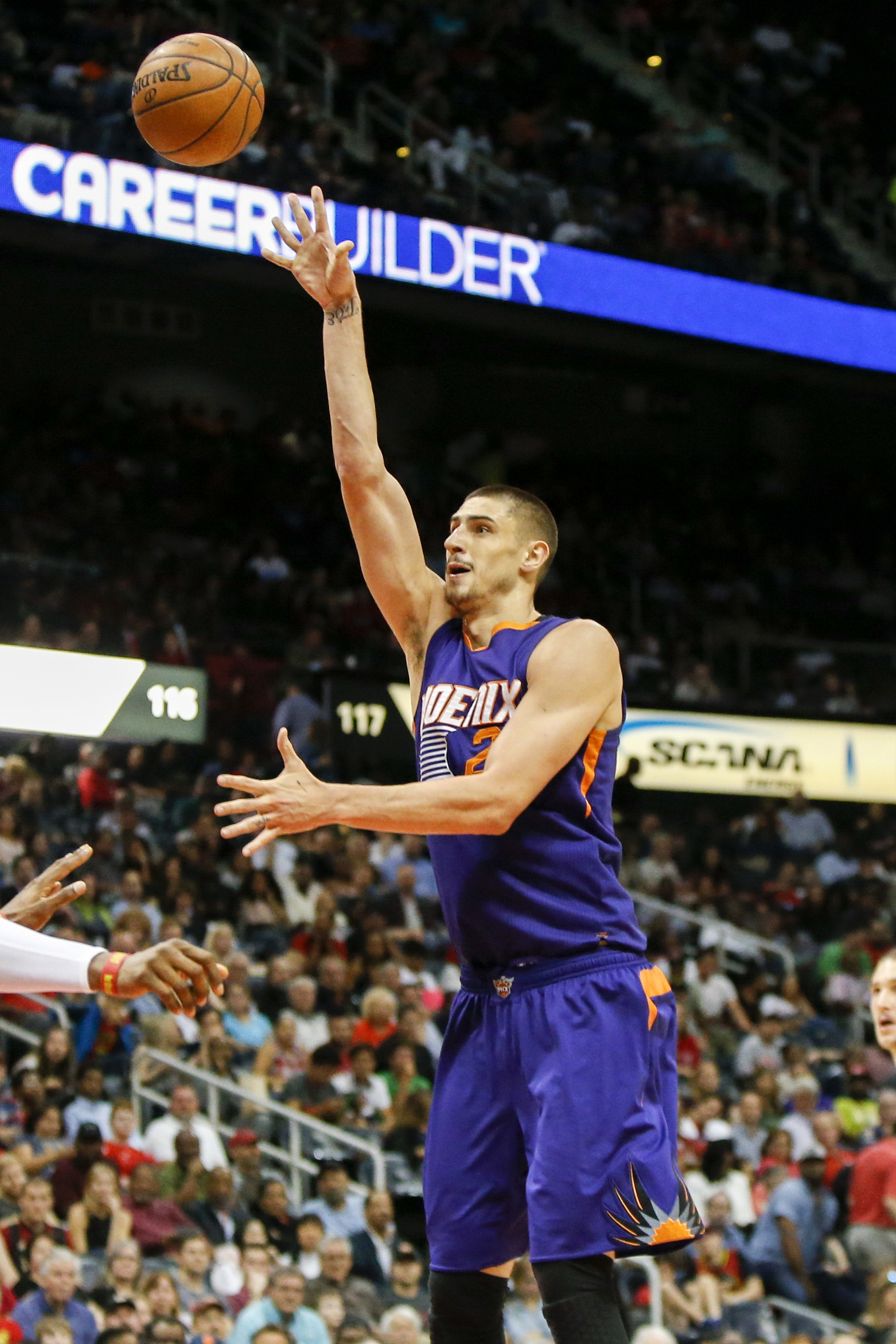
It’s hard to know what the Suns truly think of Len as a low-post building block. This year, with over $30MM tied up in between Greg Monroe and Tyson Chandler, it’s a wonder Len even makes his way onto the court at all. Despite the logjam, and a head coach that seems genuinely intent on getting the most out of his roster, Len has earned a consistent reserve role and has been modestly productive in it. Len signed a qualifying offer last summer which will make him an unrestricted free agent. There may not be a long list of suitors willing to bid for his services in the summer, but don’t be surprised if another team looks to poach him considering his upside.
Greg Monroe, C, 28 (Down) – Signed to a three-year, $50MM deal in 2015
There has been no player whose value has been impacted by the dawn of the small ball era more than Monroe. The lumbering big man has gone from being a revered young beast with the Pistons in 2011 to a stalwart reserve for the Bucks in 2015 to a barely playable expiring contract on the Suns in 2017. When the monster deal he inked with Milwaukee three years ago is officially off the books though, common sense will prevail and he’ll sign with a contender for dirt cheap and punish your favorite team in the playoffs. It doesn’t make sense to build an NBA team around a heavyweight in 2018, but that doesn’t mean those players can’t still be effective in select situations.
Photo courtesy of USA Today Sports Images.
Community Shootaround: Trading The Brooklyn Pick
No team has been tied to more trade rumors than the Cavaliers, and that figures to intensify after today’s performance. The defensive woes that have plagued the team all season were on full display in a 148-124 loss to the Thunder.
Cleveland has fallen to 27-18, and only two wins over the lowly Magic have saved the team from an eight-game losing streak. The Cavs are coming up on a critical week, with a trip to San Antonio Tuesday, followed by four straight games against Eastern Conference playoff contenders. Cleveland is just four games ahead of ninth-place Detroit in the loss column, and the possibilitties of losing home-court advantage in the first round or missing the playoffs entirely don’t seem so far fetched.
The most glaring problems are on defense, where a rim protector like DeAndre Jordan could make an immediate difference. Jordan has fallen to 1.0 blocks per game this season, but he has been among the NBA’s best shot blockers and rebounders for several years and would fill an obvious need in Cleveland. The 29-year-old can opt out this summer, which is why the Clippers are tempted to deal him.
But according to reports, L.A. will only consider the trade if Cleveland includes the unprotected Nets’ first-rounder it received from Boston in the Kyrie Irving deal. The Cavs have free agent concerns of their own with LeBron James not guaranteed to return and would like to keep the pick to help with a potential rebuilding project.
Brooklyn entered the day tied with Phoenix for seventh place in our Reverse Standings. For perspective, the seventh and eight players taken in last year’s draft were Lauri Markkanen and Frank Ntilikina. The Nets have plenty of room to move up or down, lodged three and a half games behind the Magic and Kings for the top spot, but only four games ahead of the 12th-place Knicks.
That brings us to our question for the night. Taking into consideration the fact that Brooklyn’s pick doesn’t guarantee a high lottery spot, plus the Cavaliers’ defensive problems and LeBron’s uncertain future in Cleveland, should GM Koby Altman be willing to part with the pick to obtain help now? Jump into the comments section below and give us your feedback.
Hoops Rumors Originals: 1/13/18 – 1/20/18
Every week, the Hoops Rumors writing team creates original content to complement our news feed. Here are our original segments and features from the past seven days:
- With the February 8 trade deadline fast approaching, we began to take a closer look this week at some specific trade candidates, identifying several players in the Southeast and Southwest divisions who could be on the move in the coming weeks.
- Some trade candidates will have a little more leverage than others this season. We examined five players who are viewed as possible trade chips, but would have to give their consent to be dealt.
- We continued our team-by-team series previewing the 2018 free agent market this week, assessing the stocks of free-agents-to-be for the Knicks and the Raptors.
- Eight first-round picks for the 2018 draft have already been traded, but most have protections on them. With the help of our 2017/18 Reverse Standings, we checked in on where things stand for those traded first-rounders, including the Lakers pick that will land in either Philadelphia or Boston.
- Chris Crouse’s weekly fantasy basketball feature zeroed in on finding under-the-radar values on lottery-bound teams.
- In his Sunday mailbag, Arthur Hill answered readers’ questions on LeBron James, Andre Drummond, and the Bucks.
- Our Community Shootaround discussions this week focused on the following questions:
- What moves do the Cavaliers need to make?
- Should the Heat exploring moving Hassan Whiteside?
- Who was the NBA’s first-half MVP?
- Which 10 players deserved to be named All-Star starters?
Fantasy Hoops: Ping-Pong Hopefuls
We’ve reached a point in the 2017/18 season where some front offices are facing a fork in the road, with one clearly preferable long-term path for their franchises’ futures. Several of the clubs that find themselves atop our Reverse Standings have already begun to look past this season and into the future. Today, we’re going to take a look at some of these bottom-dwellers from a fantasy perspective.
The Kings are one club that has started to focus on the long-term view. The team’s plan is to sit at least two veteran players in every remaining game this season. The group of veterans includes George Hill, Kosta Koufos, Garrett Temple, Vince Carter, and Zach Randolph. 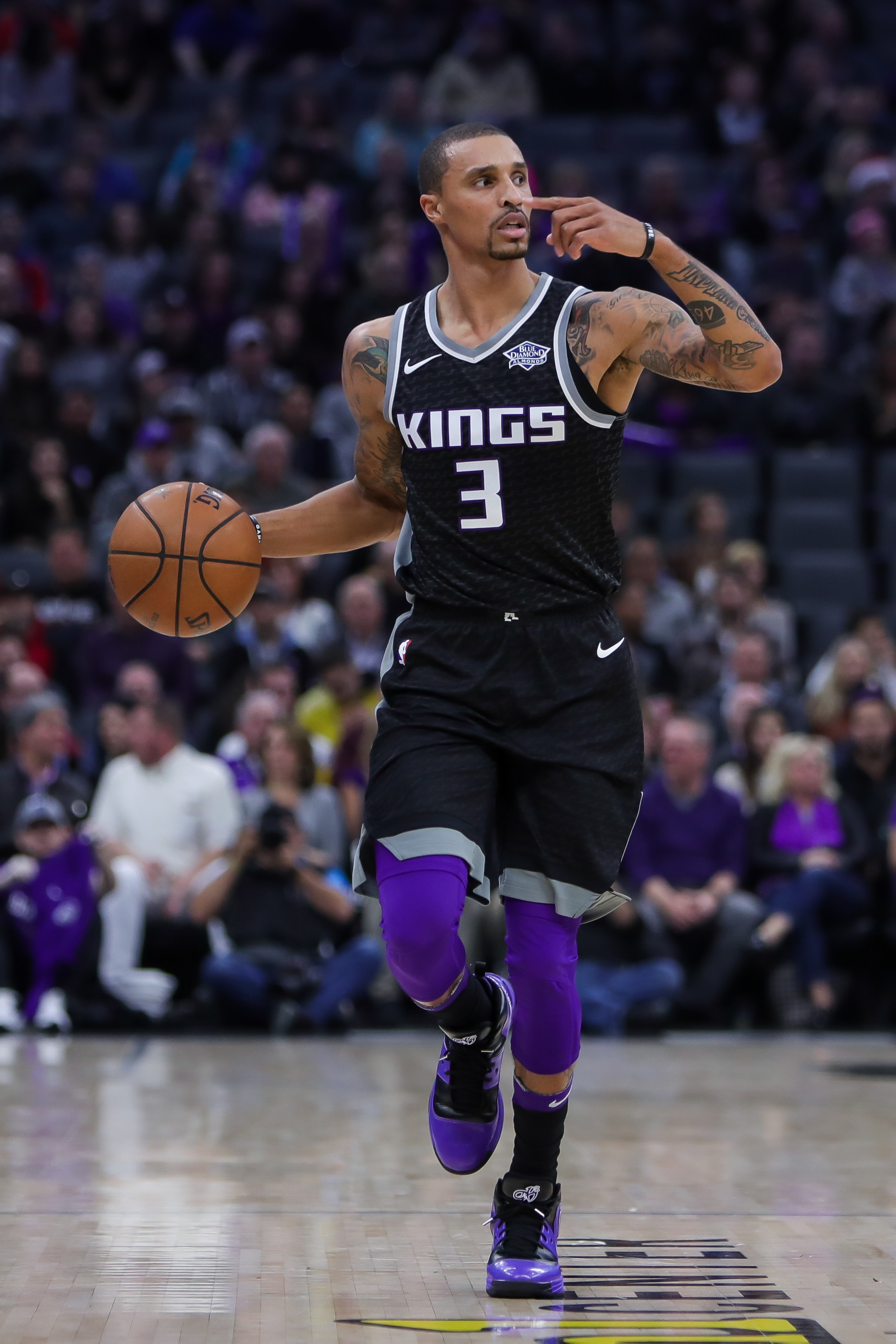
While the initial reaction is that all these vets lose value (and they do overall), there’s an opportunity to be found in Sacramento’s strategy. With two-plus players sitting out, it means the other players in the rotation are getting more run.
Hill, for example, stuffed the stat sheet in 37 minutes of action against the Jazz on Wednesday, as Carter and Temple watched from the sidelines. Hill accumulated 20 points, five assists and four rebounds and three steals in the loss and he should continue to be a fantasy contributor in games he plays.
Hill (available in over 77% of ESPN leagues) and Randolph (available in over 37%) are the only players of the bunch who should be considered for a roster spot in season-long leagues, and if I had to pick one, I’d take Hill over Randolph going forward. I have no problem giving Randolph one of my rotating spots at the end of the fantasy roster where players are added and dropped based on whether their teams play on a given night — I’d worry more about losing Hill in those daily shuffles.
Yet, any of the five Kings veterans could give you a spot start on nights they are suiting up. It’s going to be frustrating to keep track of who’s playing and who’s not, but there’s an edge to be had for those who take on the headache.
Here’s more from the league’s ping-pong hopefuls:
- The Magic—owners of the worst record in the league—are expected to be sellers at the trade deadline and that could impact many of their players’ values. Evan Fournier, one of many Southeast Division players who could be on the move, is reportedly being shopped.
- Nikola Vucevic has been out of the Magic‘s lineup since late last month and his absence is giving Elfrid Payton more control of the offense. Payton has a usage rate of 22.9 since Vucevic went down (compared to just 20.2 prior) and he’s seeing an uptick in points (16.1 vs. 11.3) and shooting percentage (54.2% vs. 50.2%). The point guard is also seeing a spike in assists, rebounds, and steals. With restricted free agency looming for Payton, Orlando figures to listen to any offers for him.
- Dewayne Dedmon, who’s available in roughly 77% of ESPN leagues, is averaging 8.4 points and 8.2 rebounds since returning to the court for the Hawks. Dedmon is a solid streaming option, though as Luke Adams of Hoops Rumors noted this week, he’s a candidate to be traded before the deadline.
- Ersan Ilyasova is also a candidate to be dealt, meaning there’s a chance that the Hawks‘ frontcourt opens up and rookie John Collins gets more opportunity down the stretch. Collins is available in over 65% of ESPN leagues.
- Bogdan Bogdanovic is owned in just under 30% of ESPN leagues, but that figure needs to be higher. The rookie is expected to continue to get steady minutes for the Kings, and he should be able to make the most out of his opportunities. Bogdanovic did just that against the Jazz on Wednesday, scoring a career-high 25 points.
- Tyson Chandler signed a four-year, $52MM deal with the Suns back in the summer of 2015 and it seems like a tradition that every year the team takes his playing time and redistributes it to the team’s youngsters. That hasn’t happened quite yet in the 2017/18 season, and Marquese Chriss‘ hip ailment – which figures to keep him out for a matter days, if not weeks – contributes to the delay. Chandler remains an asset in the rebounds department, averaging 11.2 during the month of January (eighth-most in the league) and he should be available (as he is in over 88% of ESPN leagues) for those who need help in that category in Roto leagues.
- Missed an earlier edition of Fantasy Hoops? Check out the entire series here.
Fantasy questions? Take to the comment section below or tweet me at @CW_Crouse.
Statistics are current through Friday morning. Photo courtesy of USA Today Sports Images
Five Trade Candidates Who Can Veto Deals
Only two NBA players – LeBron James and Carmelo Anthony – technically have no-trade clauses included in their current contracts. However, there are several players around the league with the ability to block trades that would involve them.
A player who re-signs with his previous team on a one-year contract – or a two-year deal with an option year – is given no-trade protection, and so is a player who accepts his qualifying offer after his rookie deal expire. If one of those players is dealt, he’d lose his Bird or Early Bird rights, which is a key reason he must approve a move.
A player who signed an offer sheet and had that offer matched by his previous team can also veto trades, and can’t be sent to the team that attempted to sign him during that same league year. That means, for instance, that the Wizards can’t trade Otto Porter to the Nets this season.
There are 17 players around the NBA that meet one of those criteria, bringing the number of players with a no-trade clause – either official or unofficial – to 19. While most of those players probably aren’t going anywhere at the trade deadline anyway, there are a handful of trade candidates who would have to consent to a move, creating an added wrinkle as those players’ teams consider their trade options.
Here are some notable players whose consent is required in order to trade them:
 Nikola Mirotic, PF (Bulls): We’ve covered Mirotic’s unofficial no-trade clause many times over the last few weeks, but it’s worth noting that his situation is a little different than anyone else’s on this list. Mirotic’s contract is actually a two-year pact, with a team option for the second year. So while he has veto power for now, that would disappear if the Bulls were to pick up his $12.5MM option for 2018/19. If the Bulls find a trade they like for Mirotic, he could use his veto power as leverage, pushing the club to exercise that option. And he might get his wish — any team willing to give up something of value for the veteran forward might not mind locking him in for an extra year as part of the deal.
- Nerlens Noel, C (Mavericks): As we noted on Thursday when we identified Noel as a trade candidate in the Southwest, the young center’s value is complicated by the fact that he’s currently sidelined with a thumb injury. Noel may be back in early February though, in which case potential suitors would have a chance to see if he’s healthy before pursuing a deal. The union between Noel and the Mavericks has been a rocky one, and it seems unlikely to turn into a long-term relationship, so if Dallas finds a taker for the 23-year-old, I expect he’d sign off, even if it means losing his Bird rights — those Bird rights probably won’t matter much this offseason if the Mavs don’t plan to retain him.
- Alex Len, C (Suns): Like Noel, Len had trouble finding an offer sheet on the restricted free agent market last summer and ultimately signed his qualifying offer. Unlike Noel though, Len has had a regular role and a solid year, averaging 8.5 PPG with career highs in RPG (8.3) and FG% (.552). The Suns have a bit of a logjam in the middle, and Len might have more trade value than Greg Monroe or Tyson Chandler, but Monroe is on an expiring contract and Chandler is 35 years old, making them more expendable for the rebuilding Suns. In other words, even though he’ll be a free agent again in July, Len remains the center most likely to stick in Phoenix for the next several years. I don’t expect the team will ask him to approve a trade.
- Ersan Ilyasova, PF (Hawks): The Hawks are reportedly seeking a high second-round pick in exchange for Ilyasova, and that price doesn’t seem unreasonable for a productive stretch four on an affordable contract, even if that contract will expire this summer. While Ilyasova may hesitate to surrender his Bird rights by approving a trade, those Bird rights aren’t as valuable to him as they would be to a star player, since Ilyasova is unlikely to earn more than the mid-level in free agency. The veteran sharpshooter has also led a nomadic NBA existence in recent years, playing for five different teams since the start of the 2015/16 season, so he’s accustomed to bouncing around and may not mind leaving the 13-31 Hawks to join a contender.
- Shabazz Muhammad, SF (Timberwolves): Muhammad hasn’t been mentioned in any trade rumors yet, but he can’t be thrilled with the way this season has played out for him in Minnesota. After failing to find a lucrative deal on the free agent market in the offseason, the 25-year-old accepted a one-year, prove-it deal from the Timberwolves, and has fallen out of the rotation over the course of the season — he has played just 17 minutes since the start of December. Muhammad isn’t a great defender or distributor, and he has been ineffective as a scorer this season (.376/.211/.750 shooting), so he’ll have little to no trade value. Still, he’s only earning the minimum, so there may be a team willing to roll the dice. It’s also worth mentioning that Muhammad’s deal includes a player option for 2018/19, which may be a minor motivating factor for the Wolves to explore a deal rather than keeping him around for depth purposes — the team’s roster will get more expensive next season, so removing even a modest amount of potential guaranteed money for a non-essential player could help.
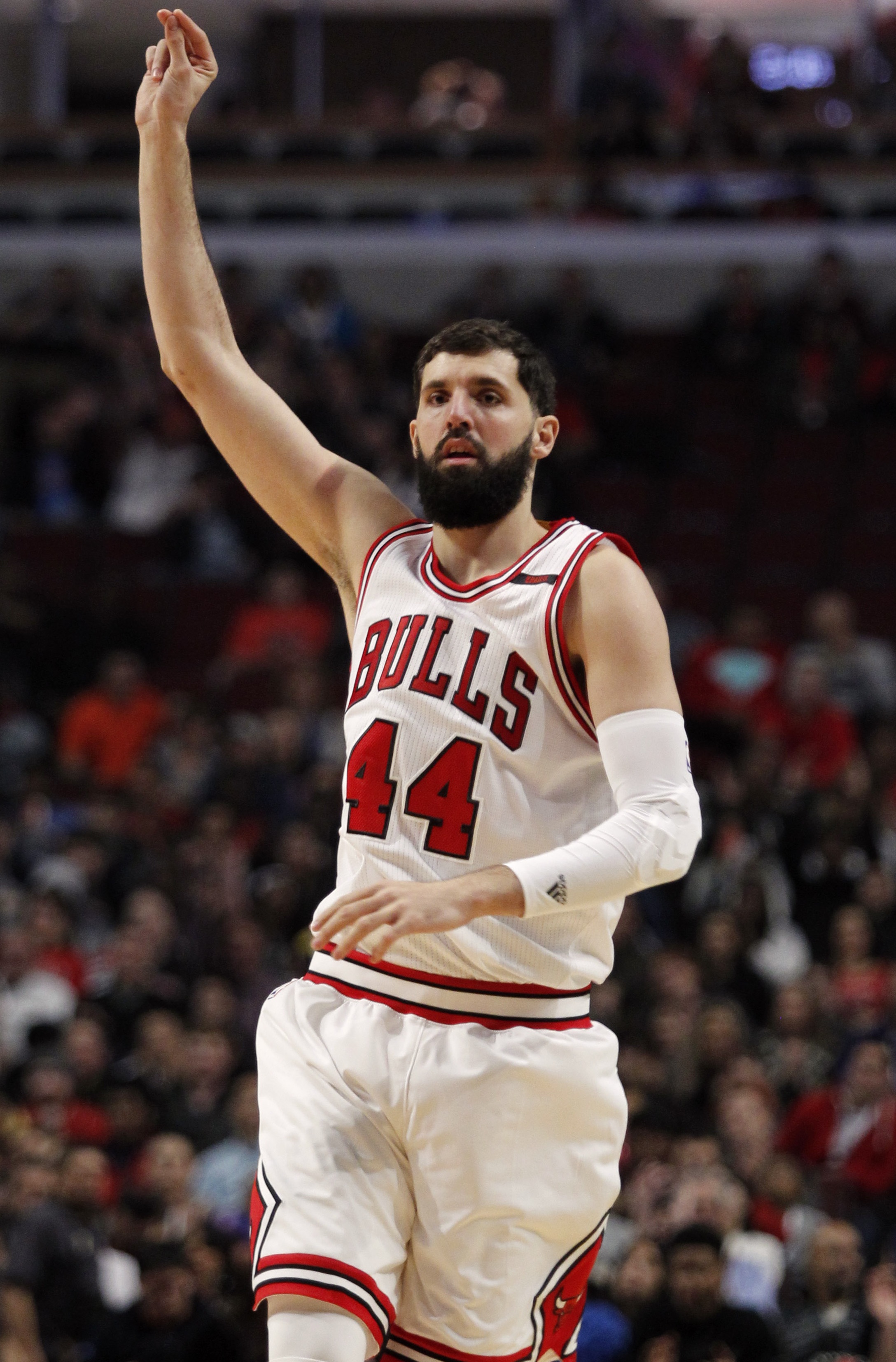
Photo courtesy of USA Today Sports Images.
2018 Free Agent Stock Watch: Toronto Raptors
Last summer, the Raptors made the decision to commit to the core that powered them to four consecutive playoff berths. As a result, the organization is somewhat financially handcuffed for the foreseeable future.
Given such financial constraints – the team already has $126MM on its books for 2018/19 – Toronto will need continue to rely heavily on the starters that the roster has been built around.
That said, a conscious decision to speed up the game has helped the team show signs of growth in other areas, and in addition to an impressive starting five, the Raps suddenly boast one of the more intriguing second units in the league.
While many of Toronto’s key rotation players are under team control through 2018/19 and beyond, not all of them are, and retaining each and every one of them may prove difficult.
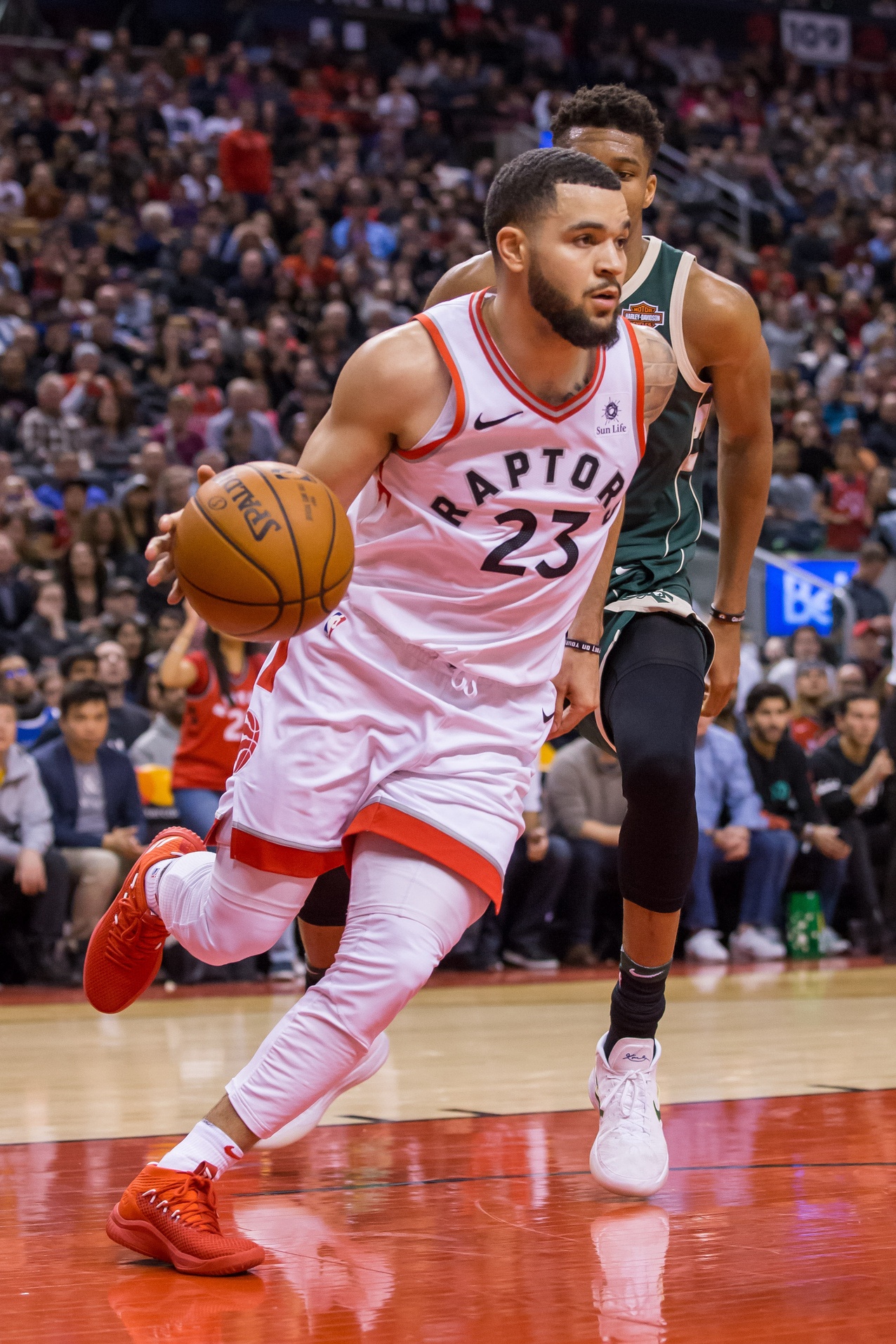 Fred VanVleet, PG, 24 (Up) – Signed to a two-year, $1.8MM deal in 2016
The undrafted guard out of Wichita State has proved to be one of the driving factors behind Toronto’s impressive second unit. His ability to handle the offense and knock down threes has helped facilitate the Raps’ transition from an iso-heavy squad to one that swings the ball and gets everybody involved. While VanVleet may have been the team’s No. 3 point guard to start the season, early returns from 2017/18 show that there is plenty of room in the rotation for both VanVleet and Delon Wright. For tax reasons, don’t expect the Raps to break the bank for the restricted free agent, but it’s a safe bet that the sharpshooter will land a bigger deal than his first NBA contract. Even if that doesn’t happen in Toronto.
Bruno Caboclo, SF, 22 (Down) – Signed to a four-year, $7MM deal in 2014
Toronto’s famously raw project hasn’t quite shown the growth that members of the team’s front office hoped they’d see when they inexplicably drafted him with their 2014 first-round pick. Caboclo remains as tantalizing a physical prospect as any, but hasn’t even reached a point where he can thrive in the G League on a consistent basis. There may still be some glimmer of promise in the 22-year-old out of Brazil, but again, the Raps may not want to venture further into luxury tax territory to chase it.
Lucas Nogueira, C, 25 (Up) – Signed to a four-year, $8.5MM deal in 2014
While he may have a ceiling as a high-energy reserve, Nogueira’s length and athleticism can be a plus for team’s looking to add cheap frontcourt depth. Nogueira will be a restricted free agent in the summer and could well find a team interested in taking a flyer on him. In that scenario, it won’t be hard for opposing teams to outbid the Raptors, especially considering that they’ve had success with Jakob Poeltl serving as the team’s primary backup big.
Photo courtesy of USA Today Sports Images.
Seven Southwest Trade Candidates To Watch
The NBA trade deadline is just three weeks away, and there’s no shortage of players around the league who could change teams. Over the next week, we’re taking a closer look at some of those top trade candidates, breaking them down by division.
While our focus will be primarily on teams expected to be sellers at the deadline, our lists may also include some players on contenders who could be used as trade chips when those teams look to make upgrades.
We’re examining the Southwest Division today, so let’s dive in and identify seven players who could be on the move on or before February 8…
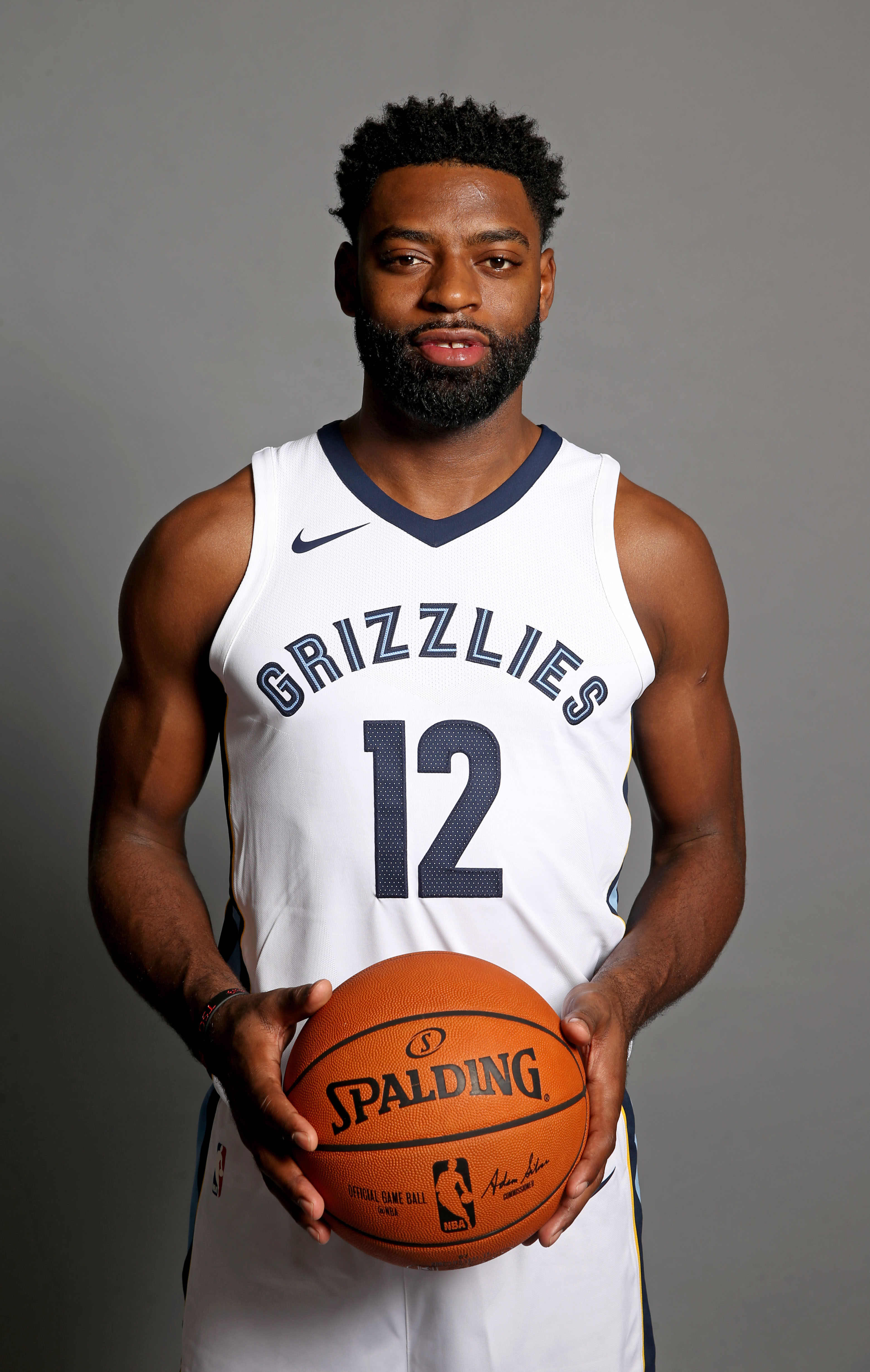
 Tyreke Evans, G (Grizzlies): After posting a career-worst 10.3 PPG and .405 FG% in 2016/17, Evans has bounced back in a major way this season. The former fourth overall pick has looked like a borderline All-Star, particularly since Mike Conley went down. In Conley’s absence, Evans has averaged an impressive 20.2 PPG, 5.7 APG, and 5.3 RPG, with a .445/.387/.773 shooting line. Throw in a very modest $3.29MM cap hit, and Evans is one of the more intriguing trade candidates on the market — even if he’ll just be a rental. The Grizzlies reportedly want a first-round pick in return for Evans, and I don’t think that’s out of the question, especially if the pick falls in the 20s, or if Memphis is willing to accept a less desirable contract in return. Last year, for instance, the Nets landed a first-round pick for Bojan Bogdanovic because they were willing to take on Andrew Nicholson.
- Ben McLemore, SG (Grizzlies): Memphis’ signing of McLemore was similar to the team’s move to land Evans. In each case, the Grizzlies were betting that they could get more out of a former top pick than his previous team(s) had. That bet paid off in Evans’ case, but the club hasn’t had as much luck with McLemore, whose 2017/18 debut was delayed after he underwent offseason foot surgery. While the Grizzlies are said to be gauging potential interest in the fifth-year guard, it’s hard to imagine teams clamoring to land him — McLemore has averaged just 6.3 PPG and has shot .411/.317/.789 in 24 games this season. Additionally, his contract, which will pay him $5.2MM this year and $5.46MM in 2018/19, isn’t quite team-friendly enough to be worth the gamble. If the former Kansas star is moved, the return won’t be significant.
- Marc Gasol, C (Grizzlies): Barring a second-half run reminiscent of the one made by the 2016/17 Heat, the 15-28 Grizzlies won’t make the playoffs this year. Gasol only has one more guaranteed year on his contract after this season, with a player option for 2019/20, so it would make sense for the Grizzlies to at least gauge the market to see what his value is. Still, Memphis has thus far been reluctant to discuss the possibility of moving Gasol — not only does the team have an eye on contending with its standout center next season, but it hasn’t thrown in the towel on this season. For now, we’ll take their word that Gasol isn’t going anywhere at the deadline, but of all the teams insisting they won’t trade their respective stars, the lottery-bound Grizzlies seem most likely to reconsider their position within the next three weeks.
- Nerlens Noel, C (Mavericks): Initially viewed as a steal, the Mavericks‘ 2017 deadline deal to acquire Noel hasn’t panned out like the team hoped. The former Sixer was good – but not great – down the stretch for the Mavs, then settled for signing his one-year qualifying offer in the summer after turning down a more lucrative multiyear deal. Given his performance and his ongoing health problems this season, it looks like Noel made a major mistake, and he and the Mavs don’t seem likely to make their union a long-term one. Currently sidelined with a thumb injury, Noel may be back in early February, which would give potential suitors a chance to get one more look at him before the February 8 deadline. He’s affordable ($4.19MM) and still very young (23 years old), so a team in need of an athletic frontcourt player may be willing to roll the dice, as long as Noel is willing to OK a trade — he has the ability to veto a move, since he’d lose his Bird rights if he’s dealt.
- Devin Harris, G (Mavericks): Harris’ 2017/18 numbers look a lot like the ones he posted in each of the previous five seasons. He’ll give you a little scoring punch off the bench, and a semi-reliable outside shot (his .354 3PT% this season is his best since 2011/12). He’ll never again be the 20-point scorer he was nearly a decade ago in New Jersey, but Harris could be a solid bench addition for teams lacking backcourt depth or battling injuries. He’s also inexpensive ($4.4MM) and will come off the cap this summer. Although there have been no reports linking Harris to other teams, it’s hard to believe the Mavericks wouldn’t move him if offered something of value.
- Alexis Ajinca, C (Pelicans): Ajinca is expected to miss the entire 2017/18 season, so he certainly won’t be targeted by any teams looking for immediate upgrades. Instead, he’ll likely be dangled by the Pelicans for salary-matching purposes as they seek out upgrades of their own. With only one more guaranteed year on his contract after this season at a reasonable rate of $5.29MM, Ajinca isn’t the sort of albatross that Omer Asik is, so it’s plausible that the Pelicans could extract a decent player in a deal if they’re willing to attach a pick or two. For instance, if New Orleans liked Devin Harris (noted above), the team could offer Ajinca and a draft pick. Such a move would help the Pels financially both this year and next year, and would give them a useful rotation player; from the Mavericks‘ perspective, Ajinca could be waived and stretched with minimal impact on their cap, so it may be worth it if the draft pick was strong enough.
- Ryan Anderson, PF (Rockets): One of the most-discussed trade candidates of the 2017 offseason, Anderson no longer seems as likely to be dealt. Still, there are only six Rockets earning more than $4MM this season, and the other five – James Harden, Chris Paul, Eric Gordon, P.J. Tucker, and Trevor Ariza – likely aren’t going anywhere. So if the Rockets look to make a major splash on the trade market and want to acquire another highly-paid player, Anderson would be the logical outgoing piece. The bet here is that Houston hangs onto the veteran sharpshooter and revisits the idea of a major splash in the offseason.
Here are a few more potential Southwest trade candidates to monitor:
- James Ennis, SF (Grizzlies): Like McLemore, Ennis is reportedly being dangled as the Grizzlies explore their trade options. Of the two, Ennis is having the better season (.500/.351/.884 shooting line) and has the more favorable cap hit ($3.03MM).
- Omer Asik, C (Pelicans): The Pelicans would prefer to move Asik’s contract over Ajinca’s, but the terms are so unfavorable that New Orleans may simply have to eventually waive and stretch Asik.
- J.J. Barea, PG (Mavericks): Mark Cuban is fond of Barea, and the veteran has another very affordable ($3.71MM) year on his contract after 2017/18, so I think he may stay put, even though he’d be one of the Mavericks‘ most valuable trade chips.
- Wesley Matthews, G/F (Mavericks): Matthews has been as reliable as ever from three-point range (38.2%), but his $18.62MM player option for 2018/19 is a roadblock for a deal.
- Tarik Black, C (Rockets): The Rockets probably need to keep Black around as insurance, given Nene‘s injury history, but if Nene is healthy, Black could become expendable.
Photo courtesy of USA Today Sports Images.